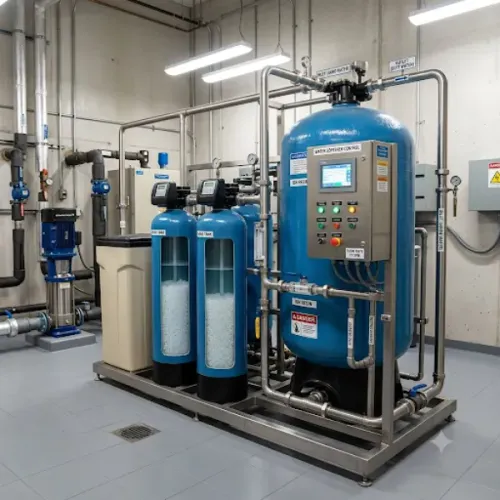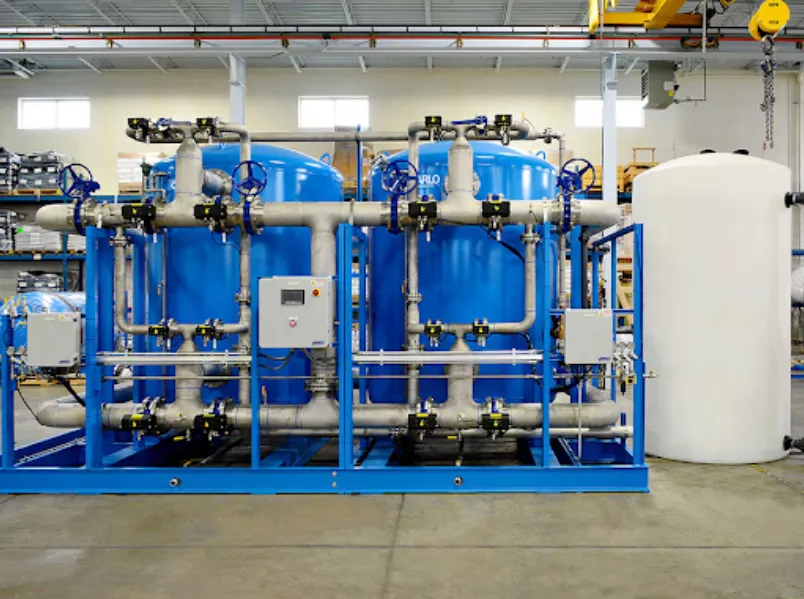
Hard water can create problems long before it becomes visibly noticeable. Mineral deposits may gradually form inside pipelines, heat exchangers, boilers, process equipment, and other water-contact surfaces. A correctly designed Water Softening Plant can reduce hardness and help facilities manage these operational problems.
Industrial businesses in Nagpur that depend on water for utilities, production, heating, cleaning, or other processes should understand hardness before deciding whether softening is necessary.
What Causes Water Hardness
Hardness is mainly associated with dissolved calcium and magnesium compounds.
When hard water is heated or subjected to certain operating conditions, these minerals can contribute to scale formation. Scale can reduce heat-transfer efficiency, restrict pipelines, interfere with equipment operation, and increase cleaning requirements.
The severity depends on water chemistry and the process in which the water is used.
How Water Softening Works
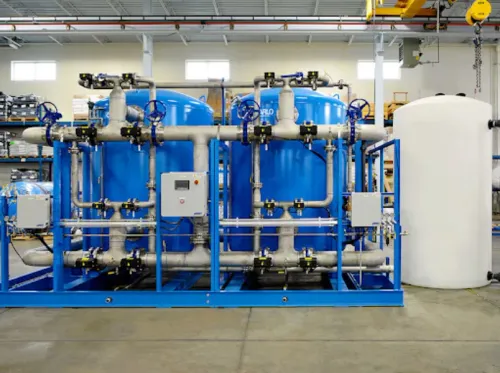
A conventional softener commonly uses ion-exchange resin.
As hard water passes through the resin bed, calcium and magnesium ions are exchanged for sodium ions. Eventually, the resin reaches its working capacity and needs regeneration using a suitable brine solution.
The basic operating cycle generally includes service, backwashing, regeneration, rinsing, and return to service.
Correct cycle settings are important because regeneration frequency affects salt use, water consumption, and plant availability.
Where Softened Water Can Be Useful
A Water Softening Plant may be considered for applications such as:
- Boiler feed pretreatment
- Cooling-related applications
- Heat-exchange systems
- Laundries
- Hospitality facilities
- Manufacturing utilities
- Process-water pretreatment
- Certain cleaning operations
However, softened water is not equivalent to demineralized or reverse-osmosis water. Softening primarily addresses hardness rather than removing all dissolved salts.
That distinction matters when specifying treatment equipment.
Water Testing Should Come First
A useful treatment assessment includes hardness along with other relevant parameters such as total dissolved solids, alkalinity, pH, iron, silica, and chlorides when applicable.
Water demand should also be understood.
An undersized softener may regenerate too frequently or struggle to meet peak requirements. Oversizing without a technical basis can increase capital cost and create inefficient operation.
Facilities should establish average consumption, peak flow, operating hours, hardness level, and required outlet hardness before sizing the system.
Signs That Hardness Needs Attention
Scale on heating surfaces is an obvious warning, but other indicators can appear earlier. Facilities may observe reduced heat-transfer performance, frequent descaling requirements, deposits on fixtures, scaling in pipelines, or inconsistent operation of water-dependent equipment.
These symptoms should be investigated rather than automatically attributed to hardness because other water-quality factors may also contribute.
Terra Eco Systems Pvt Ltd works with industrial and commercial water-treatment applications where softening can form one stage of a broader treatment arrangement.
For facilities in Nagpur and across Maharashtra, source-water characteristics may differ even when the intended industrial application is similar. Treatment selection should therefore follow actual analysis rather than assumptions about regional water quality.
Effective hardness management combines suitable equipment with proper resin selection, regeneration control, brine management, and routine testing. When those elements are addressed, water softening can support equipment protection and more predictable utility operation without adding treatment stages that the application does not need.
Keywords