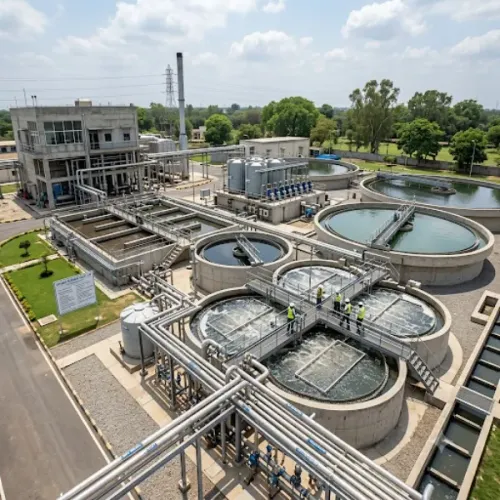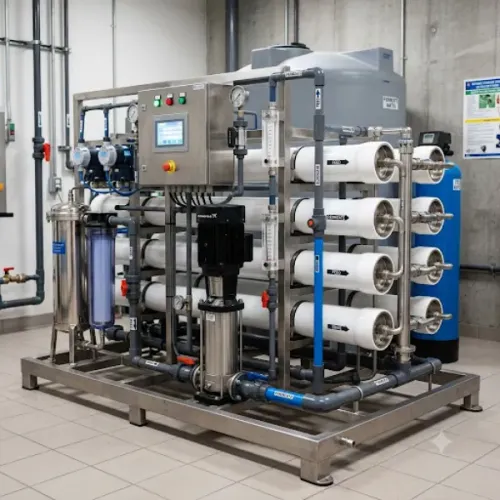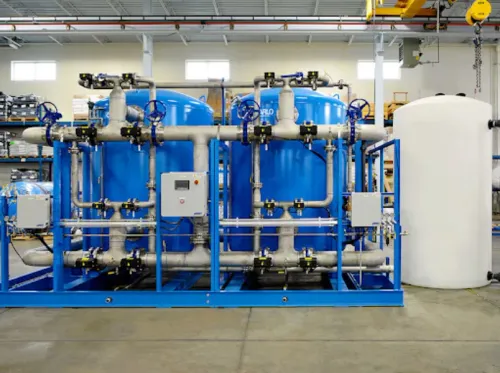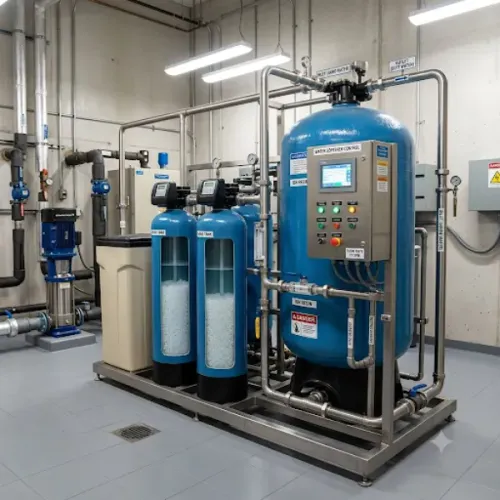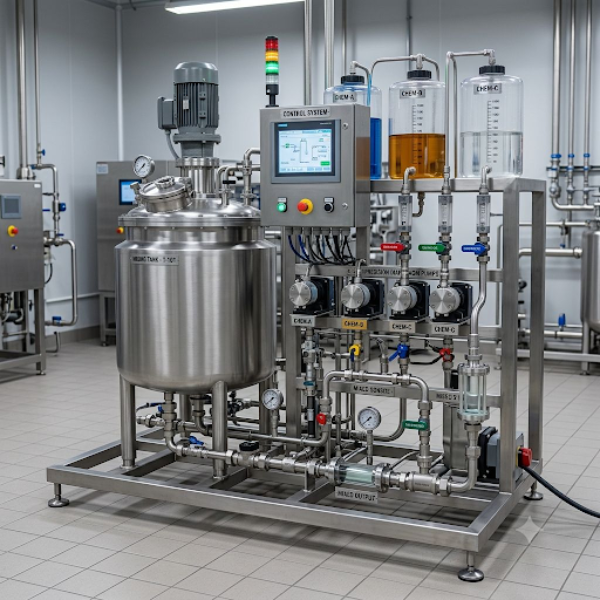
Chemical addition can influence several critical water and wastewater treatment processes. Coagulants may support solids separation, disinfectants may control microorganisms, pH correction chemicals may create suitable process conditions, and specialised chemicals may support membrane or utility-water treatment. A Chemical dosing System needs to deliver these chemicals at controlled rates rather than simply transferring liquid from a storage tank into a pipeline.
For industrial facilities in Nagpur, selecting the dosing arrangement carefully can improve process consistency while helping teams control unnecessary chemical consumption.
Define the Chemical Dosing System Purpose First
Every dosing application begins with a treatment objective.
The system may be required for:
- Coagulant addition
- Flocculant preparation
- pH adjustment
- Disinfection
- Antiscalant dosing
- Boiler-water conditioning
- Cooling-water treatment
- Process chemical addition
The chemical properties and required dosing rate influence pump selection, storage, materials of construction, instrumentation, and control philosophy.
Avoid Selecting a Pump From Flow Rate Alone
The required dosing quantity is only one part of pump selection.
Engineers should also consider discharge pressure, chemical compatibility, viscosity, concentration, turndown requirements, operating frequency, suction conditions, and required dosing accuracy.
A pump that can theoretically deliver the required litres per hour may still be unsuitable if wetted components are incompatible with the chemical.
Automation Should Match the Process
Some applications can operate using a fixed dosing rate. Others benefit from proportional dosing based on flow or a measured process parameter.
Depending on the application, control signals may be associated with parameters such as flow, pH, oxidation-reduction potential, chlorine residual, conductivity, or another relevant measurement.
Automation should have a clear process purpose.
Adding instruments without planning calibration, maintenance, and operator response can create complexity without delivering reliable control.
Think About Chemical Storage and Handling
The dosing skid is only part of the complete installation.
Chemical storage volume, bunding where appropriate, transfer arrangements, dilution requirements, ventilation, operator access, material compatibility, and safe handling procedures all need consideration.
Maintenance teams should also be able to isolate and service pumps, valves, injection points, and instruments without unnecessarily disrupting the entire treatment process.
Review Accuracy Through Actual Process Results
Chemical consumption should not remain unchanged simply because a dosing pump has always been operated at the same setting.
Raw water and wastewater conditions can vary.
Operators should compare chemical use with flow, inlet quality, treatment performance, and outlet results. Unexpected increases in consumption can indicate changing water characteristics, calibration problems, incorrect settings, leaking lines, worn pump components, or ineffective upstream treatment.
Terra Ecosystems Pvt Ltd provides environmental and water-treatment solutions where chemical mixing and dosing can be integrated with broader treatment systems.
For industrial plants, hospitals, commercial facilities, and infrastructure projects across Nagpur and Maharashtra, choosing a Chemical dosing System should therefore involve chemistry, hydraulics, instrumentation, safety, and maintainability.
The most suitable arrangement is not necessarily the one with the greatest level of automation. It is the one that consistently delivers the required chemical at the appropriate rate, responds properly to changing treatment conditions, and remains practical for the facility team to operate and maintain.
Keywords