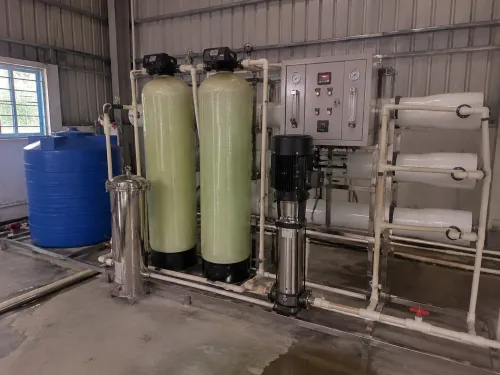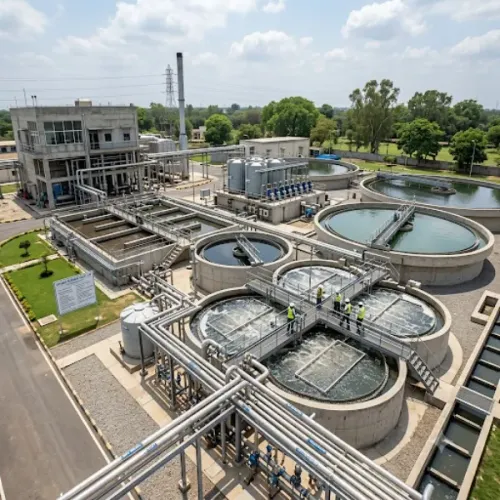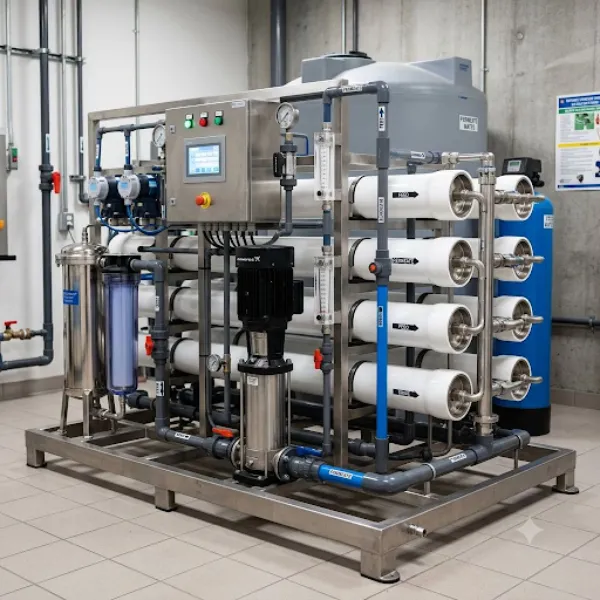
Industrial water requirements can vary from general utility water to tightly controlled process water. When dissolved salts need to be substantially reduced, a Reverse Osmosis Plant may become part of the treatment strategy. The challenge is that two RO systems with the same nominal output capacity can perform very differently when feed-water quality, pretreatment, recovery expectations, membrane selection, and operating conditions are not equivalent.
Manufacturing units and project teams in Nagpur should therefore evaluate an RO plant as a complete process rather than comparing equipment only by litres per hour.
Begin With Feed Water Analysis
RO design starts before the membrane.
A representative water analysis can identify parameters that influence membrane performance and pretreatment requirements. These may include:
- Total dissolved solids
- Hardness
- Turbidity
- Iron
- Silica
- Chlorine
- pH
- Organic matter
- Suspended solids
The source of water also matters. Borewell water, municipal supply, surface water, and treated wastewater can require substantially different pretreatment arrangements.
Review the Reverse Osmosis Plant Recovery Target
Recovery indicates how much feed water becomes permeate compared with the quantity entering the RO system.
A higher recovery percentage may sound automatically better, but it also concentrates dissolved constituents in the reject stream. If recovery is pushed beyond appropriate limits for the feed-water chemistry, scaling risk can increase.
A technically realistic recovery target should therefore consider water analysis, pretreatment effectiveness, membrane limits, and reject management.
Pretreatment Deserves Serious Attention
Many membrane problems originate before the RO unit.
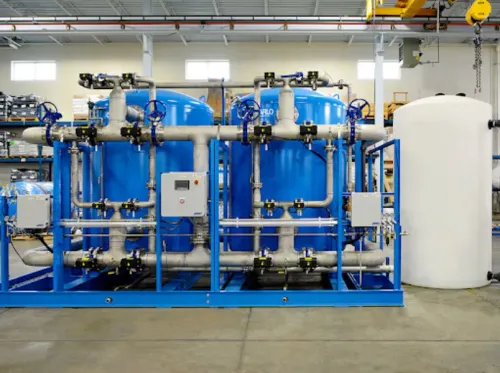
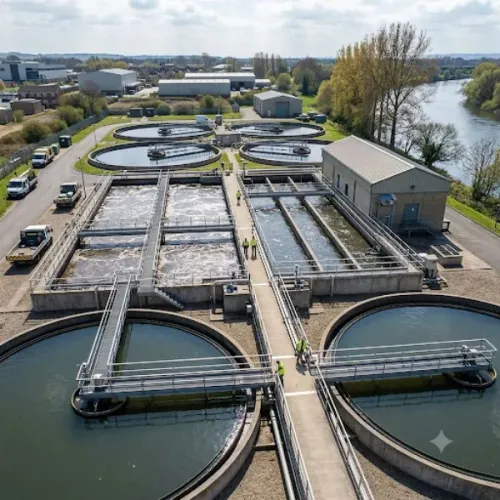
Depending on feed conditions, pretreatment may involve clarification, pressure filtration, activated carbon treatment, softening, cartridge filtration, ultrafiltration, chemical conditioning, or other suitable stages.
The objective is to give the membrane feed water within acceptable operating conditions.
Poor pretreatment can result in frequent cleaning, declining permeate flow, increasing pressure requirements, and shortened membrane service life.
Compare Lifecycle Requirements Alongside Purchase Cost
Procurement teams often receive quotations containing different equipment specifications.
A meaningful comparison should look beyond the initial price and consider:
- Design flow
- Expected permeate quality
- Recovery
- Membrane configuration
- Pump specifications
- Instrumentation
- Automation
- Pretreatment
- Cleaning arrangements
- Chemical consumption
- Power requirement
- Consumables
- Service access
A lower initial equipment price can lose its advantage if the plant consumes excessive chemicals, requires frequent membrane replacement, or produces insufficient water during real operating conditions.
Plan for Reject Water Before Installation
RO produces both permeate and a concentrated reject stream.
Reject management should therefore be considered during project design rather than after commissioning. The appropriate strategy depends on reject quantity, chemistry, site infrastructure, applicable requirements, and the broader water-management plan.
Terra Ecosystems Pvt Ltd works with industrial water and wastewater treatment projects where membrane systems can be configured around source-water characteristics and process requirements.
For industrial facilities across Nagpur and Maharashtra, selecting a Reverse Osmosis Plant becomes easier when procurement begins with measurable information. Define feed-water quality, required product-water quality, daily demand, operating hours, realistic recovery, pretreatment, reject management, and maintenance expectations before comparing commercial offers.
That approach makes quotations easier to evaluate and reduces the risk of buying an RO system that looks suitable on paper but struggles under actual plant conditions.
Keywords