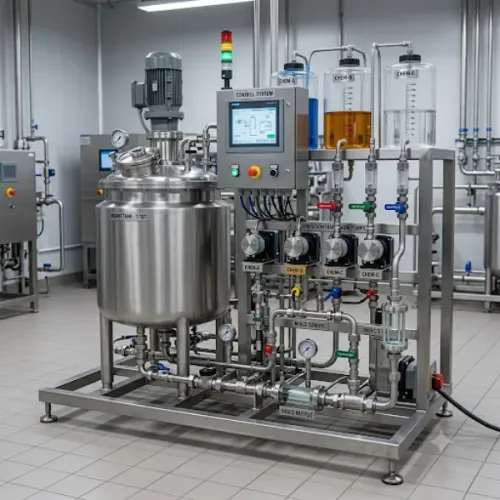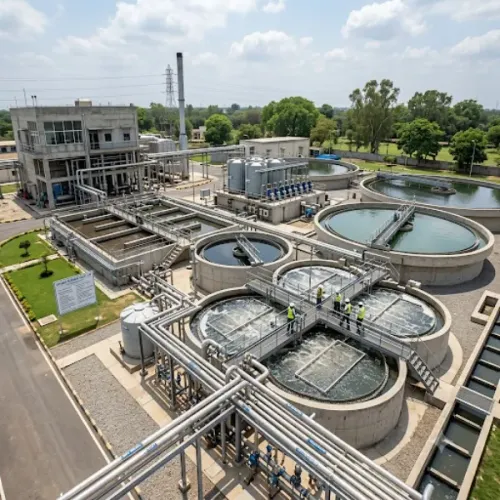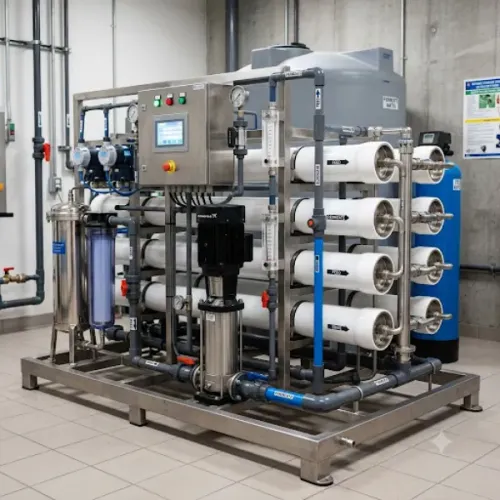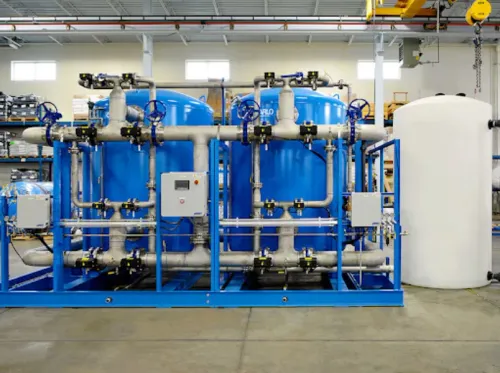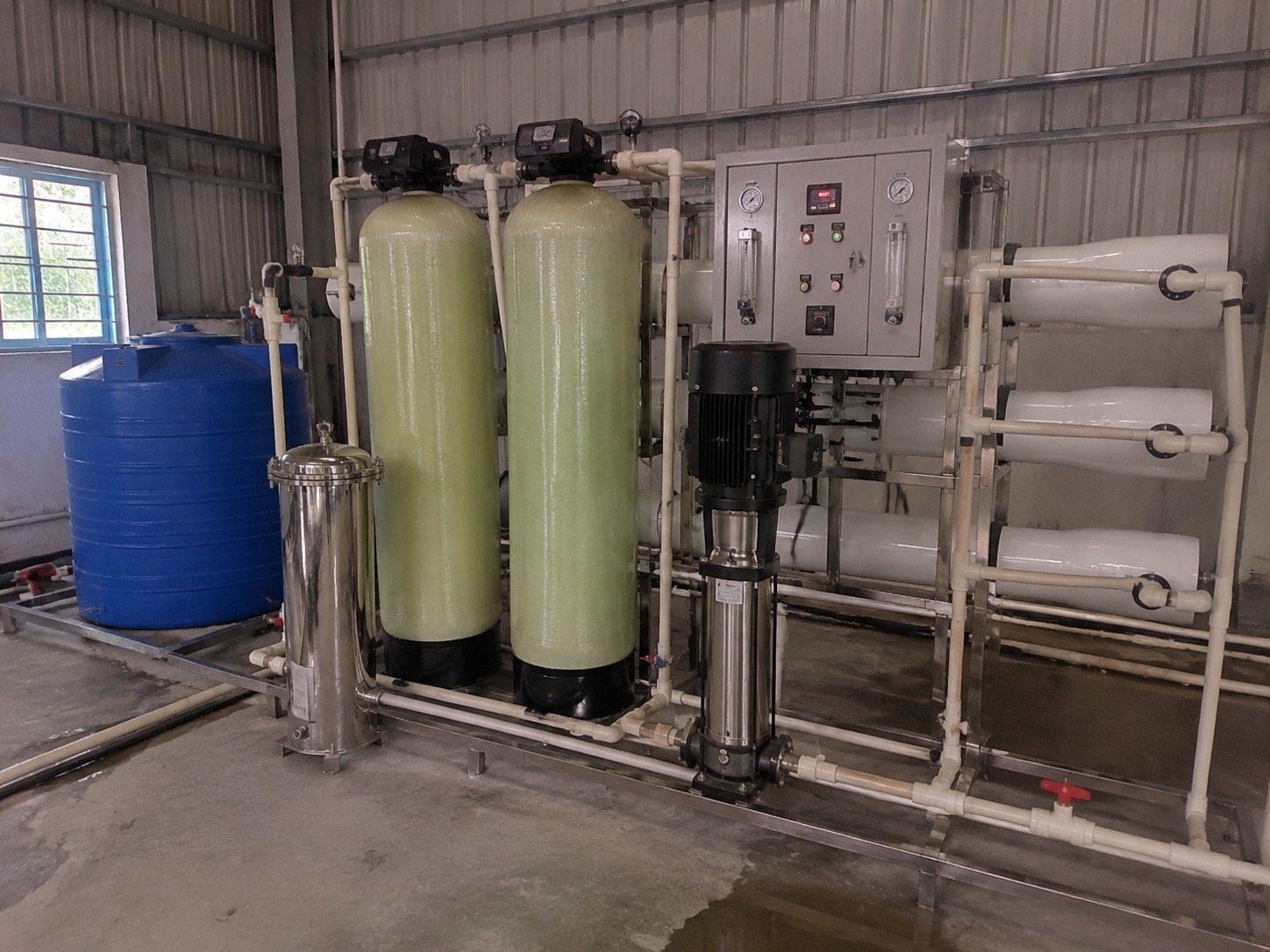
Some industrial processes need much lower mineral content than conventional filtration or softening can provide. Boilers, laboratories, power-related applications, chemical processes, and specialised manufacturing operations may require highly purified water to protect equipment and maintain process consistency. A DM Plant removes dissolved ionic constituents through demineralisation and can be configured according to the purity required by the application.
For industrial facilities in Nagpur, selecting the right system begins with understanding both incoming water chemistry and the final water specification.
Understand What a DM Plant Removes
Demineralisation commonly uses ion-exchange resins to remove positively and negatively charged dissolved ions.
A conventional arrangement may include a cation exchanger followed by an anion exchanger. Applications requiring higher purity may include additional polishing stages such as a mixed-bed unit.
The exact configuration depends on feed-water quality and the conductivity or other quality parameters required after treatment.
Establish the Required Water Purity
Not every industrial application requires the same quality.
Using an unnecessarily complex system can increase capital and operating requirements. Selecting insufficient treatment can affect production and equipment.
Before requesting quotations, define:
- Required treated-water quality
- Daily demand
- Peak demand
- Operating hours
- Raw water analysis
- Storage requirement
- Downstream process sensitivity
These details give suppliers a much stronger design basis.
Consider Regeneration During System Evaluation
Ion-exchange resin eventually becomes exhausted and requires regeneration.
This means a DM system must be evaluated not only while producing water but also during regeneration.
Chemical requirements, regeneration frequency, rinse-water demand, wastewater generation, storage arrangements, operating procedures, and appropriate handling measures all influence lifecycle operation.
For facilities requiring continuous treated-water availability, the system configuration may also need to account for regeneration downtime.
Compare DM With Other Purification Technologies
A DM plant is not automatically the only route to low-mineral water.
Depending on feed quality and required output, reverse osmosis may be used upstream to reduce ionic load before final demineralisation. Combining technologies can sometimes reduce the burden on ion-exchange units.
The correct sequence should be established through water analysis and lifecycle evaluation rather than choosing technologies independently.
Look Beyond Initial Equipment Price
A procurement comparison should include resin quantity and quality, vessel design, instrumentation, chemical requirements, regeneration arrangements, controls, pumps, piping, operating costs, service access, and expected treated-water performance.
A lower capital quotation can become expensive if regeneration is excessively frequent or the plant cannot consistently achieve the required purity.
Terra Ecosystems Pvt Ltd works with industrial water-treatment requirements where demineralisation can be integrated with filtration, softening, RO, and other treatment stages.
For industries across Nagpur and Maharashtra, the most useful DM Plant specification connects water chemistry directly with process requirements.
Rather than requesting a generic system of a certain capacity, provide representative raw-water data, required outlet quality, consumption profile, operating schedule, regeneration expectations, and downstream application. That information allows technical proposals to be compared on performance and lifecycle suitability rather than nominal capacity alone.
Keywords