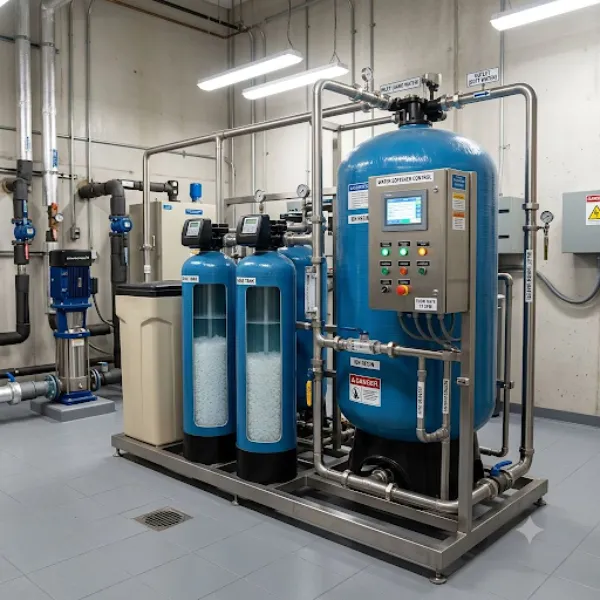
Filtration is often treated as a simple step in water treatment, yet poor filtration can affect almost everything that follows it. Suspended solids, turbidity, iron, organic matter, and other contaminants can increase maintenance requirements and interfere with sensitive downstream processes. A well-selected Pressure filtration System provides controlled media filtration inside a closed vessel and can become an important protective stage in an industrial treatment train.
For manufacturing and infrastructure facilities in Nagpur, the right filtration arrangement depends heavily on the source water and the quality required after treatment.
How a Pressure Filtration System Works
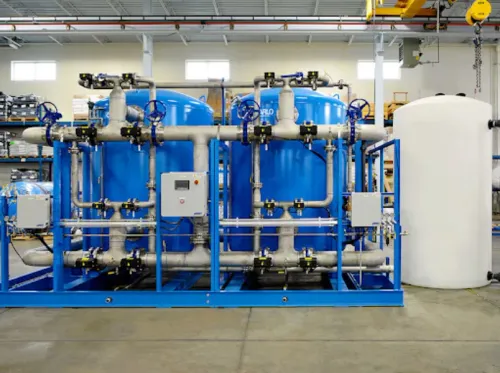
Water is passed under pressure through selected filter media contained inside a vessel. As it travels through the media bed, targeted suspended impurities are retained.
The filtered water then continues to the next process.
As contaminants accumulate, resistance through the media increases. Backwashing is therefore required at suitable intervals to remove accumulated material and restore effective filtration conditions.
Filter Media Should Match the Treatment Objective
Different filtration media perform different functions.
Depending on raw water characteristics and treatment objectives, systems may incorporate media arrangements intended to address suspended solids, turbidity, certain forms of iron and manganese, residual chlorine, odour, and selected organic contaminants.
This is why simply specifying a pressure filter by vessel diameter and flow rate is incomplete.
Water analysis should guide media selection.
Pretreatment Can Protect Expensive Equipment
One of the strongest reasons to improve filtration is downstream equipment protection.
A suitable filtration stage may be positioned ahead of:
- Reverse osmosis membranes
- Ultrafiltration systems
- Water softeners
- Demineralisation systems
- Process-water equipment
- Utility-water systems
Reducing the contaminant load before these stages can help create more stable operating conditions.
Pressure filtration can also be considered after wastewater treatment when further reduction of suspended matter is required before polishing or selected reuse processes.
Warning Signs That Filtration Needs Attention
A filter may continue operating even when performance has deteriorated.
Operators should watch for changes such as increasing pressure difference across the vessel, falling outlet flow, increasing turbidity, unusually frequent backwashing, media loss, channel formation, and inconsistent filtered-water quality.
These symptoms should be investigated rather than managed indefinitely through more frequent backwashing.
The underlying cause could involve changing inlet water, unsuitable filtration rates, exhausted media, internal distribution problems, ineffective backwash conditions, or problems in an upstream process.
Design Filtration Around the Whole Treatment Train
Water sources across Nagpur and Maharashtra may include groundwater, municipal supplies, surface water, process water, and treated wastewater. Each source presents a different filtration challenge.
Terra Ecosystems Pvt Ltd provides water and wastewater treatment solutions where filtration can be integrated with upstream and downstream processes according to site requirements.
For plant owners, the useful question is not simply which filter has enough capacity. The stronger approach is to identify what contaminants must be reduced, what water quality the next treatment stage requires, how frequently the filter will operate, and how it will be maintained.
A properly planned Pressure filtration System is therefore more than a vessel filled with media. It is a protective treatment stage whose performance can influence reliability across the complete water-treatment process.
Keywords