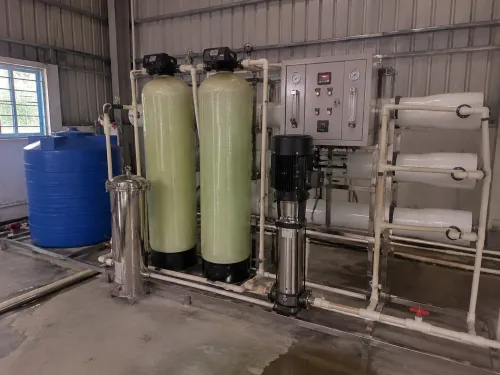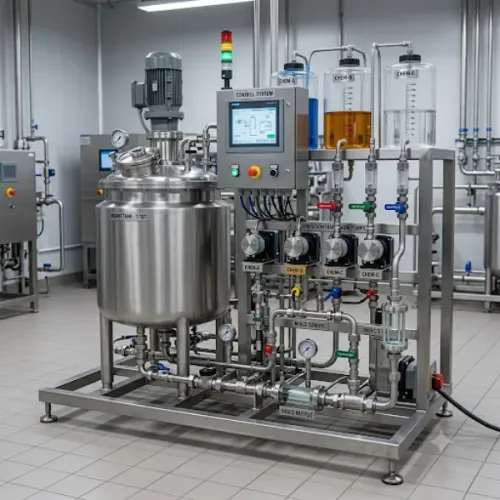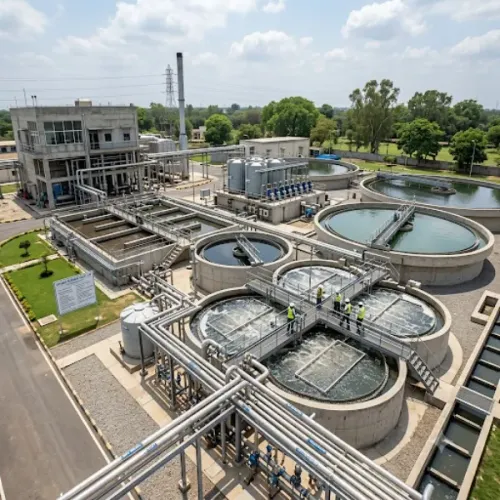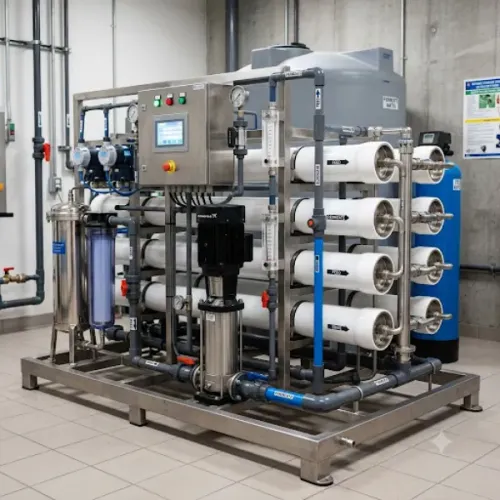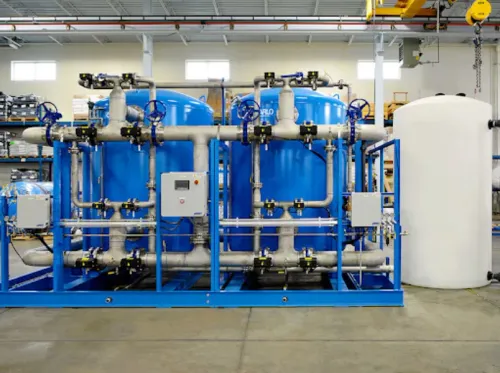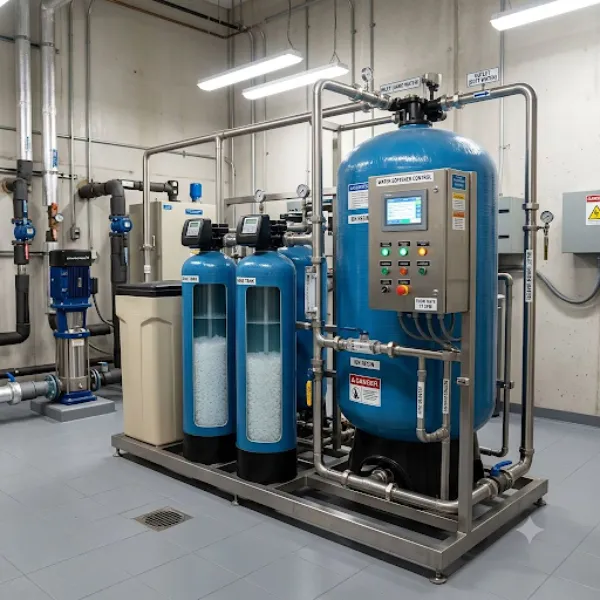
Filtration is often required when suspended particles, turbidity, and other unwanted matter need to be reduced before water proceeds to another treatment stage or reaches its intended application. A properly selected Pressure Filtration System provides controlled filtration inside a closed vessel and can be incorporated into many industrial water-treatment arrangements.
For manufacturing units and infrastructure facilities in Nagpur, filtration requirements can differ considerably depending on the source water and downstream process.
How Pressure Filtration Works
In a pressure filter, water is passed through selected filtration media inside a vessel under pressure. As water moves through the media bed, suspended particles and certain impurities are retained.
The filtered water is collected and directed to the next treatment stage.
Over time, trapped material increases resistance through the media. The system must therefore undergo backwashing at suitable intervals to remove accumulated contaminants and restore filtration performance.
A typical arrangement can include:
- Pressure vessel
- Selected filter media
- Internal distribution system
- Valves and piping
- Pressure indicators
- Backwash arrangement
- Flow-control components
Automation can also be incorporated depending on the application and operational requirements.
Why Filter Media Selection Matters
Not every filtration application requires the same media.
The correct selection depends on what needs to be removed from the water. Multimedia arrangements can support turbidity and suspended-solids reduction, while specialized media may be considered for particular water-quality conditions.
Before selecting a Pressure Filtration System, raw-water testing helps identify the actual treatment challenge. Designing filtration without understanding parameters such as turbidity, suspended solids, iron, organic matter, and hardness can result in poor performance or unnecessary treatment stages.
Pressure Filtration Within a Larger Treatment Process
Pressure filtration frequently acts as one component within a complete water-treatment train.
For example, filtration may be positioned before:
- Reverse osmosis
- Ultrafiltration
- Water softening
- Demineralization
- Process-water systems
- Utility-water systems
It may also be used as tertiary treatment after wastewater treatment when further suspended-solids reduction is required.
The upstream and downstream processes influence filter design. Water intended for sensitive membrane treatment, for instance, may require more carefully controlled pretreatment than water intended for a less demanding utility application.
Recognizing Declining Filter Performance
Several operating observations can indicate that filtration requires attention.
An increasing pressure difference across the filter may indicate accumulation of contaminants. Reduced outlet flow can have a similar cause. Changes in filtered-water turbidity can indicate ineffective backwashing, media problems, unusual inlet conditions, or internal distribution issues.
Routine monitoring should therefore include inlet and outlet pressure, flow, water quality, backwash frequency, and media condition.
Local Industrial Considerations
Nagpur supports manufacturing, logistics, commercial, infrastructure, healthcare, and institutional activities with different water requirements. Water sources and quality conditions can also vary from project to project.
Terra Eco Systems Pvt Ltd provides environmental and water-treatment solutions where filtration can be integrated with other treatment technologies according to site conditions.
For facilities across Maharashtra, effective filtration begins with a clear understanding of the source water rather than choosing equipment only by flow capacity. Testing the water, identifying the contaminants, establishing the required output quality, and understanding downstream processes allow filtration to perform its intended role more consistently.
A pressure filter is ultimately a treatment component rather than a universal solution. Its value depends on correct media selection, hydraulic design, backwashing, monitoring, and integration with the overall water-treatment process.
Keywords