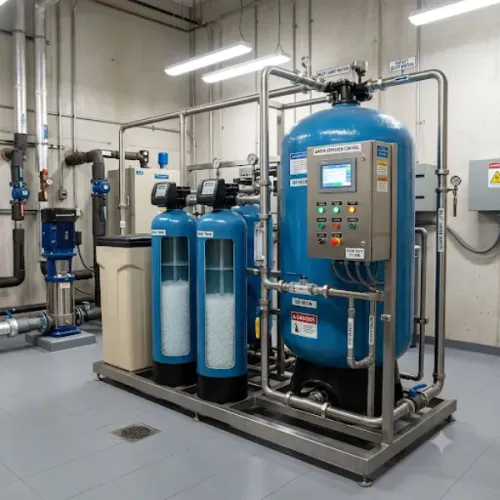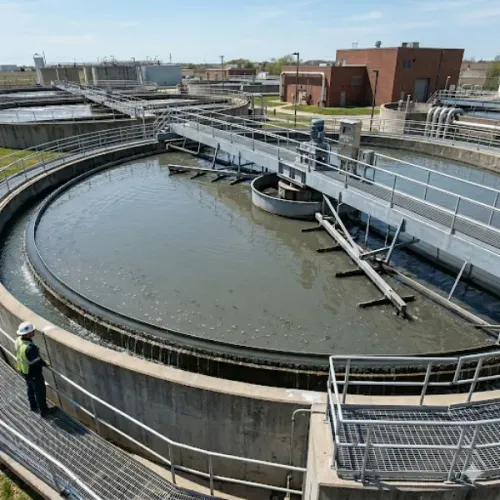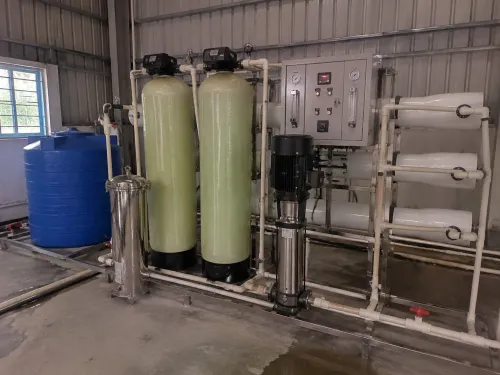

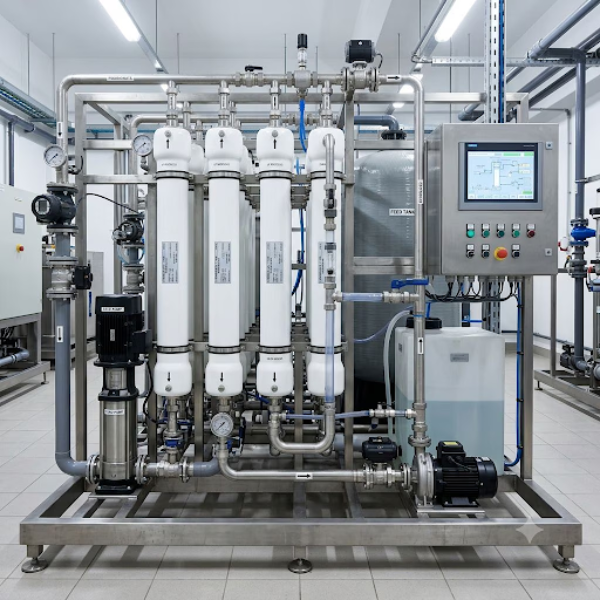
Water reuse is becoming an important operational consideration for industries seeking to manage freshwater demand and make better use of treated wastewater. An Ultrafiltration System can play a valuable role in reuse projects by providing fine membrane separation before further treatment or selected reuse applications.
For industrial facilities in Nagpur, however, successful reuse requires a complete treatment strategy rather than simply installing UF membranes at the outlet of an existing wastewater plant.
Define the Intended Reuse Application
The first step is deciding where treated water will be used.
Potential applications may include cooling-related uses, gardening, washing, utility requirements, process applications, or feed to further purification systems, subject to the water-quality requirements appropriate to the use.
Different applications require different quality levels.
The reuse objective should therefore be established before deciding the treatment sequence.
Assess Existing Treated Water
An existing STP or ETP may already remove much of the pollutant load, but its outlet quality must be evaluated.
Testing can help determine suspended solids, turbidity, organic load, dissolved constituents, hardness, microbial considerations, and other relevant parameters.
Consistent feed quality is particularly important for membrane systems.
If the existing treatment process is unstable, adding UF downstream without addressing upstream problems may lead to frequent membrane fouling.
Determine Necessary Pretreatment
Depending on treated-water characteristics, an Ultrafiltration System may require suitable upstream protection.
This can include clarification, media filtration, screening, chemical conditioning, or other treatment measures. The objective is to prevent excessive solids and contaminants from reaching membrane surfaces.
Pretreatment requirements should be established from actual water data.
Plan Membrane Cleaning
Every UF system requires a cleaning strategy.
Backwashing, flushing, chemically enhanced cleaning, and periodic chemical cleaning may be incorporated depending on membrane technology and feed conditions.
When comparing proposals, industrial buyers should ask about:
- Expected operating flux
- Recovery
- Backwash frequency
- Cleaning requirements
- Chemical consumption
- Membrane replacement expectations
- Instrumentation
- Automation
- Waste streams from cleaning
These factors influence long-term operating cost.
Consider Treatment After UF
UF removes fine suspended matter effectively, but dissolved salts can remain in the permeate.
If the intended reuse application requires lower dissolved-solids levels, reverse osmosis or another suitable process may be required after UF.
This is one reason membrane technologies should be selected according to contaminant type rather than assuming one membrane process solves every water-quality issue.
Complete a Water Balance
A reuse project should quantify how much wastewater is generated, how much becomes recoverable treated water, how much water the intended application consumes, and what residual streams require management.
Without a water balance, equipment can be incorrectly sized or recovered water may exceed actual reuse demand.
Terra Eco Systems Pvt Ltd works with industrial water, wastewater treatment, filtration, membrane treatment, and pollution-control applications where reuse systems can be developed around site-specific requirements.
For facilities in Nagpur and across Maharashtra, planning should also account for applicable environmental requirements, site infrastructure, existing treatment performance, storage capacity, operating manpower, and future production changes.
An organization is better prepared to invest in UF-based reuse when it knows its wastewater quantity, current outlet quality, desired reuse application, daily reuse demand, available space, and downstream treatment requirements.
With these fundamentals established, ultrafiltration can be evaluated as part of an integrated reuse process. This creates a clearer basis for equipment sizing, membrane selection, operating-cost assessment, and long-term treatment planning.