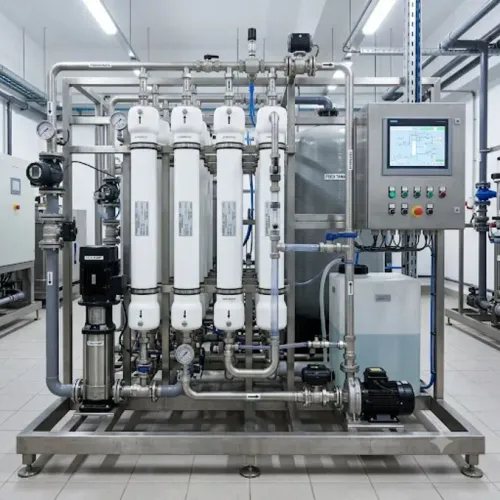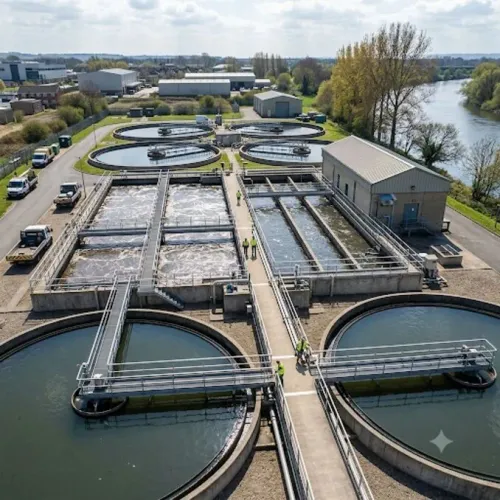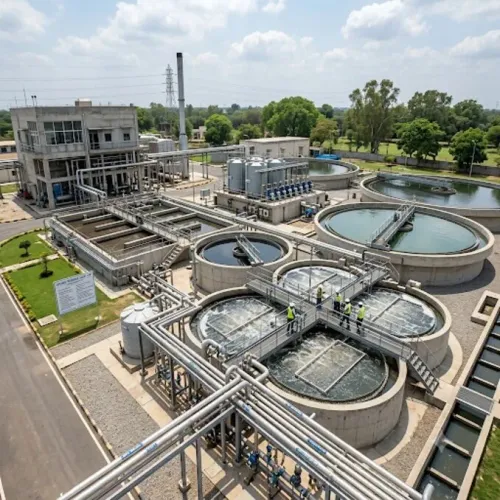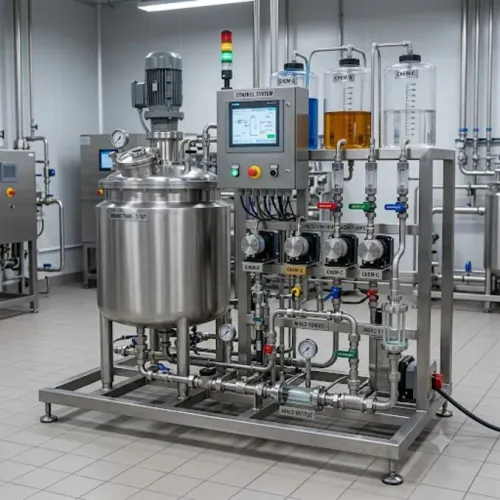
A reverse osmosis plant cannot be selected safely from TDS and production capacity alone. By matching a complete feed-water analysis to pretreatment, membrane type, recovery, permeate quality, and concentrate handling, you can compare proposals on performance and whole-life operating cost.
Key takeaways
- Build a feed-water envelope covering minimum, maximum, and seasonal conditions.
- Match pretreatment to hardness, silica, iron, turbidity, chlorine, and biological risk.
- Choose recovery and staging after checking scaling limits, pressure, and concentrate disposal.
- Specify permeate limits for the actual end use, not maximum membrane rejection.
What feed-water data must you collect before choosing an RO plant?
Define a feed-water envelope before comparing RO plants: it must show what the membranes will face at minimum, maximum, and seasonal conditions, not just one laboratory result. A single dry-season sample cannot predict fouling, scaling, corrosion, salt passage, or biological growth.
Use this RO feed-water testing checklist and record the sampling date, source, treatment state, and operating temperature:
- pH; minimum and maximum temperature; conductivity; TDS; turbidity; SDI15; alkalinity; total hardness; calcium; magnesium; silica; sulfate; chloride; nitrate; fluoride; boron; barium; strontium; iron; manganese; TOC or COD; ammonia; oil or hydrocarbons; residual chlorine and other oxidants; microbiological load; and seasonal samples.
Treat TDS versus individual ions differently. TDS is the total concentration of dissolved material, not a description of its ions. Calcium plus alkalinity indicates calcium-carbonate scaling; sulfate with calcium, barium, or strontium indicates sparingly soluble sulfate scales. Silica and boron need separate design checks.
Iron, manganese, oil, organics, microbes, and colloids can foul membranes even when TDS is low.
| Result | Risk revealed | Design implication |
|---|---|---|
| Temperature range | Permeability changes | Size for cold and hot conditions |
| Conductivity and TDS | Salt passage and osmotic pressure | Select membrane and operating pressure |
| SDI15, turbidity, TOC/COD | Particle and organic fouling | Specify pretreatment and cleaning |
| Ion profile | Specific scale or corrosion | Set recovery, pH, and antiscalant |
| Microbiology and seasonal samples | Biofouling variability | Provide monitoring and control |
How should the water analysis determine RO pretreatment?
Select each pretreatment step for a named contaminant, not for a generic filter package. The aim is to deliver feed with turbidity commonly below approximately 1 NTU and SDI15 below 5 at the RO inlet.
| Contaminant or risk | Pretreatment choice | Design check |
|---|---|---|
| Suspended solids and colloids | Coagulation plus multimedia filtration | Confirm turbidity and SDI15 after filtration |
| Free chlorine and other oxidants | Activated carbon dechlorination or sodium bisulfite dosing | Measure residual oxidant immediately before the membranes |
| Hardness-related scale | Softener or antiscalant for RO scale control | Project calcium, alkalinity, sulfate, silica, barium, and strontium |
| Oxidisable iron or manganese | Dedicated iron and manganese removal | Prevent metal oxidation and membrane fouling |
| Persistent colloids, biological solids, oil, or high SDI | Ultrafiltration or microfiltration | Use when conventional pretreatment does not control fouling |
Free chlorine damages thin-film composite polyamide membranes. Do not treat nominal chemical dosing as proof of protection; measure the residual at the membrane inlet.
Use cartridge filtration as the final particle barrier, not as evidence that the feed has acceptable fouling potential. For wastewater, surface water, and biologically active groundwater, assess:
- TOC or COD, microbiological indicators, SDI trends, cleaning history, and oil loading
- Chemical dosing, backwash, monitoring, and membrane-cleaning provisions
A generic multimedia filter cannot replace dechlorination, scale control, metal removal, or membrane-grade biological protection.
How do membrane type, recovery, pressure, and staging affect plant selection?
Choose membrane family from feed salinity and required permeate quality, then verify the choice with a membrane projection. Low-TDS water can use low-pressure brackish-water membranes; brackish water needs brackish-water RO membranes; high-salinity water needs elements and pressure-rated equipment sized for elevated osmotic pressure; seawater needs seawater RO membranes and high-pressure energy recovery equipment.
A stated range of 400 to 45,000 mg/L TDS does not mean one configuration performs efficiently across it.
| Membrane family | Feed condition | Plant-selection consequence |
|---|---|---|
| Low-pressure brackish-water | Low-TDS feed | Lower feed pressure and lower energy demand |
| Brackish-water RO | Brackish feed | Standard brackish elements with recovery limited by concentrate chemistry |
| High-pressure brackish or high-salinity RO | Elevated salinity and osmotic pressure | Pressure-rated vessels, pumps, and elements selected from the projection |
| Seawater RO | Seawater salinity | Seawater membranes, high-pressure pumping, and energy recovery |
- Compare normalized permeate flow, salt rejection, feed pressure, membrane flux and staging, number of stages, elements per vessel, concentrate flow, and design recovery instead of capacity alone.
- Use an RO recovery calculation: the concentration factor is 1 divided by 1 minus recovery. Fifty percent recovery doubles dissolved concentrations, 75% quadruples them, and 80% increases them fivefold before staged-flow effects.
- Set recovery from the scaling model. Check calcium carbonate, calcium sulfate, barium sulfate, strontium sulfate, silica, and metal hydroxides separately; antiscalants are not interchangeable.
- Run minimum and maximum temperature projections. Apply RO operating pressure and temperature correction because cold water reduces permeability and can require more membrane area or pressure. Set pH from the complete projection because it changes carbonate chemistry, silica control, boron rejection, salt passage, and chemical demand.
What permeate quality does the end use actually require?
Write the RO permeate quality requirements before choosing plant capacity or membrane count. Define numerical limits for the actual application, because process water, cooling-tower make-up, rinsing, boiler make-up water, potable water, laboratory water, and demineralisation feed require different conductivity, silica, hardness, alkalinity, boron, microbiological, and residual-disinfectant limits.
1. State the target and its location. Identify whether each value applies at the RO permeate outlet or at the point of use. A permeate suitable as demineralisation feed does not automatically meet the finished-water specification.
2. Check carbon dioxide separately. Uncharged dissolved CO2 passes through RO readily, so low-conductivity or low-alkalinity water may need a degasser, strong-base anion exchange, second-pass RO, or EDI and mixed-bed polishing after RO.
3. Treat boron as a separate design case. Near-neutral pH gives poorer boron rejection than rejection of many common salts; low limits can require elevated-pH operation followed by neutralisation, a second pass, or ion exchange. Set pH from the complete projection because it changes scaling, salt passage, and chemical demand.
4. Add microbiological barriers when the finished specification requires them. UV, ozone, or final disinfection belongs after RO when control at the point of use matters.
5. Add remineralisation when the product needs controlled alkalinity, hardness, or corrosivity. Include the required flow and quality of feed entering every downstream polishing step in the plant design.
How should you compare RO plant proposals and supplier claims?
Ask every supplier to submit the same design basis before you compare RO plant proposals. Require the complete feed-water envelope and temperature range, permeate flow, recovery, salt rejection, membrane model, flux, feed pressure, stage arrangement, concentrate flow, pretreatment chemicals, cleaning method, power demand, and expected membrane replacement interval.
Use concentrate disposal and whole-life cost as decision criteria, not an afterthought.
- Sewer discharge, surface-water discharge, evaporation ponds, deep-well injection, crystallisation, and off-site disposal each impose limits on salinity, flow, chemicals, and permits.
- Require the supplier to show the selected route, reject composition, daily volume, required permits, and cost at the proposed recovery.
| Recovery choice | Benefit | Cost or risk to compare |
|---|---|---|
| 50% | Lower concentrate salinity | Higher intake and pretreatment flow |
| 75% | Lower intake volume | Fourfold concentration before staged-flow effects |
| 80% | Maximum water yield on paper | Greater scaling, cleaning, chemical, and disposal burden |
Higher recovery can increase antiscalant use, instrumentation requirements, membrane replacement, and cleaning frequency. Compare the full operating life, not the highest water-yield percentage.
Put normalized permeate flow, normalized salt passage, feed pressure, differential pressure, conductivity, pH, temperature, and chemical-dose records into the controls and RO acceptance test. Test performance at agreed temperatures and pressures; an instantaneous conductivity reading can hide temperature effects, fouling, or membrane compaction.
Terra Ecosystems Pvt Ltd belongs in the comparison when its proposal documents these assumptions, pretreatment duties, downstream polishing needs, and acceptance criteria. Choose the supplier that predicts performance on your water, not the one with the broadest catalogue.
Related product
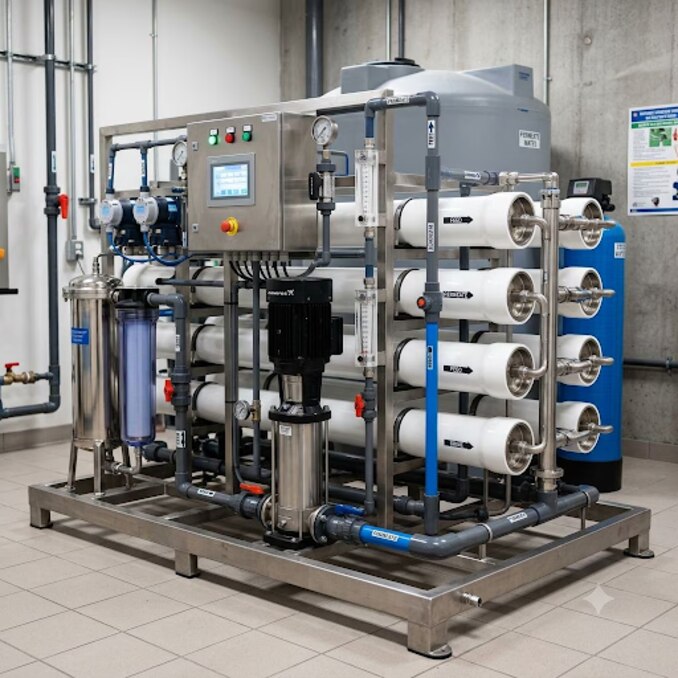
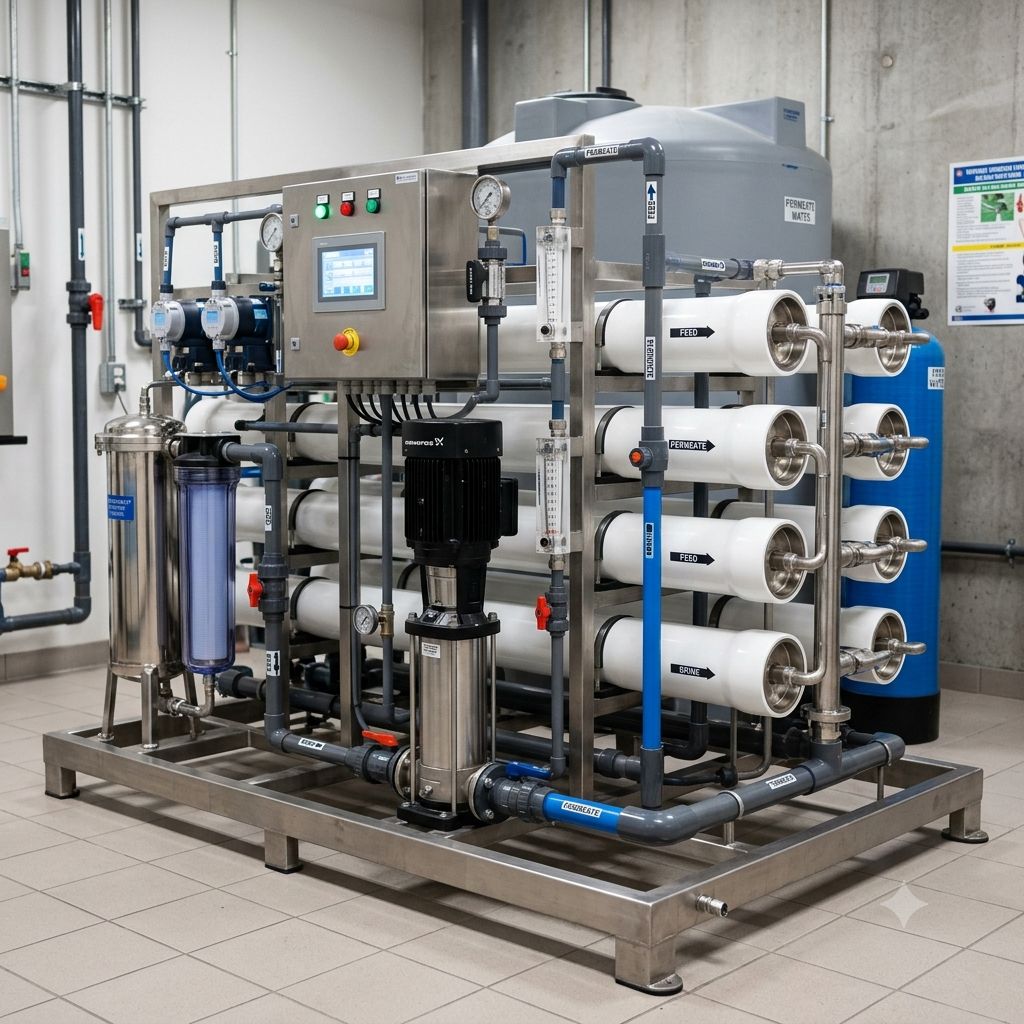 | REVERSE OSMOSIS SYSTEM We offer a wide range of Industrial Reverse Osmosis Plant according to We need for tap water, brackish water & sea water application. View product → |
Frequently asked questions
What feed-water data must you collect before choosing an RO plant?
Collect laboratory results and operating ranges for TDS, conductivity, pH, temperature, turbidity, hardness, alkalinity, silica, iron, manganese, chlorine, sulphate, phosphate, oil, organics, and microbiological activity. Record minimum, maximum, and seasonal values, plus flow rate and operating hours.
How should water analysis determine RO pretreatment?
Use the analysis to select specific barriers: multimedia filtration for suspended solids, activated carbon or chemical dechlorination for chlorine, softening or antiscalant for hardness, iron removal for dissolved iron, and cartridge filtration before the membranes. Confirm each choice with the membrane manufacturer’s feed limits.
How do membrane type, recovery, pressure, and staging affect plant selection?
Choose membrane chemistry and configuration for the feed and target quality. Set recovery from scaling and concentrate limits, then size pressure and staging to achieve the required permeate flow without excessive salt passage, energy use, or membrane fouling.
What permeate quality does the end use actually require?
Define conductivity, TDS, silica, hardness, microbiological, and chemical limits from the end use. Drinking water, boiler feed, process water, cooling makeup, and laboratory use require different polishing and disinfection arrangements.
How should you compare RO plant proposals and supplier claims?
Compare proposals using the same feed-water envelope, permeate guarantee, recovery, temperature, pressure, energy consumption, chemical doses, membrane model, cleaning frequency, concentrate flow, instrumentation, warranty exclusions, and replacement costs.