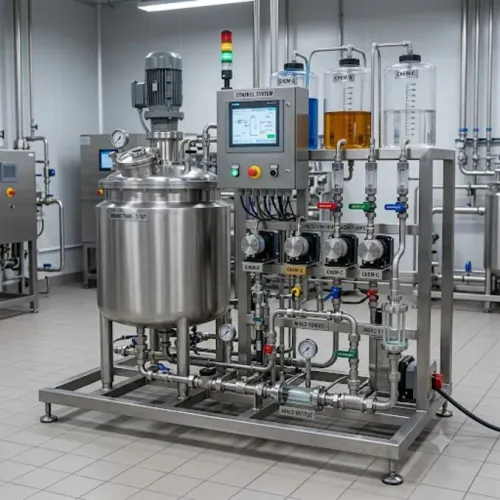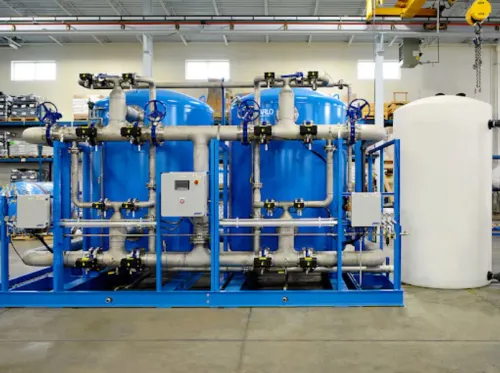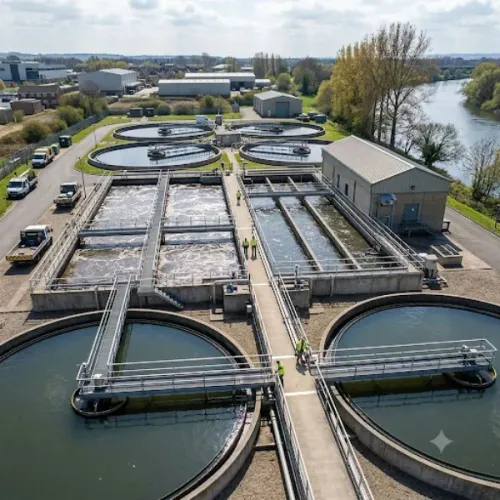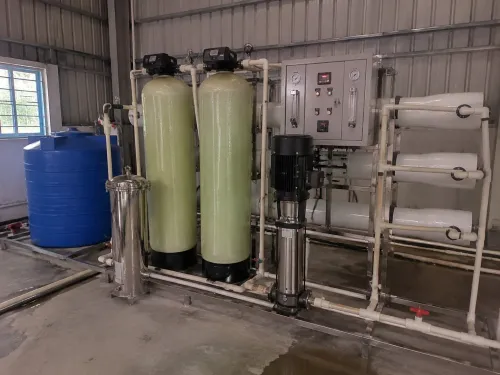
An ETP decision starts with the wastewater your process actually produces, not with a catalogue capacity or a standard treatment sequence. By the end, you will be able to identify the relevant pollutant loads, separate streams, test treatment options, check Indian approvals, and turn discharge conditions into a practical design and operating brief.
Key takeaways
- Map every production and cleaning stream before sizing the ETP.
- Test flow, pH, COD, BOD, TSS, salts, oil and toxic compounds by batch.
- Confirm discharge limits, consent conditions and the approved disposal route.
- Compare guarantees, pilot data, energy use, sludge handling and lifecycle cost.
Which industries produce effluent that needs specialised treatment?
Map each production step to its pollutants before comparing equipment. A sector label is only a starting hypothesis: textile dyeing effluent and pharmaceutical wastewater can behave very differently between batches, while dairy effluent treatment plant requirements depend on cleaning cycles and production volume.
| Industry | Likely pollutants |
|---|---|
| Textile dyeing | Colour, fibres, high COD, salts, surfactants, variable pH |
| Pharmaceutical manufacturing | Solvents, active pharmaceutical ingredients, toxic or inhibitory compounds, high COD, batch shock loads |
| Food processing and dairies | Biodegradable BOD, fats, oil and grease, suspended solids, cleaning chemicals, nutrients, fluctuating pH |
| Distilleries | Very high organic load, dark colour, acidity, difficult-to-treat spent wash |
| Electroplating | Chromium, nickel, copper, zinc, cyanide, acids, alkalis, high dissolved solids |
| Chemical manufacturing | Solvents, toxic organics, salts, extreme pH and temperature |
| Paper mills | Fibres, colour, suspended solids, lignin-related COD, bleaching residues |
| Tanneries | Sulphide, chromium, chloride, colour, proteins, grease, high organic load |
| Engineering units | Oily wastewater, metal-bearing rinse water, phosphates, detergents, suspended solids |
For food processing wastewater and every other stream, request the process flow diagram, chemical inventory, batch schedule, cleaning procedure and production forecast. Use them to check tank volume, biological treatability, chemical dosing and sludge quantity; never infer those values from the industry name alone.
Which wastewater streams belong in the ETP design basis?
Keep process effluent separate from domestic sewage, cooling-water blowdown, stormwater and hazardous liquid waste before selecting treatment equipment. Domestic sewage follows a different biological and regulatory basis; stormwater segregation prevents process-load dilution and plant flooding; cooling-water blowdown adds conductivity, dissolved salts and treatment chemicals.
Concentrated solvents, cyanide, sulphide, oils, acids, alkalis and contaminated cleaning liquids need source storage, pretreatment or authorised disposal.
| Stream | Design implication | Typical action |
|---|---|---|
| Process effluent | Variable pollutants and production loads | Equalisation and treatment |
| Domestic sewage | Sanitary organics and microbiological load | Separate sewage system or dedicated treatment |
| Cooling-water blowdown | Conductivity, salts and chemicals | Assess reuse, softening or specific removal |
| Stormwater | Intermittent high hydraulic flow | Keep separate from the ETP |
| Hazardous liquid waste | Toxic or concentrated contaminants | Store, pretreat or send to an authorised facility |
Build a wastewater mass balance in m3/day. Calculate each important pollutant load in kg/day as flow multiplied by concentration, and record average flow, peak hourly flow, shift changes, batch discharge, startup, shutdown, cleaning cycles and seasonal production.
Do not rely on one grab sample. Use production-linked grabs to capture short pH, solvent, cyanide, sulphide, temperature or toxicity peaks, then use flow-proportional wastewater composite sampling across shifts and cleaning cycles.
Test pH, temperature, BOD, COD, TSS, oil and grease, colour, conductivity, TDS, ammonia, chloride, sulphate, heavy metals, toxicity and microbiological parameters. Repeat under representative seasonal conditions, and confirm laboratory methods, preservation, sampling points and chain of custody before using results for design.
What disposal route and approval conditions will govern treatment?
Choose the receiving route before finalising the ETP: sewer, surface water, land application, internal reuse or evaporation each sets different limits, monitoring duties and failure consequences.
| Route | Main controls | Critical question |
|---|---|---|
| Sewer | Trade-effluent limits, flow and pollutant loads | Does the sewer authority accept every contaminant? |
| Surface water | pH, BOD, COD, TSS, oil and grease, temperature, colour, metals, nutrients, toxicity and residual disinfectant | Are concentration and mass limits both met? |
| Land application | Soil loading, salinity, metals, nutrients and application rate | Will the land and crop tolerate the wastewater? |
| Internal reuse | TDS, hardness, silica, microbiology and specific contaminants | Where will reject or concentrate go? |
| Evaporation | Energy use, vapour controls and concentrated residue | Is the residue legally stored or disposed of? |
A sewer connection needs a trade effluent agreement in India and local pretreatment limits, not merely low final BOD and COD. For surface-water discharge, check flow restrictions, pollutant mass limits and online monitoring requirements imposed by the State Pollution Control Board.
Obtain Consent to Establish before construction and Consent to Operate before commissioning. Read each consent order line by line, then convert every condition into:
- A treatment target and sampling location
- An alarm value and corrective action
- A testing frequency and calibration record
- A sludge classification, storage, transport and disposal route
Reuse for cooling, boilers, process water or washing usually demands tighter treatment than discharge. Reverse osmosis reject, evaporation concentrate and treatment sludge still need lawful routes. Compare source reduction, segregated drains, equalisation and partial treatment, a common effluent treatment plant, authorised off-site disposal and zero-liquid-discharge systems; the cheapest installation is not automatically the lowest-compliance-cost option.
What technical and operating risks should the plant design address?
Treatability evidence, not a high BOD-to-COD ratio, should decide whether biological treatment will work.
1. Require a wastewater treatability study for difficult or variable effluent. Use respirometry, biodegradability tests, jar tests and bench or pilot trials to expose inhibition from metals, biocides, solvents, salinity, pH extremes and shock loads.
2. Base equalisation tank design on batch discharge, shift changes, cleaning cycles and upset storage, not average daily flow alone. Provide mixing, level control, odour and septicity control, overflow protection and enough working volume to prevent a sudden load reaching biology.
3. Segregate concentrated, toxic, oily, solvent-bearing and high-temperature streams before the biological stage. Source storage or pretreatment protects microorganisms; combining incompatible streams in one tank does not.
4. Treat chemical precipitation as a transfer of metals into sludge, not their destruction. Define dewatering behaviour, quantity, storage, transport, classification and industrial ETP sludge disposal before commissioning, including an accepting disposal or recovery facility.
5. Protect people and equipment around sulphide-bearing wastewater, sludge and biological units with ventilation, hydrogen-sulphide detection, chemical compatibility checks and confined-space controls. Specify coatings, gaskets, wetted materials and corrosion allowances for chlorides, sulphides, solvents, oxidants, temperature cycling and wet-dry zones.
6. Calculate aeration energy consumption from actual oxygen-transfer performance, blower turndown, dissolved-oxygen control and diffuser fouling allowance. Include parallel equipment or trains, isolation valves, emergency storage, standby power where required and a defined no-bypass response to high level or off-specification effluent.
How should you compare proposals before approving an ETP?
Approve an ETP only after every bidder prices the same ETP design basis, not merely the largest tank or highest m3/day rating. For an industrial wastewater treatment proposal comparison, issue one brief containing:
- Flow in m3/day and peak hourly flow
- Pollutant loads in kg/day, stream-segregation drawing and production scenarios
- Discharge route, consent limits, sampling results and required reuse quality
| Compare | Require from each bidder | Reject if missing |
|---|---|---|
| Capacity | Normal, peak-shift, startup, shutdown, cleaning and upset cases | Only nominal m3/day or m3/h |
| Performance | Guaranteed outlet values and sampling conditions | “Meets standards” without figures |
| ETP operating cost | Chemicals, sludge, blower power, membrane or media replacement, operator hours, laboratory testing and preventive maintenance | Capital price without exclusions |
| Controls | P&ID with sample points, online pH, flow, dissolved oxygen, conductivity, level, and justified ammonia or other analysers | Instruments without purpose or location |
Require calibration frequency, cleaning access and manual laboratory verification for online effluent monitoring; fouling and drift can hide a failing process. Ask how off-specification effluent is isolated without an uncontrolled bypass, and how maintenance continues through standby pumps or trains, isolation valves, emergency storage and standby power.
Terra Ecosystems Pvt Ltd belongs in the comparison when it converts this information into a site-specific design, approval support and operating plan. Score evidence, service response and whole-life cost rather than choosing the cheapest or largest plant.
Related product
 | EFFLUENT TREATMENT PLANT The Effluent Treatment Plant (ETP) is an environmental facility that removes pollution from the water released during the industrial process. View product → |
Frequently asked questions
Which industries need specialised effluent treatment?
Industries such as textile dyeing, pharmaceuticals, dairy, chemicals, food processing, metal finishing and paper can require specialised treatment because their pollutants and batch variability differ.
Which wastewater streams should the ETP design include?
Include production wastewater, equipment and floor washings, clean-in-place or chemical cleaning streams, utility blowdown, laboratory drains and other contaminated water that will enter the treatment system.
What approvals and disposal conditions govern an ETP?
The design must match the approved discharge route and conditions, including consent limits for discharge to a sewer, surface water, land or a common effluent treatment plant, plus sludge disposal requirements.
What risks should an ETP design address?
Address fluctuating flow and pollutant loads, shock loads, incompatible chemicals, inadequate equalisation, biological toxicity, sludge generation, odour, corrosion, power failure and operator safety.
How should you compare ETP proposals?
Compare each proposal against the same design basis, guaranteed outlet limits, treatment process, pilot or treatability evidence, chemical and energy demand, sludge plan, automation, maintenance access and total lifecycle cost.