A facility can send domestic sewage, process wastewater, or both into its drainage system, and the wrong treatment train can leave pollutants untreated, damage biological processes, or breach the receiving system’s permit. By the end, you will be able to classify your wastewater, estimate the loads a plant must handle, compare treatment stages, and specify performance and operating information before approving a design.
Key takeaways
- Separate domestic sewage from industrial effluent before selecting treatment.
- Size the plant from measured flow and pollutant loads, not occupancy alone.
- Use equalisation tanks to absorb peak flows and changing industrial loads.
- Compare treated-water limits, residuals, maintenance access, and operator workload.
What enters the plant: sewage, industrial effluent, or both?
A hotel, office, hospital, school, warehouse, factory, or mixed-use site can send wastewater through internal gravity drains, pumping stations, and separate collection headers before it reaches treatment. Toilets, washrooms, kitchens, and similar fixtures produce commercial sewage: domestic sewage made mainly of biodegradable organic matter, suspended solids, nutrients, and pathogens.
Production lines create industrial effluent, which can contain oil, solvents, metals, dyes, high salinity, extreme pH, toxic compounds, or other process-specific pollutants.
Domestic sewage pipeline separation keeps these streams controllable. Combining them can dilute industrial test results and expose biological treatment to a toxic shock; a batch of solvent, acidic liquor, or concentrated metal-bearing wastewater can suppress organisms in an STP.
| Arrangement | What enters the plant | When it applies |
|---|---|---|
| STP | Domestic sewage from sanitary fixtures and kitchens | Offices, schools, hotels, hospitals, and residential portions |
| ETP | Segregated process wastewater | Factories, laboratories, workshops, laundries, and other pollutant-generating operations |
| STP and ETP | Domestic sewage and pretreated industrial effluent in controlled systems | Mixed-use sites where process pollutants could damage sewage treatment |
Before selecting an STP or ETP, confirm:
- Send industrial streams to an ETP when oil, metals, solvents, dyes, extreme pH, salinity, or toxicity exceeds the biological process’s safe range.
- Use both systems when domestic sewage needs biological treatment while process wastewater requires neutralisation, oil separation, precipitation, or other pretreatment.
- A municipal sewer discharge can trigger POTW pretreatment rules, local limits, slug-discharge controls, categorical standards, sampling, and reporting duties. Prohibited discharges include fire or explosion hazards, obstructions, corrosive damage, pass-through, and interference.
- Direct discharge to a river, lake, wetland, or other surface water normally requires NPDES permit coverage; sewer-discharge compliance does not prove direct-discharge compliance.
How to size flow, pollutant load, and equalisation capacity
Average daily water consumption cannot set the STP design flow by itself. Assemble occupancy, population, shift patterns, hotel or hospital activity, school schedules, production records, water-use meters, cleaning cycles, infiltration, peak hourly flow, batch discharges, and planned expansion before selecting pumps, tanks, and biological capacity.
Collect inlet samples for:
- BOD5, COD, TSS, pH, oil and grease, ammonia, total nitrogen, total phosphorus, salinity, and temperature
- Solvents, dyes, metals, PFAS, and other industry-specific contaminants
Calculate pollutant mass loading as concentration multiplied by flow. Two sites with the same daily flow can require different equipment because their organic, nitrogen, solids, and toxic loads differ.
| Site | Same daily flow, different risk | Sizing consequence |
|---|---|---|
| Office complex | Low-strength domestic sewage with predictable occupancy | Hydraulic capacity and normal biological treatment control the STP design flow |
| Food factory | High BOD, COD, grease, and cleaning-cycle peaks | Pretreatment, stronger aeration, and larger equalisation tank sizing become important |
| Metal-finishing unit | Lower flow with metals, acidity, or toxic chemicals | Segregation and chemical treatment can control design more than hydraulic volume |
An equalisation tank is risk-control equipment, not a replacement for treatment. It dampens hydraulic, pH, and organic-load shocks before biological or chemical processes, but it needs mixing, level control, odour management, and enough residence time. An undersized or poorly mixed tank settles solids, then releases a concentrated slug when emptied.
Use measured peak hourly flow and batch timing to set tank volume, transfer-pump capacity, and controlled feed rates. Check future expansion now; a full tank on day one leaves no operating buffer.
What happens inside the treatment train
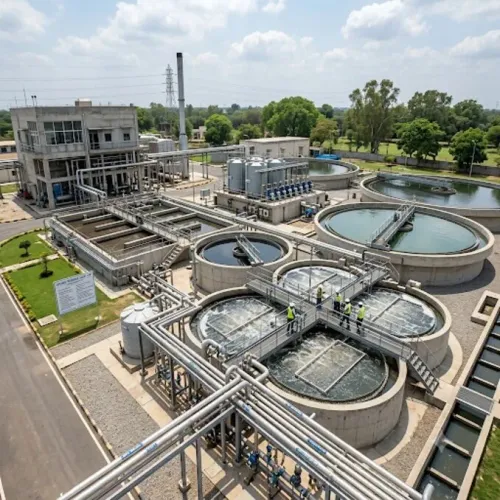
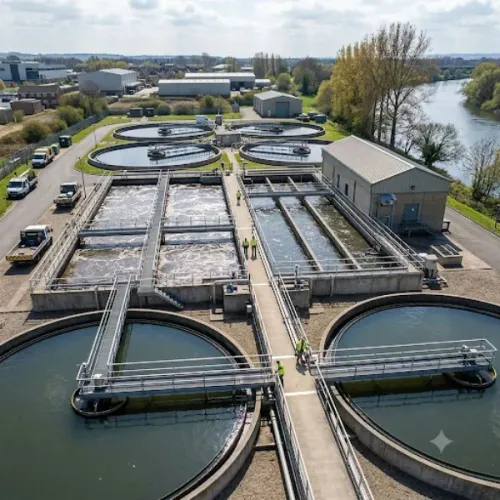
Screening and grit removal capture rags, plastics, sand, and other settleable solids before pumps and biological treatment. Equalisation then mixes and buffers hydraulic, pH, and organic-load shocks; poor mixing allows solids to settle and later releases a concentrated slug. BOD5 measures five-day oxygen demand, while COD measures chemically oxidisable material by another test.
A high COD-to-BOD ratio indicates slowly biodegradable or refractory material, so COD alone cannot size biology.
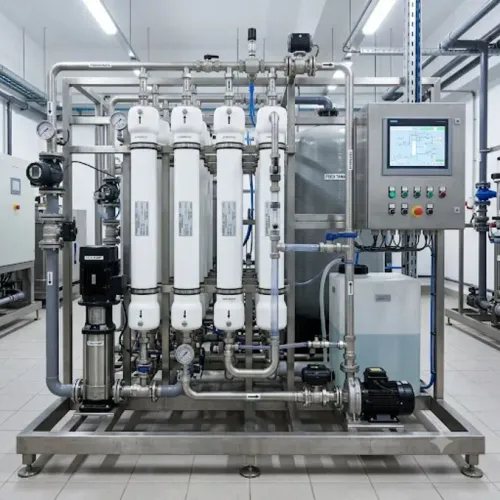
Activated sludge grows suspended organisms in aerated tanks. MBBR keeps organisms on moving carriers, while an SBR combines aeration and clarification in timed batches. An MBR replaces final gravity clarification with membranes, producing low-solids, low-turbidity water in less space but demanding reliable pretreatment, fouling control, energy, and chemical cleaning.
| Process | Practical role | Main limitation |
|---|---|---|
| Activated sludge | Continuous carbon and ammonia removal | Needs clarifier and sufficient solids-retention time |
| MBBR | Adds attached growth for variable loads | Carrier retention and aeration require control |
| SBR | Batches aeration, settling, and decanting | Needs level control and cycle capacity |
| MBR | Membrane separation after biological treatment | Grease and fibres foul membranes |
Nitrification needs established nitrifying organisms, dissolved oxygen, alkalinity, and adequate solids-retention time. Toxic compounds, cold wastewater, low alkalinity, or shock loads can stop ammonia removal even when BOD removal continues. Clarification and tertiary filtration remove remaining solids; ultraviolet disinfection inactivates organisms without residual, while chlorination leaves a measurable residual. Sludge handling concentrates the captured pollutants.
- Use gravity separation for free oil and large solids; break stable emulsions chemically or use dissolved-air flotation.
- Treat dissolved contaminants with precipitation, adsorption, or source segregation; metals move into sludge rather than disappearing.
- Evaluate PFAS at the source and test activated carbon, ion exchange, membranes, or other residual-management options.
How to judge treated-water performance and residuals
Reject any design that gives only a daily flow figure. Compare inlet concentration, outlet concentration, removal efficiency, hydraulic capacity, peak-flow handling, sludge production, power consumption, chemical consumption, odour control, and the quality required at the final discharge or reuse point.
1. Request a pollutant-by-pollutant mass balance for BOD5, COD, TSS, ammonia, nitrogen, phosphorus, oil and grease, metals, salinity, and site-specific toxic compounds. Two plants with the same flow can produce different results when their mass loads differ.
2. Match each guaranteed outlet concentration to its destination. A plant designed for municipal sewer discharge cannot automatically meet direct-discharge limits for a river, lake, wetland, or other surface water; direct discharge normally requires NPDES permit coverage, with different pollutants, sampling points, and reporting duties.
3. Make sampling part of the process design. Use flow-proportional composite samples to represent average loading, but use grab samples for pH, temperature, cyanide, phenols, oil and grease, and volatile compounds when compositing could change the measured result.
4. Ask for a sludge estimate, dewatering and disposal route, and the assumptions behind both. Dewatering reduces haulage volume; it does not remove metals or persistent organics. Metals transferred into sludge through precipitation can require controlled disposal, while beneficial use depends on sludge characteristics.
5. Require the power basis, chemical consumption, odour-control method, cleaning schedule, peak-flow calculation, sampling plan, guaranteed outlet values, and residual-disposal assumptions in writing. When comparing a proposal from Terra Ecosystems Pvt Ltd with alternatives, use those documents rather than equipment names as the comparison sheet.
Related products
 | SEWAGE TREATMENT PLANT We has many years of Sewage Treatment Plant Solution experience in the design, construction, and operation of wastewater treatment plants, we are... View product → |
 | EFFLUENT TREATMENT PLANT The Effluent Treatment Plant (ETP) is an environmental facility that removes pollution from the water released during the industrial process. View product → |
How to select a treatment arrangement that remains operable
Choose an STP for domestic sewage, an ETP for industrial process wastewater, or STP and ETP integration when controlled connections can be monitored. Keep pipelines separate until sampling proves that mixing will not dilute results or expose biology to toxic shocks.
1. Use anaerobic treatment for high-strength, readily biodegradable wastewater when lower aeration demand and biogas production justify slower start-up. Do not use it alone where temperature variation, toxic shocks, nutrient imbalance, or stringent outlet limits require dependable downstream aerobic treatment or polishing.
2. Keep oil, grease, emulsions, and fibrous solids out of an MBR. Screening, segregation, gravity separation, chemical breaking, or dissolved-air flotation provide MBR fouling control; a larger membrane will not correct poor pretreatment.
3. Mix the equalisation tank without grinding solids into an unrecoverable slug, control its level, and investigate every sudden change in flow, pH, COD, ammonia, or conductivity. Protect nitrification with adequate alkalinity, dissolved oxygen, and solids-retention time; carbonaceous BOD removal does not prove ammonia removal.
4. Block discharges that create fire, explosion, obstruction, corrosion, pass-through, or interference hazards. A discharge below pH 5.0 is generally prohibited unless the receiving POTW is designed for it, and local limits, slug-discharge controls, categorical standards, or NPDES conditions can be stricter.
5. Before handover, verify separate pipelines, calibrate flow and level instruments, establish sampling points, record batch events, trend pH and pollutant load, train operators, inspect sludge handling, and match every outlet to its sewer-use or NPDES obligation. These records anchor stable wastewater plant operation.
Frequently asked questions
What is the difference between commercial sewage and industrial effluent?
Commercial sewage comes from toilets, washrooms, kitchens, and similar fixtures. Industrial effluent comes from manufacturing or process activities and can contain chemicals, oils, metals, high salts, or unusual organic loads.
How do you size a sewage treatment plant?
Use measured average and peak flow, pollutant loads such as BOD, COD, TSS, nitrogen, phosphorus, oil, and pH, plus equalisation capacity for fluctuating inflows.
What happens inside a sewage treatment plant?
Treatment commonly includes screening, grit removal, equalisation, biological treatment, clarification or membrane separation, tertiary polishing, disinfection, and sludge handling.
How do you judge treated-water performance and residuals?
Compare laboratory results for flow, pH, BOD, COD, TSS, nutrients, pathogens, and any site-specific contaminants with the discharge or reuse limits. Also assess sludge quantity, dewatering, storage, and disposal records.
What makes a treatment arrangement operable?
Choose equipment with accessible screens, pumps, blowers, instruments, sampling points, bypass controls, spare capacity, clear maintenance procedures, and a workload your operators can sustain.
Related products
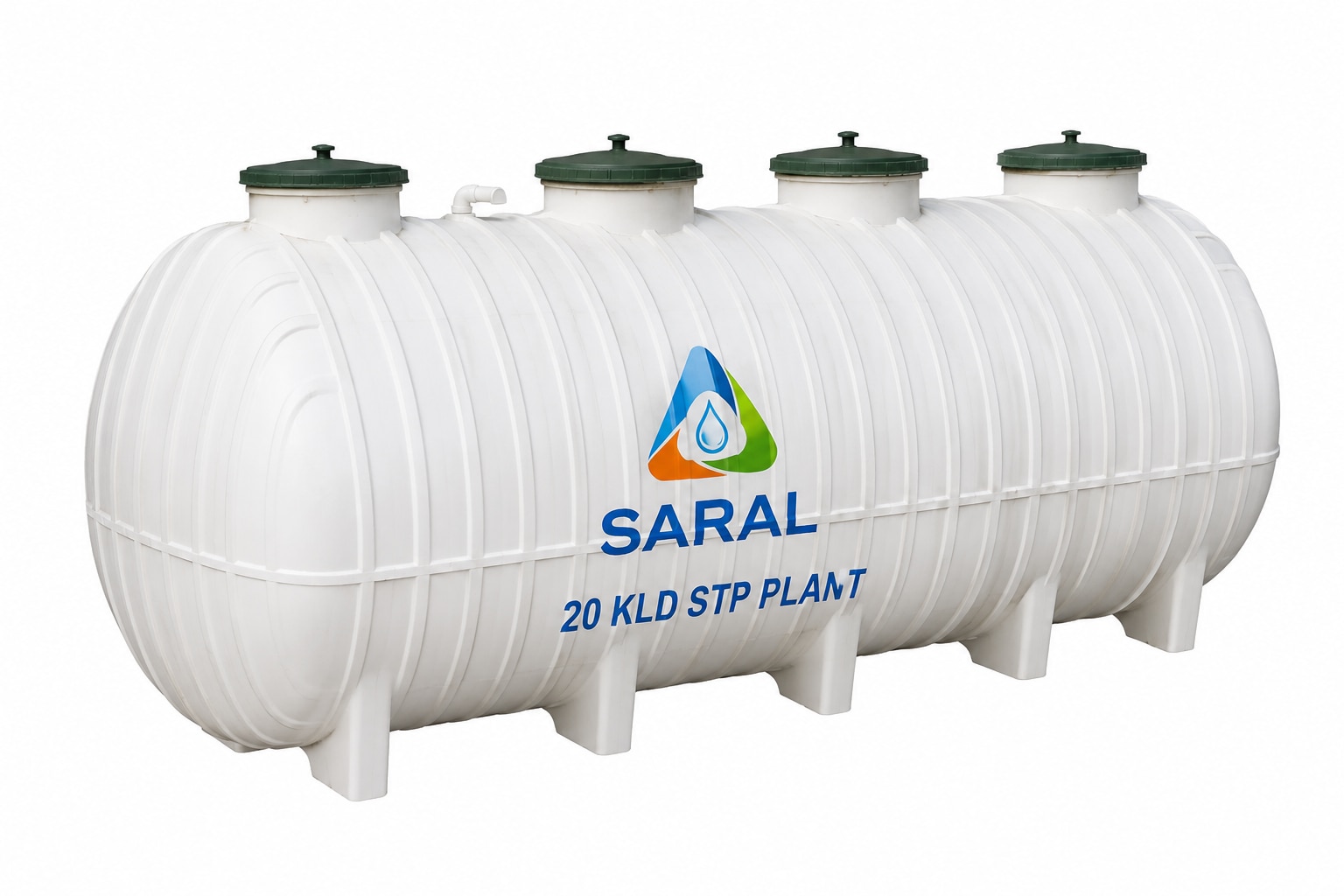 | PACKAGED SEWAGE TREATMENT PLANT PACKAGED SEWAGE TREATMENT PLANT SARALTM FRP STP is a prefabricated, decentralized onsite sewage treatment system designed in accordance with CPHEEO guidelines for residential,... View product → |
 | CLARIFIER SYSTEM Clarifiers are required where ever the Suspended solids in raw/waste water are higher in concentration. View product → |
 | CHEMICAL MIXING AND DOSING SYSTEM CHEMICAL MIXING AND DOSING SYSTEM Chemical dosing is the adding of chemicals into water/fluid or sludge to achieve required conditioning. View product → |