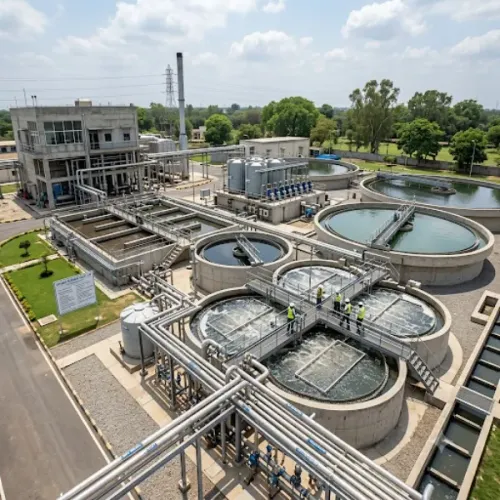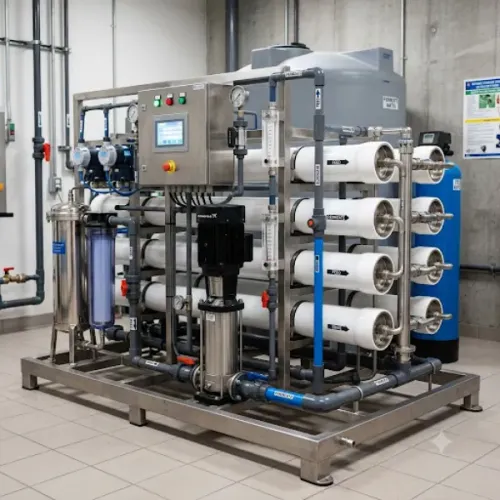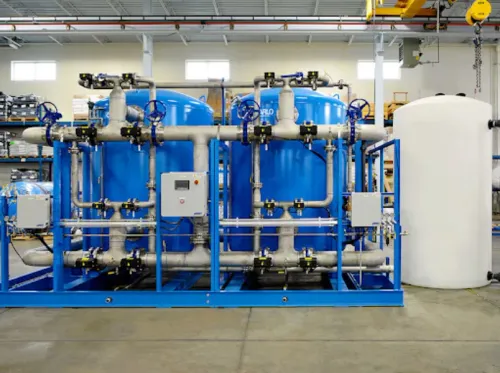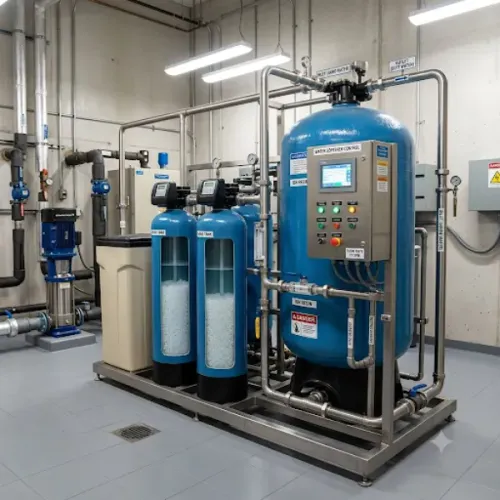
Industrial wastewater is rarely uniform. Its characteristics depend on raw materials, manufacturing processes, cleaning practices, chemicals, production schedules, and water consumption. An existing Effluent Treatment Plant can therefore become inadequate when industrial operations change, even if the original system was correctly designed.
Manufacturing facilities in Nagpur considering an ETP upgrade should begin with a structured assessment rather than immediately adding tanks or equipment.
Compare Current Effluent With the Original Design
The first step is determining whether present conditions still match the design basis.
Production may have increased since commissioning. New chemicals may have been introduced. Additional processes may discharge wastewater into the ETP. Water-conservation measures can even reduce wastewater volume while increasing pollutant concentration.
Review current flow and characteristics against the original design data.
Check Hydraulic Capacity
Measure average and peak effluent flows.
An Effluent Treatment Plant receiving substantially more wastewater than intended may experience inadequate retention time, hydraulic overloading, solids carryover, and unstable downstream performance.
Flow equalization can become particularly important where discharge varies sharply between production shifts.
Identify the Pollutant Load
Volume alone does not determine treatment difficulty.
Important parameters can include pH, suspended solids, dissolved solids, COD, BOD, oil and grease, metals, colour, and industry-specific contaminants.
Testing should reflect actual operating conditions. Composite sampling or multiple samples may provide a more representative picture when wastewater quality changes during the day.
Review Every Treatment Stage
An upgrade assessment should examine the complete process.
Useful checks include:
- Screening efficiency
- Equalization performance
- pH correction
- Chemical dosing
- Coagulation and flocculation
- Primary settling
- Biological treatment where applicable
- Clarification
- Sludge handling
- Tertiary filtration
- Treated-water reuse systems
Improving one stage without identifying the true bottleneck can simply transfer the problem elsewhere.
Examine Chemical Consumption
Increasing chemical dosage is sometimes used as a quick response to declining performance.
This can increase sludge production and operating cost without solving the underlying issue. Dosing should be based on wastewater characteristics and process testing rather than repeatedly increasing chemical quantities.
Consider Future Production Plans
An upgrade should not address only today's load.
If production expansion is planned, the expected future wastewater flow and pollutant load should be considered. Modular additions may be appropriate in some projects, while other facilities may require changes to the treatment process itself.
Include Sludge in the Upgrade Study
Treatment produces residual solids that need handling.
Additional chemical treatment can increase sludge volume. Higher biological loading may affect biological sludge generation. Thickening, dewatering, storage, handling, and applicable disposal arrangements should therefore be reviewed alongside liquid treatment.
Terra Eco Systems Pvt Ltd supports water, wastewater, and pollution-control requirements for industrial applications where existing systems may need optimization, modification, or capacity enhancement.
Nagpur's industrial operations serve diverse sectors, and wastewater conditions can differ substantially between facilities. Maharashtra-based organizations must also align treatment operations with the environmental requirements applicable to their particular activity and discharge arrangement.
A successful ETP upgrade starts with evidence. Current flow measurements, wastewater analysis, equipment condition, process performance, operating records, production plans, and treated-water objectives reveal where investment is actually required. That approach helps businesses distinguish between a maintenance problem, an operational problem, a capacity constraint, and a genuine need for process modification.
Keywords