
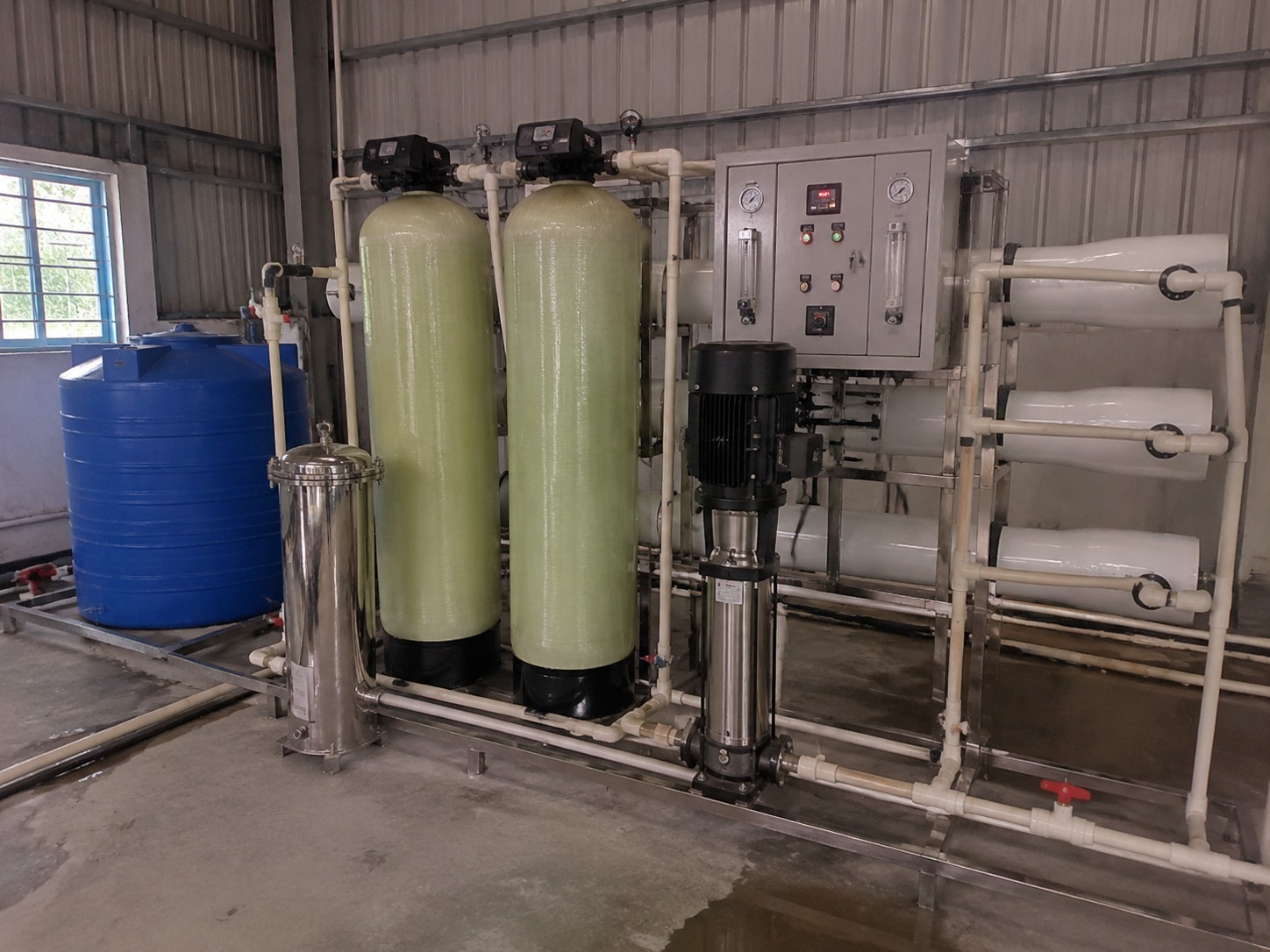
Industries that require low-mineral water often need treatment beyond conventional filtration and softening. A DM Plant is designed to reduce dissolved ionic impurities and can be used where process water, boiler-related applications, manufacturing operations, laboratories, and other systems require controlled water quality.
Selecting the right system for a Nagpur facility requires more than specifying litres per hour.
Define the Required Water Quality
Start with the end use.
The required conductivity, silica level, hardness, and other relevant parameters depend on the application. A system intended for general process use may have different requirements from one serving a demanding boiler or specialized manufacturing process.
This product-water specification should guide the treatment design.
Analyze the Feed Water
Demineralization performance depends heavily on the ionic load entering the plant.
Feed-water testing can include:
- Total dissolved solids
- Conductivity
- Hardness
- Alkalinity
- Silica
- Chlorides
- Sulphates
- Iron
- pH
Other parameters may be relevant depending on the water source.
Testing also helps estimate resin loading and regeneration requirements.
Understand the Treatment Configuration
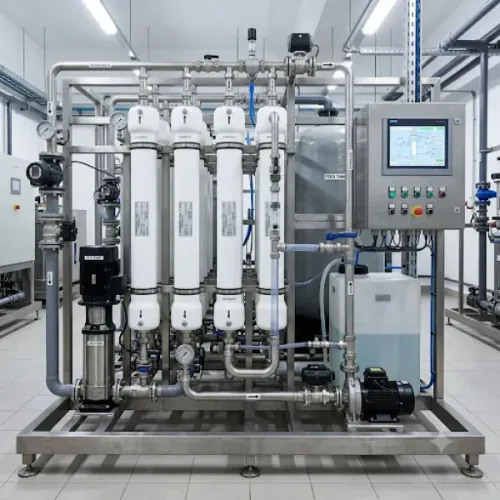
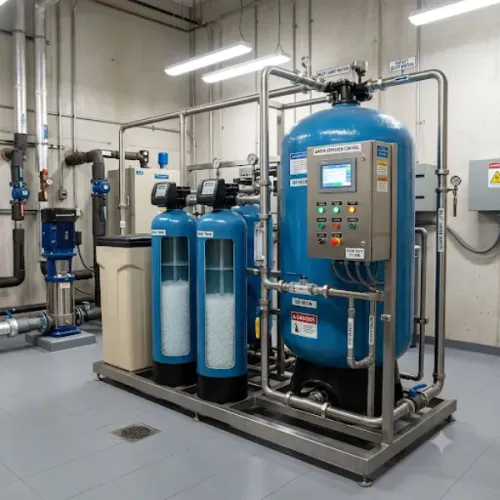
A conventional ion-exchange DM Plant can use cation and anion exchange stages to remove positively and negatively charged ions.
Some applications may incorporate additional treatment such as degassing or mixed-bed polishing where a higher product-water quality is needed.
The appropriate configuration depends on feed-water chemistry and final quality requirements.
Evaluate Pretreatment
Ion-exchange resin performs better when troublesome contaminants are controlled upstream.
Suspended solids, iron, organic matter, hardness-related conditions, and other contaminants can affect treatment performance. Depending on feed quality, filtration and other pretreatment processes may therefore be required.
A supplier should be able to explain why each proposed pretreatment stage is necessary.
Calculate Operating Requirements
Purchase price is only one part of DM plant selection.
Facilities should understand expected regeneration frequency, chemical consumption, rinse-water requirements, waste generation, resin replacement expectations, operator involvement, and maintenance needs.
Chemical storage and handling arrangements also need appropriate planning.
A lower initial equipment price may not represent lower lifecycle cost if regeneration is frequent or the system operates inefficiently.
Ask About Instrumentation
Conductivity monitoring is particularly useful because it helps operators track treated-water quality and identify exhaustion of ion-exchange capacity.
Depending on system complexity, additional instrumentation and automation may improve operating control.
The level of automation should match the facility's operating resources rather than adding complexity without a clear benefit.
Consider Future Water Demand
Nagpur's industrial facilities can expand production or add utilities over time. If additional demand is reasonably expected, future requirements should be discussed during system planning.
Terra Eco Systems Pvt Ltd provides industrial water and wastewater treatment solutions where demineralization can be considered alongside filtration, softening, reverse osmosis, and other technologies.
For organizations in Maharashtra, selecting a DM system should be based on a complete water balance and actual process needs. Feed-water quality, product specification, hourly demand, daily consumption, operating pattern, regeneration requirements, chemical handling, wastewater generation, and future expansion all influence the final design.
A technically appropriate DM system is one that consistently produces the required water quality while remaining practical to operate and maintain. Asking for these details before procurement gives industrial buyers a far stronger basis for comparing proposals than capacity and price alone.