Suspended particles do not all behave alike: sand settles quickly, colloids can remain dispersed for hours, and dissolved substances pass through a granular bed. By the end, you will be able to trace how water moves through a pressure filter, identify when pretreatment is necessary, and compare the system with other filtration choices.
Key takeaways
- Use pressure filtration for suspended particles, not dissolved salts or hardness.
- Select media by particle size, turbidity, flow rate, and target water quality.
- Track pressure loss to identify loading and schedule backwashing.
- Place filtration after coagulation or clarification when fine particles need removal.
How a pressure vessel captures suspended particles
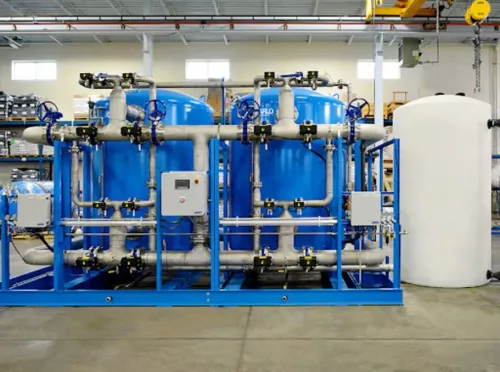
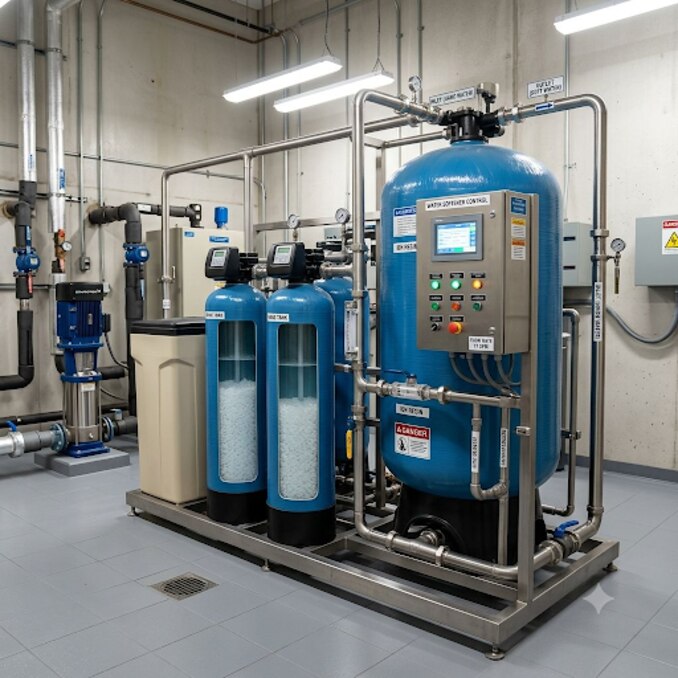
A pressure filtration system forces water through a deep bed of granular media inside a sealed vessel. In a downflow design, an inlet distributor spreads the pressurised flow across the bed, while an underdrain collects the treated water below it.
Suspended impurities in water do not encounter a single sieve with one fixed opening. As water moves through the irregular spaces between media grains, particles are removed through several mechanisms:
- Straining holds relatively large particles at narrow openings between grains.
- Interception makes particles following the water path touch a media grain.
- Sedimentation lets denser particles settle into deeper pore spaces where flow slows.
- Attachment makes particles adhere to media surfaces through physical forces and water chemistry.
This layered action produces suspended solids removal throughout the media depth, not only at the surface. A granular media filter therefore has distributed performance that depends on grain size, bed depth, filtration rate, particle shape and density, and the water’s chemistry. A micrometre figure alone is not a universal removal guarantee.
As particles accumulate, the bed offers greater resistance and the vessel’s differential pressure rises. Continue beyond the specified pressure loss and flow can fall, particles can break through, or the bed can channel around blocked areas.
Backwashing reverses the flow, expands or agitates the media, and carries trapped solids to waste; it does not make the vessel a disinfection barrier. Bacteria, viruses, and protozoa require validated downstream treatment.
What pressure filtration removes—and what it leaves dissolved
The key question is whether the impurity exists as a particle or as material dissolved in the water. Suspended solids include visible or microscopic particles such as silt, clay, rust, algae, and organic debris. A granular pressure filter captures these through straining, interception, settling within pores, and attachment to media grains.
Colloids in water are much smaller and remain dispersed because electrical charges prevent them from joining into larger particles. Coagulation and flocculation can enlarge colloids into filterable flocs; without that step, a sand bed may remove them inconsistently.
Turbidity is only an optical measure of cloudiness, not a direct measurement of solids concentration or particle size. Therefore, turbidity removal does not prove equal suspended-solids removal or a predictable filter run.
| Water constituent | What it means | Can granular pressure filtration address it? |
|---|---|---|
| Suspended solids | Particles retained by physical and surface-capture mechanisms | Yes, when the bed, rate, and solids load are suitable |
| Colloids | Fine, stable particles that resist settling | Sometimes, especially after coagulation and flocculation |
| Dissolved substances | Salts, dissolved organics, and other molecules or ions | No; use activated carbon, ion exchange, or reverse osmosis as appropriate |
| Colour | Particulate colour or dissolved colour-causing compounds | Particulate colour, yes; dissolved colour, usually no |
| Dissolved iron or manganese | Soluble metal ions that pass through ordinary media | No, unless oxidation first forms precipitates that the filter can retain |
A filter is not a reliable disinfection barrier. Bacteria, viruses, and protozoa require validated disinfection, membrane treatment, or another designed pathogen-control barrier.
Where pressure filtration fits in a complete treatment train
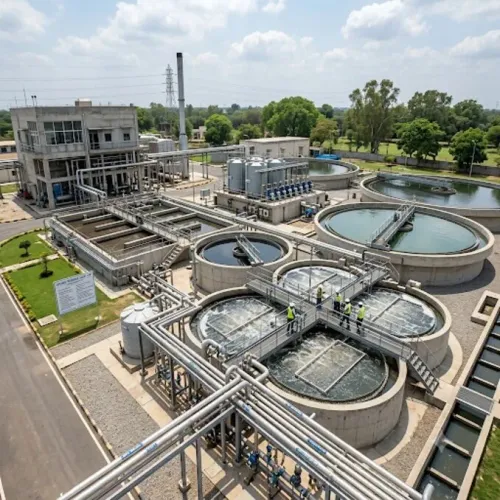
A practical water treatment process sequence moves from coarse solids removal to fine particle control, then to contaminant-specific polishing and pathogen control. Do not send a heavy solids load directly to a pressure vessel; it will develop headloss quickly or discharge turbidity before its pressure limit is reached.
1. Screen the intake to remove leaves, fibres, plastics, and other debris that could foul pumps or block valves.
2. Apply coagulation and flocculation when the water contains colloids or particles that settle poorly. Chemical dosing forms larger flocs that downstream equipment can capture.
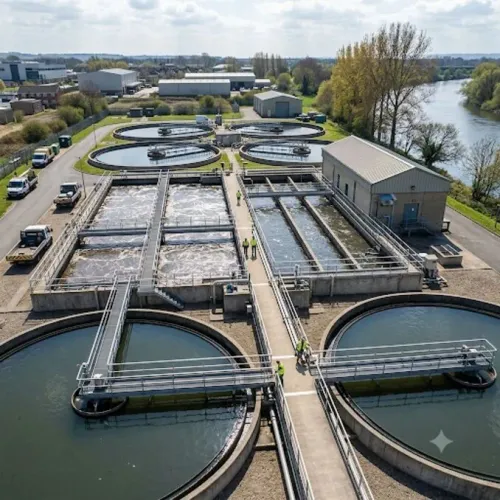
3. Provide clarification before filtration. A settling tank, tube settler, or dissolved-air flotation unit removes the bulk of those flocs and reduces the solids burden reaching the filter.
4. Use pressure filtration for the remaining suspended particles and turbidity. This is pressure filter pretreatment when the next unit is activated carbon, ultraviolet disinfection, or reverse osmosis. Size it from feed solids, flow, filtrate quality, backwash water, waste volume, and disposal limits—not flow alone.
5. Add activated carbon when you need chlorine removal, taste and odour reduction, or adsorption of selected organic compounds. Place carbon before reverse osmosis when chlorine could damage the membrane.
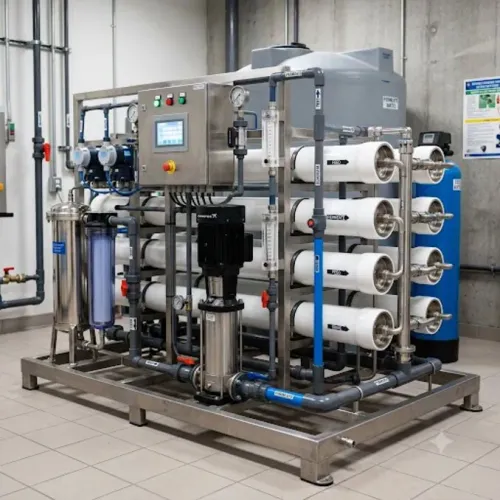
6. Use reverse osmosis for dissolved salts and other contaminants that granular filtration cannot remove. Disinfect after the final particle-removal step, unless a validated process specifies another location; filtration alone is not a reliable barrier for bacteria, viruses, or protozoa. Terminate filter cycles using both differential pressure and filtrate-quality limits.
Choosing media, vessel internals, and operating limits
Choose media from the contaminant, feed solids, required turbidity, and available backwash—not from flow alone. Sand filtration media suits suspended solids after upstream clarification. A multimedia pressure filter places coarser, lighter media above finer layers, increasing solids-holding capacity while limiting rapid surface blinding.
| Media | Select it when | Key sizing or operating caution |
|---|---|---|
| Sand filtration media | Turbidity and suspended particles are the main target | Match grain size, bed depth, and filtration rate; finer media increase pressure loss |
| Activated carbon filter media | You need adsorption of taste, odour, residual oxidant, or selected organic compounds | Size for contact time and contaminant loading; carbon is not a substitute for solids removal |
| Iron and manganese filter media | Dissolved iron or manganese must be oxidised and retained | Confirm pH, oxidant demand, contact time, and media regeneration or cleaning method |
Support gravel holds the bed above the underdrain and prevents media escape. The underdrain must collect evenly without dead zones; the inlet distributor must spread flow without creating a high-velocity channel. Poor distribution causes early turbidity breakthrough even when the average flow looks acceptable.
Size the vessel from these design inputs:
- Peak and normal flow, media depth, grain-size distribution, and allowable pressure-loss
- Feed turbidity and solids concentration, filtrate turbidity limit, and expected cycle length
- Backwash flow, air-scour rate if used, wash-water volume, and waste-disposal capacity
Terra Ecosystems Pvt Ltd can help translate these measurements into vessel internals and controls rather than sizing from nominal flow alone. End a cycle at the specified pressure-loss or turbidity limit, whichever occurs first; air scour must loosen deposits without displacing media or damaging the underdrain.
Related product
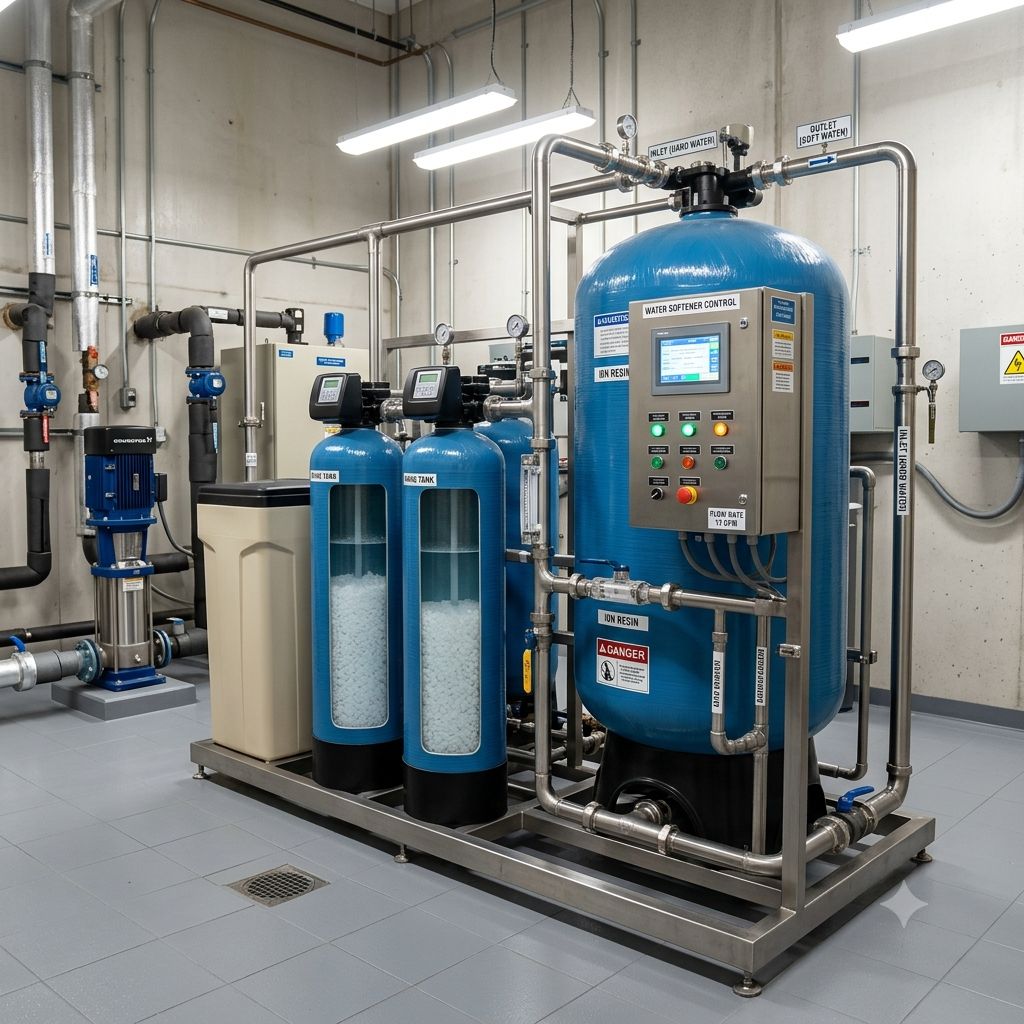 | FILTRATION SYSTEM Pressure filtration can be used for a variety of conventional filtration media; oxidative media for iron and manganese removal; activated carbon... View product → |
Pressure filtration compared with other particle-removal options
Choose a pressure filter when you need continuous suspended-solids removal in a compact, closed vessel and the treated water must leave under pressure. It is a poor choice when the feed carries heavy solids, unstable colloids, or a pathogen-control requirement that the media bed has not been validated to meet.
| Option | What it means | When it applies |
|---|---|---|
| Pressure filter | Granular media removes particles inside a pressurised vessel; backwashing restores capacity. | Best for steady flows, limited space, and direct connection to a pressurised distribution line. |
| Cartridge filter | Replaceable elements provide nominal or absolute particle ratings, but clog as solids load rises. | Better for final polishing, low flow, or protection of sensitive equipment; worse for dirty water and frequent replacement. |
| Bag filter | A disposable or cleanable porous bag captures larger suspended solids. | Useful for intermittent service and simple bag filter comparison; worse when you need long cycles or fine, consistent removal. |
| Gravity rapid sand filter | An open sand bed filters by gravity and needs downstream pumping. | Better for large flows and available land; worse where a closed, compact installation is required. |
| Clarifier | Settling removes flocculated solids before filtration. | Better for high solids loading; use it upstream when a pressure filter would blind quickly. |
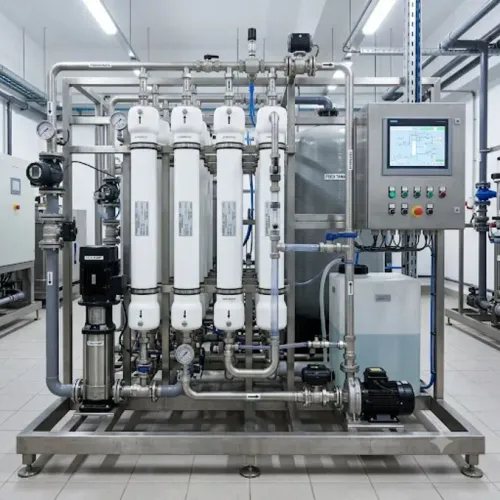
| Ultrafiltration membrane system | A membrane provides a tighter, more defined barrier but demands fouling control and cleaning. | Better for colloids and validated microbial reduction; worse when energy, concentrate handling, and membrane maintenance are unacceptable. |
Do not compare a stated micrometre rating as if it were universal. Media depth, grain size, filtration rate, coagulation, and water chemistry determine performance, while cartridge ratings depend on whether the claim is nominal or absolute.
Frequently asked questions
How does a pressure filtration system capture suspended particles?
Pressurised water flows through a granular media bed, where particles are retained by straining, interception, and attachment. An inlet distributor spreads flow, and an underdrain collects filtered water.
What does pressure filtration remove from water?
It removes suspended solids and turbidity when the media and operating conditions suit the particle load. It does not remove dissolved salts, hardness, or other substances that pass through the media in dissolved form.
Where does pressure filtration fit in a treatment train?
It can follow coagulation and clarification to polish water after larger solids have been removed. It can also serve as pretreatment before disinfection, membranes, or other processes that need lower suspended-solid loads.
How do you choose pressure-filter media and operating limits?
Match media size and depth to particle size, turbidity, flow rate, and required water quality. Check vessel pressure rating, design flow, bed depth, backwash flow, and allowable pressure loss before operation.