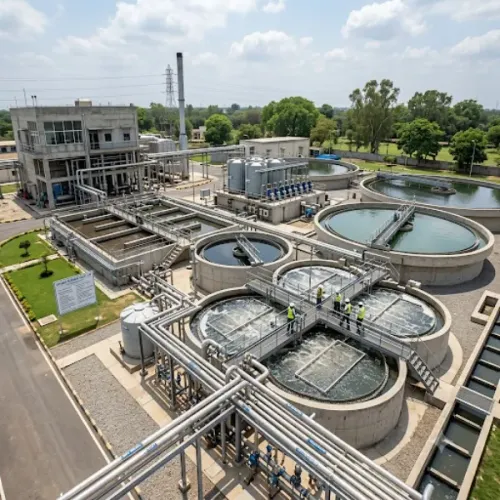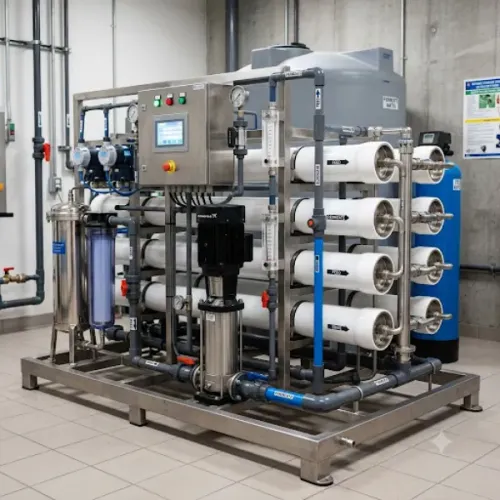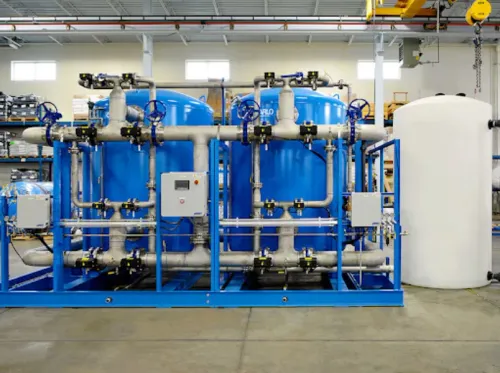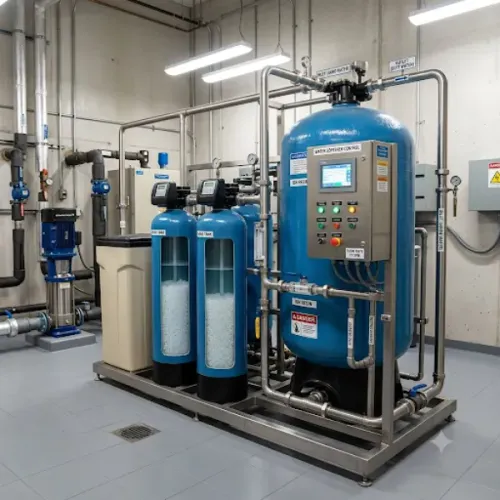
Modern water-treatment systems often need to remove very fine suspended matter that conventional settling or basic filtration may not consistently address. An Ultrafiltration System uses membrane technology to create a physical separation barrier and is widely considered for industrial water treatment, wastewater polishing, and pretreatment applications.
For facilities in Nagpur, ultrafiltration can be particularly relevant when stable feed-water quality is needed before a sensitive downstream process.
What Ultrafiltration Removes
Ultrafiltration uses membranes with very small pores. Depending on membrane characteristics and operating conditions, the process can retain suspended solids, colloidal particles, and many microorganisms while allowing water and smaller dissolved substances to pass through.
This distinction is important.
UF is highly effective for particle separation, but it is not primarily intended to remove dissolved salts in the same manner as reverse osmosis.
How the Membrane Process Operates
Feed water is supplied to the membrane system at controlled operating conditions. Water passing through the membrane becomes permeate, while retained contaminants are periodically removed through backwashing, flushing, or chemical cleaning procedures.
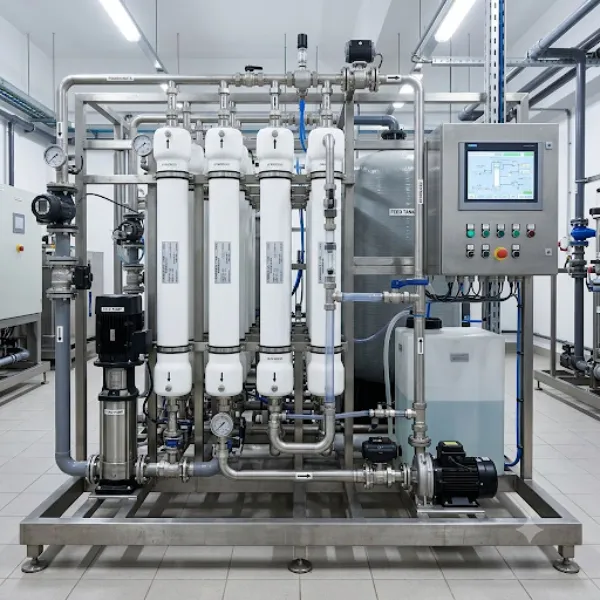
A typical UF installation may incorporate:
- Feed pumps
- Pretreatment components
- UF membrane modules
- Backwash equipment
- Chemical cleaning arrangements
- Instrumentation
- Control system
- Permeate storage
Actual configurations vary according to feed-water quality and project objectives.
Where Ultrafiltration Fits Best
An Ultrafiltration System can be used for several purposes.
Industrial facilities may use UF before reverse osmosis to improve the consistency of RO feed water. Wastewater treatment facilities may use it as an advanced polishing stage where finer separation is required.
Other potential applications include process-water preparation, tertiary treatment, recycling systems, and selected surface-water treatment projects.
Its suitability should always be evaluated against feed characteristics and required output quality.
Membrane Fouling Needs Active Management
Membrane systems perform best when fouling risks are considered during design rather than after commissioning.
High suspended solids, organic matter, oils, biological growth, scaling tendencies, and unsuitable chemical conditions can affect membrane performance.
Operational teams should monitor parameters such as transmembrane pressure, permeate flow, feed quality, backwash effectiveness, and cleaning frequency.
A gradual reduction in normalized performance can provide an early indication that maintenance or process adjustment is required.
UF Is Part of a Treatment Strategy
One of the most common mistakes is viewing membrane technology in isolation.
Upstream treatment determines what reaches the UF membranes. Downstream requirements determine how good the permeate needs to be. The overall system should therefore be designed as a connected process.
For example, an industrial reuse project may combine biological wastewater treatment, clarification, filtration, UF, and RO. Another application may require only pretreatment followed by UF.
Terra Eco Systems Pvt Ltd develops water and wastewater treatment solutions for industrial and infrastructure requirements, including membrane-based treatment configurations.
Nagpur's industrial and institutional projects can have widely different water sources and reuse objectives, while Maharashtra facilities also need to consider applicable environmental and discharge requirements. This makes project-specific analysis essential.
Ultrafiltration is most valuable when its purpose is clearly defined. Establishing feed-water quality, required permeate quality, recovery expectations, cleaning strategy, downstream treatment, and operating capabilities provides a much stronger basis for membrane selection than specifying UF solely because it is an advanced technology.
Keywords