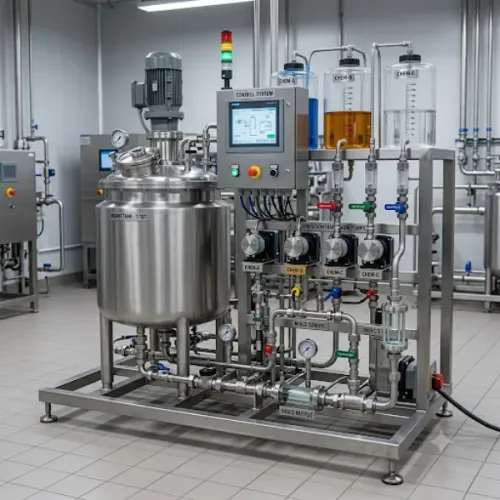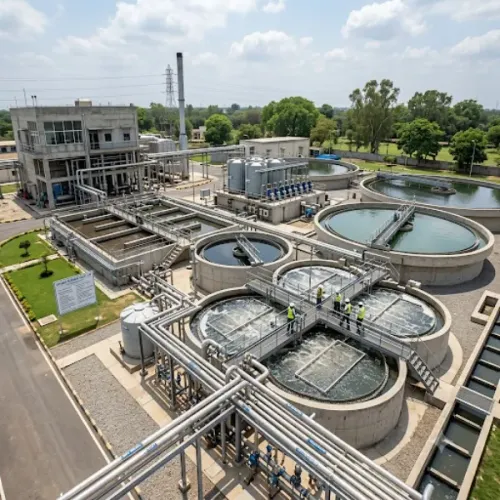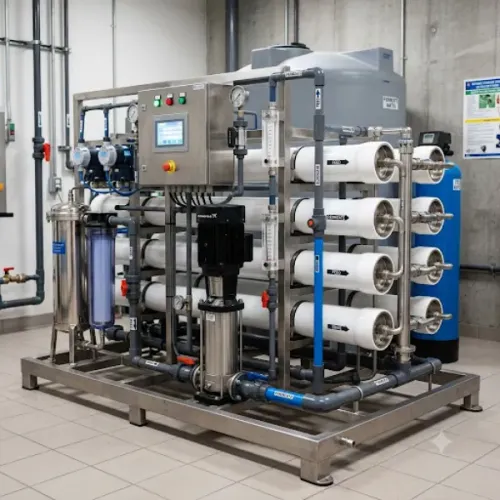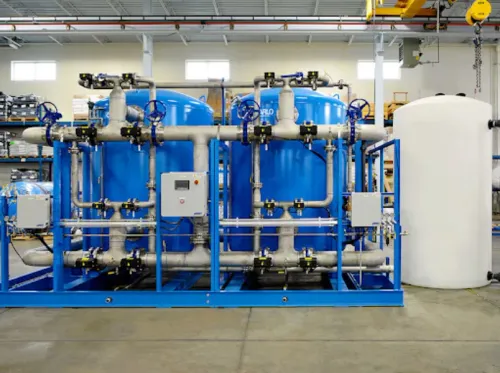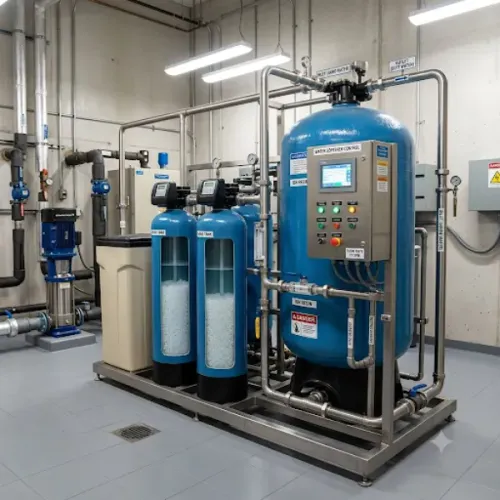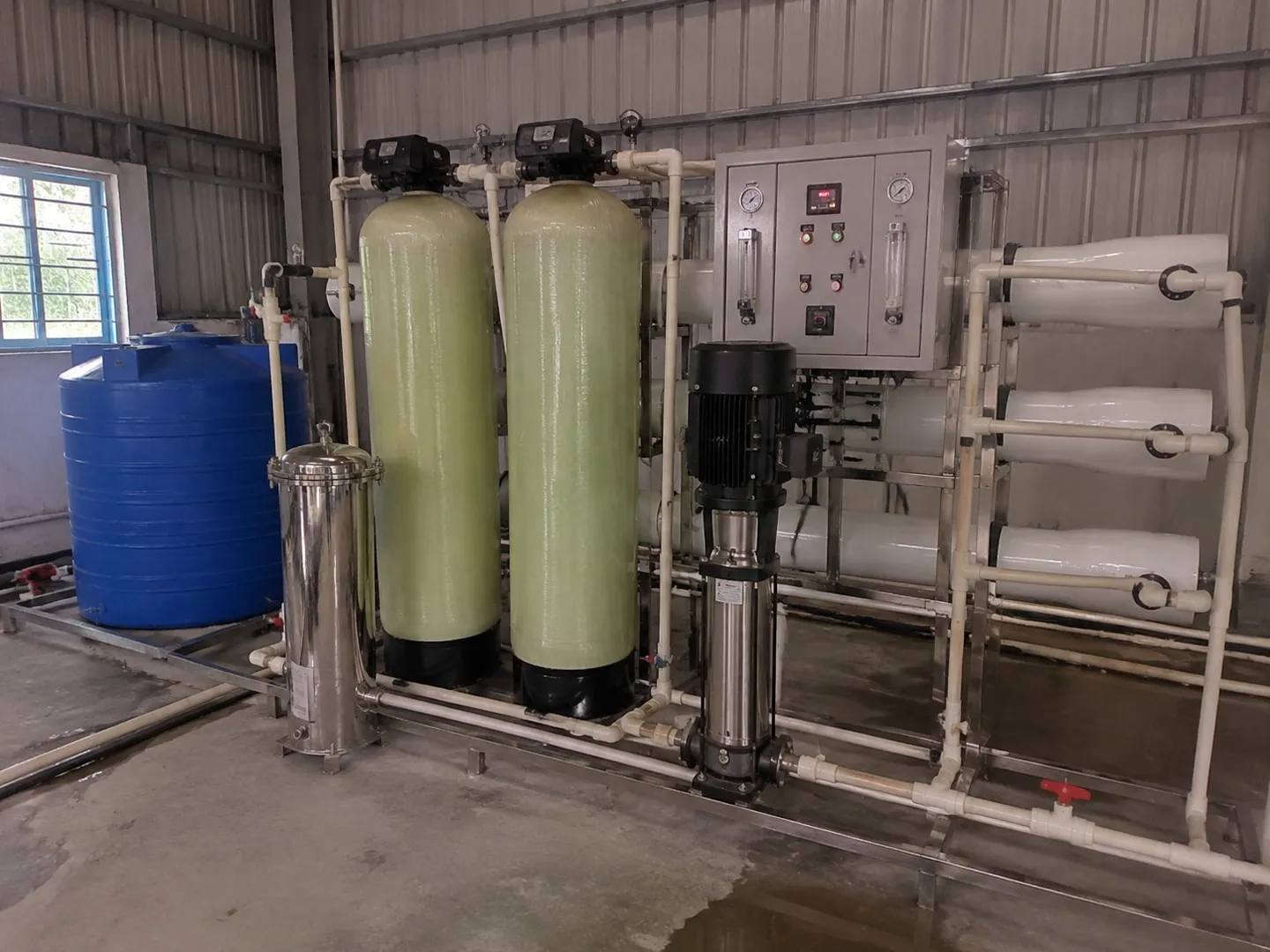
Many industrial processes require water with extremely low mineral content to maintain product quality and protect valuable equipment. Ordinary treated water may still contain dissolved salts that can affect boilers, laboratories, pharmaceutical production, and various manufacturing operations. A DM Plant provides highly purified water by removing dissolved minerals through the demineralisation process.
Industries throughout Nagpur and Maharashtra depend on DM plants to achieve consistent water quality while improving operational reliability and reducing equipment-related problems.
What Is a DM Plant?
A Demineralisation (DM) Plant is a water treatment system that removes dissolved ions such as calcium, magnesium, sodium, chloride, and sulphates from water using ion exchange resins.
The resulting demineralised water is suitable for applications where mineral-free water is essential for maintaining production quality and equipment performance.
How Does a DM Plant Work?
The treatment process generally includes multiple stages that remove both positively and negatively charged ions.
Cation Exchange
The first resin bed removes positively charged ions such as calcium, magnesium, and sodium.
Anion Exchange
The second resin removes negatively charged ions such as chloride, nitrate, and sulphate.
Mixed Bed Polishing
Some systems include a mixed bed unit to achieve even higher water purity for specialised industrial applications.
Industries That Commonly Use DM Plants
Demineralised water is widely used across several industries, including:
- Pharmaceutical manufacturing
- Power plants
- Chemical industries
- Electronics manufacturing
- Food processing
- Laboratories
- Boiler feed water systems
- Process manufacturing facilities
Each application requires different water quality specifications, making proper system selection essential.
Advantages of Installing a DM Plant
A properly designed DM Plant offers several operational benefits.
These include:
- High-purity water production
- Reduced scaling inside equipment
- Improved boiler efficiency
- Better product quality
- Lower maintenance costs
- Increased equipment lifespan
- Reliable industrial process performance
High-quality water helps industries maintain consistency while reducing production interruptions.
Key Considerations Before Installation
Selecting the appropriate DM Plant depends on several technical factors.
Important aspects include:
- Raw water quality
- Required water purity
- Daily production capacity
- Regeneration requirements
- Available installation space
- Future operational needs
A detailed water analysis helps determine the most suitable treatment configuration.
Meeting Industrial Water Quality Requirements
Reliable water treatment begins with understanding process-specific requirements. Terra Eco Systems Pvt Ltd supports industries by evaluating feed water quality and recommending demineralisation systems that match operational and regulatory expectations.
For industries operating in Nagpur, investing in a DM Plant helps ensure consistent water quality, protects critical equipment, and supports efficient manufacturing processes. As industrial quality standards continue to evolve, demineralised water remains an essential requirement for many specialised applications.
Keywords