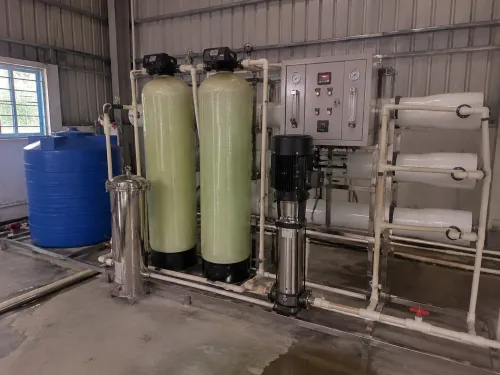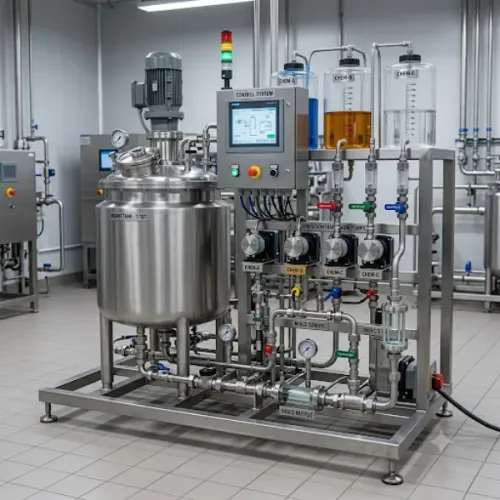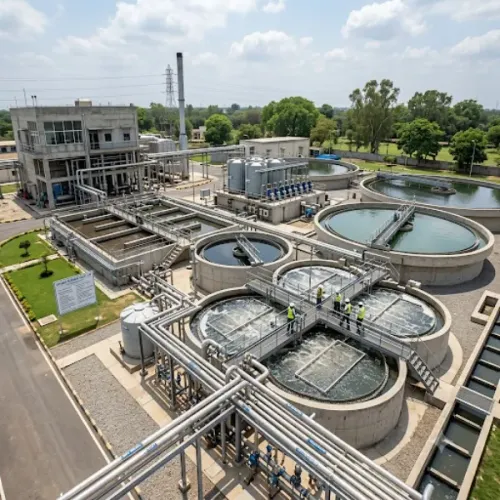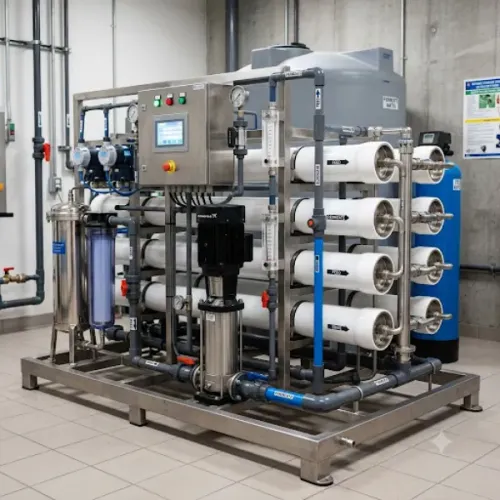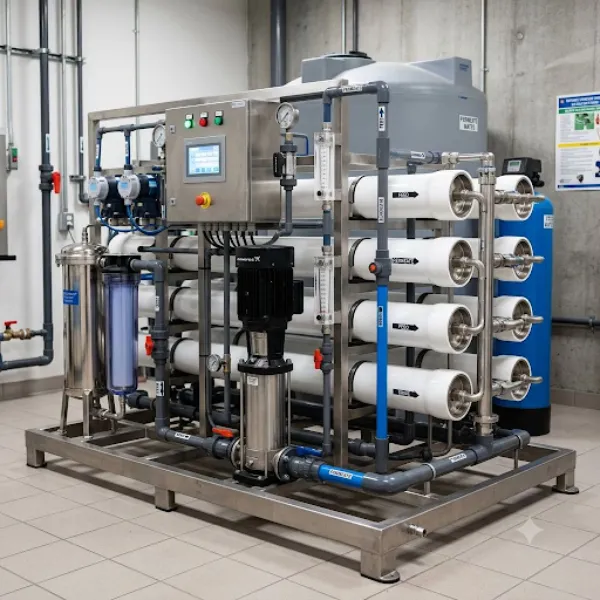
Selecting a Reverse Osmosis Plant is not simply a matter of matching equipment capacity to daily water consumption. Feed-water chemistry, recovery expectations, pretreatment, membrane configuration, operating pressure, and final water-quality requirements all influence whether an RO system performs efficiently.
This becomes especially important for industrial businesses in Nagpur where treated water may be required for manufacturing, boilers, process applications, utilities, or further purification.
Start With the Required Product Water
The first question should be what quality of water the process actually requires.
Different applications can have very different limits for total dissolved solids, conductivity, hardness, silica, and other constituents. Designing without clearly defining the required output may lead to unnecessary treatment or insufficient purification.
The source water must then be tested so that the gap between feed quality and required product quality can be established.
Evaluate Pretreatment Carefully
RO membranes are sensitive to fouling and scaling. Pretreatment therefore has a major influence on membrane life and system stability.
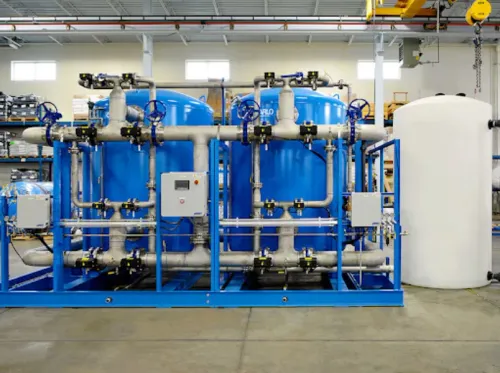
Depending on source-water characteristics, pretreatment could involve:
- Pressure filtration
- Activated carbon treatment
- Water softening
- Chemical dosing
- Cartridge filtration
- Ultrafiltration
- pH adjustment
The correct combination depends on the contaminants present rather than a standard equipment package.
Understand Recovery and Reject Water
RO separates feed water into permeate and concentrate streams.
A higher recovery rate may appear attractive because more feed water becomes product water. However, increasing recovery also concentrates salts and other constituents in the reject stream, which can increase scaling risk.
The appropriate recovery should be established from feed-water analysis, membrane design, operating conditions, and reject-water management options.
For Nagpur facilities evaluating a Reverse Osmosis Plant, planning the concentrate stream is particularly important. Reject water should not be treated as an afterthought because its quantity and quality influence overall water management.
Compare Systems Beyond Initial Cost
Two RO proposals with similar capacities may differ significantly in engineering quality.
A meaningful evaluation should consider membrane specifications, pump efficiency, instrumentation, pretreatment, automation, recovery assumptions, chemical requirements, cleaning provisions, material of construction, and after-installation support.
Operating cost matters as much as purchase cost.
Electricity, membrane replacement, cartridge filters, chemicals, maintenance, cleaning, and reject-water handling all contribute to the long-term cost of treated water.
Look at Operating Conditions
Industrial water demand rarely remains perfectly constant.
Peak demand, operating shifts, seasonal changes, source-water variation, and production expansion should be considered. Storage arrangements may sometimes help balance variations rather than sizing equipment only around short-duration peaks.
Terra Eco Systems Pvt Ltd works with industrial water-treatment requirements where RO can be integrated with filtration, softening, ultrafiltration, DM treatment, and other technologies according to application needs.
Across Maharashtra, there is no single RO configuration suitable for every industry. A food-processing facility, engineering unit, hospital, commercial building, and process plant may all require different pretreatment and product-water specifications.
The strongest purchasing decision comes from comparing complete treatment philosophies rather than comparing only litres per hour and equipment price. When source-water testing, pretreatment, recovery, reject management, energy demand, maintenance access, and required output quality are considered together, organizations can select an RO system that better matches real operating conditions.
Keywords