Reverse osmosis membranes are vulnerable to particulate and colloidal fouling, but an ultrafiltration stage does not remove the dissolved salts that drive RO scaling and osmotic pressure. By the end, you will be able to place UF correctly, define the feed-water checks that matter, verify its performance, and judge when another pretreatment combination is safer or more economical.
Key takeaways
- Use UF to remove suspended solids and colloids before RO, not dissolved salts.
- Place UF after screening and clarification when feed solids or organics demand it.
- Track filtrate turbidity, pressure, flux and RO differential pressure to verify performance.
- Choose media filtration, dissolved air flotation or other barriers when UF cannot control the feed.
How UF protects RO without replacing desalination
UF protects RO by removing particles and macromolecules, not by desalinating the feed. An intact UF membrane intercepts suspended solids, colloids, bacteria, protozoa and high-molecular-weight organic matter before the pressure vessels. That reduces particulate fouling, cartridge loading and RO differential-pressure rise, extending stable operation.
Use this boundary when designing UF pretreatment:
- UF provides a physical barrier against colloidal fouling and lowers SDI15, but a lower SDI does not prove complete RO protection.
- RO removes dissolved salts and low-molecular-weight constituents that UF leaves behind.
- UF filtrate can still contain dissolved organic carbon, soluble microbial products, residual coagulants and dissolved metals that foul or chemically affect the RO membrane.
UF does not materially remove chloride, nitrate, alkalinity, hardness, silica or other dissolved ions. Those constituents still determine osmotic pressure and scaling risk, including calcium carbonate, calcium sulfate and silica scale. Keep RO recovery modelling, temperature correction, ionic analysis and antiscalant selection in the design; add pH adjustment where the chemistry requires it.
A conductivity reading, even after UF, remains relevant to RO operation.acterial and protozoan removal also depends on membrane integrity, while virus removal requires validated log-removal data rather than a generic claim.
Where UF belongs in the complete pretreatment train
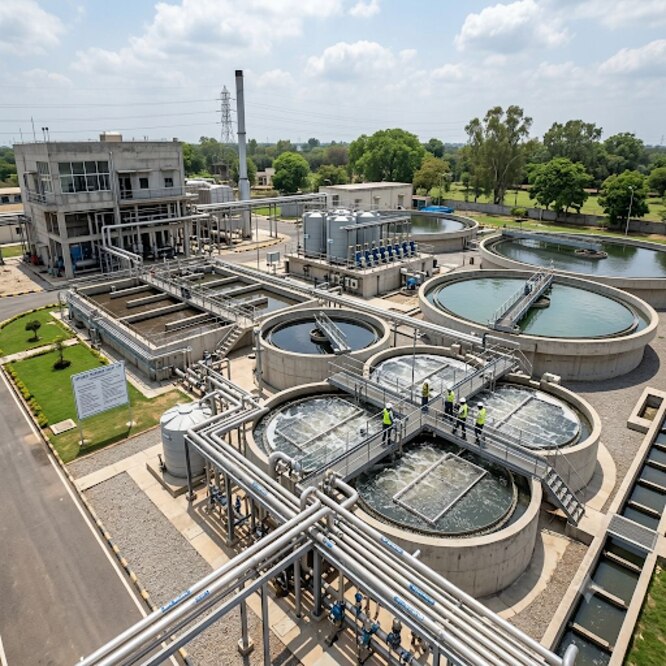
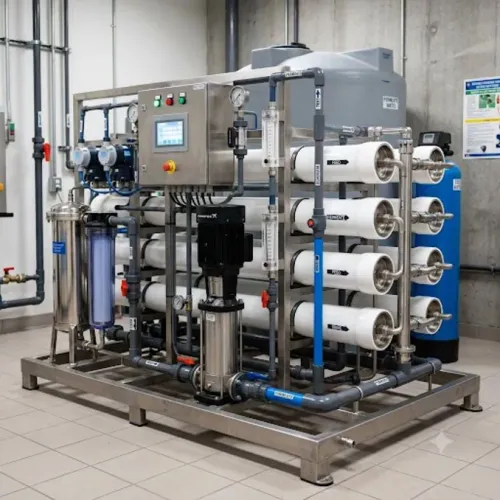
The UF-RO process sequence places UF after upstream solids control and before the final cartridge filter and RO high-pressure pump. Use this order:
- Coarse screening to remove leaves, fibres and large debris.
- Source-specific chemical dosing, such as coagulant, antiscalant, pH adjustment or dechlorination.
- Clarification and media filtration before UF when solids, oil, settleable floc, or oxidised iron and manganese would foul the modules.
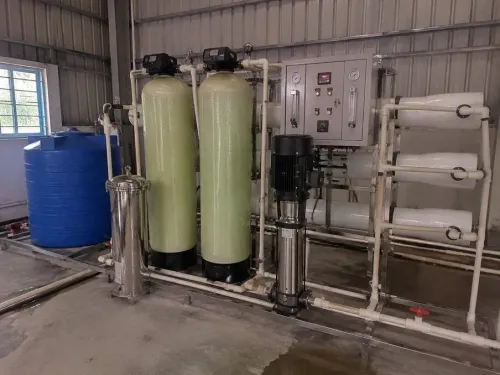
- UF to remove remaining suspended solids, colloids, bacteria, protozoa and macromolecular foulants.
- A cartridge filter to catch membrane fragments, precipitated chemicals or particles released during an integrity failure.
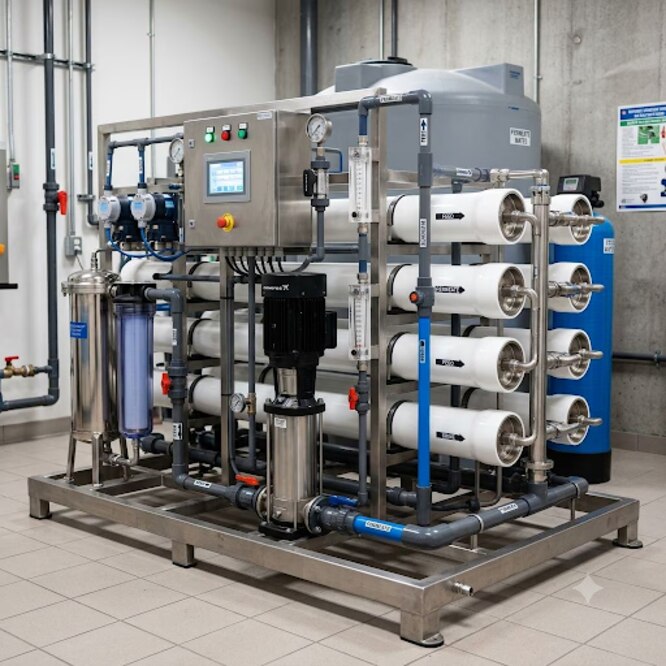
- High-pressure pumping followed by the RO pressure vessels.
UF is not a standalone answer to every feed condition. It does not remove dissolved salts, hardness, alkalinity, nitrate, chloride, silica or other low-molecular-weight contaminants; oil, dissolved metals and residual coagulant can also pass through and affect RO performance.
Before accepting the RO feed, record turbidity, SDI15, temperature, pH, oil concentration, total suspended solids, iron, manganese, hardness, silica, microbial loading, conductivity and relevant dissolved-organic indicators. RO manufacturers commonly seek SDI15 below 5; demanding or high-recovery duties often target below 3.
A good SDI result does not prove UF integrity. Keep the cartridge filter: removing this last-line barrier because UF permeate normally looks clear exposes RO to abnormal events.
How to prove that UF is working as RO pretreatment
Prove UF performance with operating trends, not a nominal removal percentage. Record UF feed and filtrate turbidity at defined intervals, then compare transmembrane pressure with temperature-corrected normalized flux. Successful backwash recovery restores permeability; falling recovery indicates irreversible fouling or a process problem.
- Select pressure-decay, vacuum-decay or air-hold testing for the module design and run it at the defined frequency. One broken hollow fibre can create a local bypass while average filtrate turbidity remains acceptable.
- Set alarm limits from commissioning data, including normal turbidity, pressure, normalized flux and recovery ranges. Revisit them after seasonal feed changes, production changes or chemical-dose changes.
- Track RO cartridge-filter loading and RO feed-to-concentrate differential pressure as downstream confirmation. Investigate a rising RO differential pressure against UF trends before blaming the RO membrane.
- Link UF filtrate quality, integrity-test results, cartridge replacement frequency and RO pressure trends in the acceptance record.
| Signal | What to compare | What a change suggests |
|---|---|---|
| UF turbidity | Feed versus filtrate | A filtrate rise indicates solids breakthrough or integrity loss |
| UF pressure and flux | Transmembrane pressure versus normalized flux | Rising pressure with falling normalized flux indicates fouling |
| Backwash result | Pre- and post-backwash permeability | Poor backwash recovery indicates irreversible fouling or inadequate cleaning |
| RO response | Cartridge loading and feed-to-concentrate differential pressure | Downstream deterioration points to UF bypass, fragments or residual foulants |
How flux, backwash and cleaning determine the real operating burden
Run UF at the highest sustainable flux, not the highest value on a clean-water datasheet. Excessive flux or long filtration cycles raise transmembrane pressure, reduce normalized flux and increase irreversible fouling, labour and chemical demand.
- Filter until the operating limit is reached, then perform routine backwash. Set UF backwash frequency from feed quality and recovery testing, not a universal calendar interval; each backwash consumes permeate and sends concentrated solids to drain.
- Use a chemically enhanced backwash when water-only backwash no longer restores permeability. Record membrane recovery, backwash volume, cleaning volume and waste strength so UF recovery and waste reflect the complete water balance.
- Start cleaning-in-place when transmembrane pressure rises, normalized flux falls or backwash recovery remains poor. Do not clean merely because a fixed number of days has passed.
- Match chemistry to the foulant: use citric acid for inorganic deposits, an alkaline cleaner for organic deposits, and sodium hypochlorite only when the membrane polymer and module manufacturer approve that oxidant exposure.
- Size the drain, holding tank and neutralisation system for backwash and cleaning waste containing suspended solids, aluminium or iron residues, biological solids and cleaning chemicals.
Coagulation or inline flocculation can improve removal of fine colloids and natural organic matter, but poor dosing leaves residual aluminium or iron and worsens fouling. Variable feed quality, shutdowns, startups, temperature changes and biological growth can shorten filtration cycles and increase cleaning demand.
If UF permeate contains chlorine, dechlorinate it before contact with a polyamide RO membrane.
When UF is the right choice—and when another barrier belongs upstream
Choose UF when feed quality changes and you need a reliable physical barrier against colloids and microbes, not when another unit can remove the dominant contaminant more cheaply.
| Option | Main job | Best fit |
|---|---|---|
| UF | Captures fine particles, colloids and microbes | Variable surface water, industrial wastewater pretreatment and tertiary wastewater |
| Multimedia filtration | Removes bulk suspended solids through media depth | Higher solids loads where simple operation matters |
| Cartridge filtration | Polishes already-treated water | Final protection, not primary solids capacity |
| Coagulation-flocculation plus clarification | Forms and settles removable floc | Settleable colloids, turbidity and larger solids |
| Dissolved-air flotation | Floats oil, grease and buoyant solids | Feeds containing free oil or light suspended matter |
| UF versus microfiltration | Trades pore size, flux and fouling behaviour differently | Select through representative pilot testing |
Put a barrier upstream of UF when the feed contains:
- Free oil or heavy solids loading
- Severe biological growth
- High iron or manganese
- High hardness
- A contaminant load requiring coagulation or flotation
These conditions can cause rapid fouling, unstable permeability and excessive cleaning. Poor coagulant dosing can also leave aluminium or iron residuals, so verify the chemistry before sending the water to UF.
Compare pilot data, design flux, recovery, reject handling, chemical storage, automation, footprint, operator coverage, membrane replacement and lifecycle cost. Terra Ecosystems Pvt Ltd can assess these choices as one UF-RO train, preventing a headline-capacity calculation from hiding upstream treatment and operating burdens.
Related products
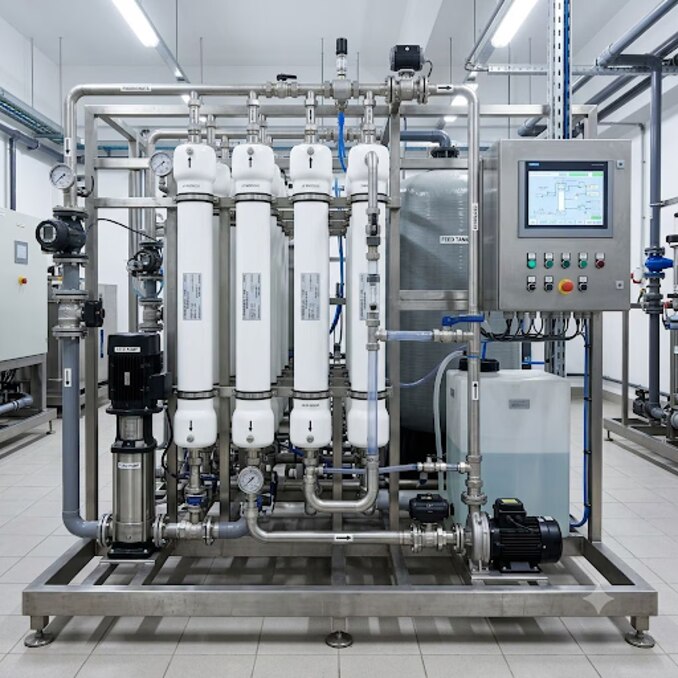
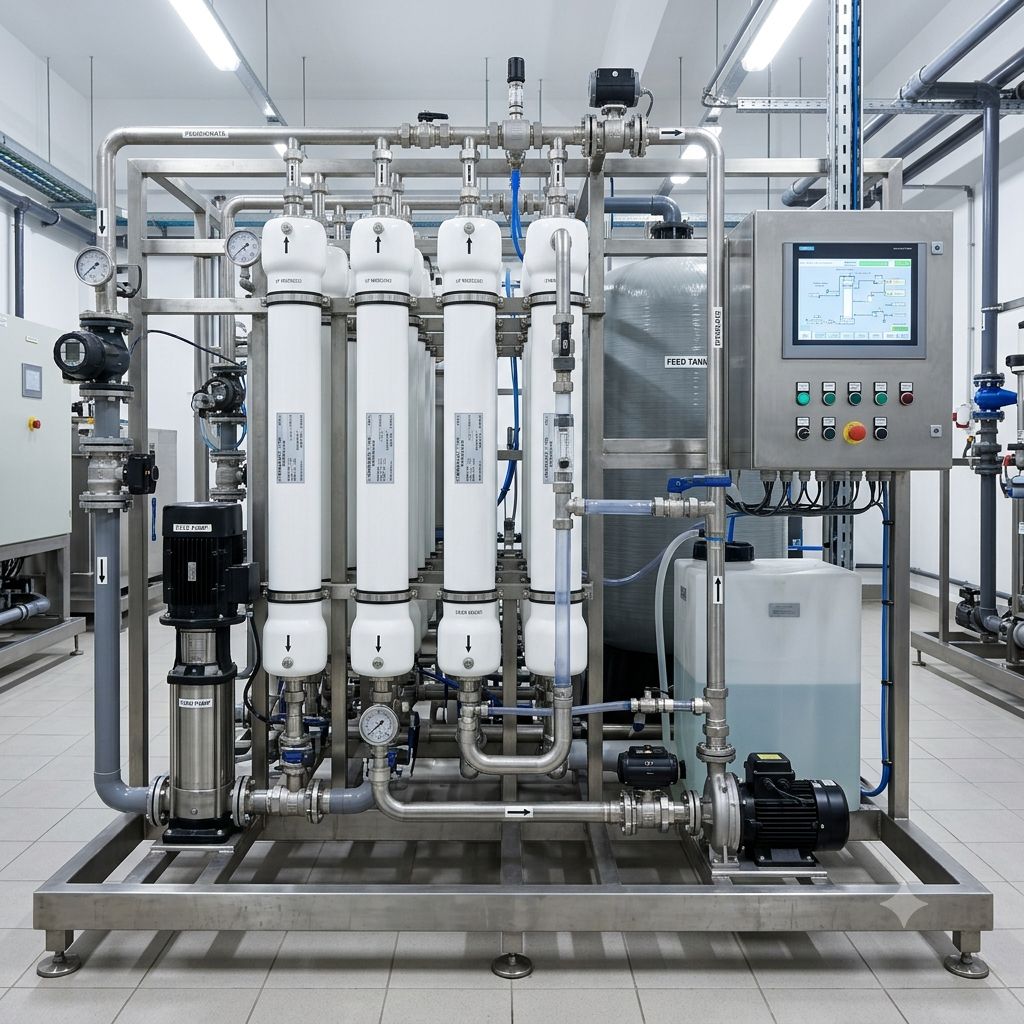 | ULTRAFILTRATION SYSTEM Ultrafiltration (UF) is a pressure-driven process that removes organics, emulsified oils, metal hydroxides, emulsions, dispersed material, suspended... View product → |
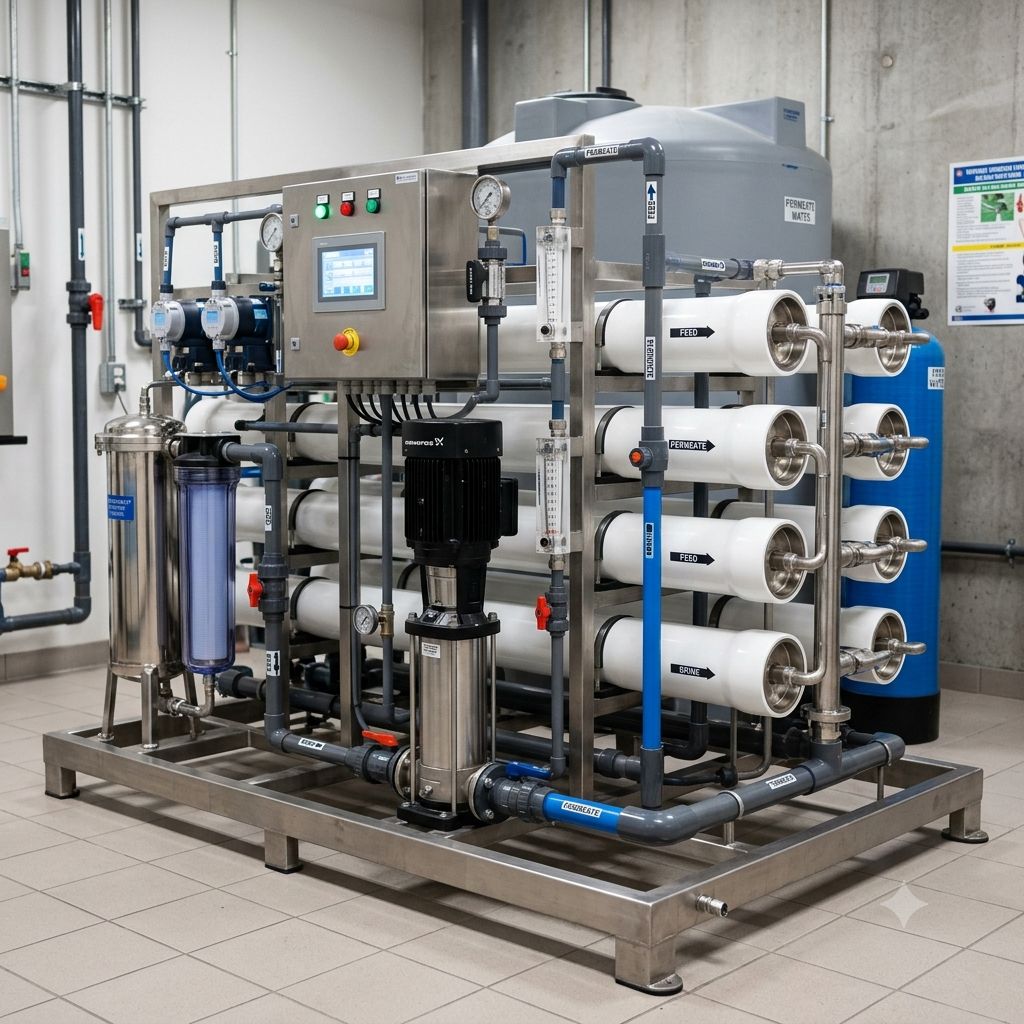 | REVERSE OSMOSIS SYSTEM We offer a wide range of Industrial Reverse Osmosis Plant according to We need for tap water, brackish water & sea water application. View product → |
Frequently asked questions
What does ultrafiltration remove before reverse osmosis?
UF removes suspended solids, colloids, bacteria, protozoa and high-molecular-weight organic matter, but it does not desalinate water or remove dissolved salts.
Where should UF be placed in an RO pretreatment train?
Place UF after coarse screening and any upstream process needed to control heavy solids, oil, algae or coagulant carryover, then feed UF filtrate to cartridge filtration and RO.
How do you prove that UF is protecting RO?
Trend UF filtrate turbidity, transmembrane pressure, normalized flux, backwash frequency, cartridge-filter loading and RO differential pressure against feed conditions.
When is UF the wrong pretreatment choice?
Use another upstream barrier when the feed contains heavy solids, oil, unstable coagulation products or contaminants that rapidly foul or damage UF membranes.