Minerals in makeup water do more than create visible scale: evaporation concentrates them inside the boiler, where they can restrict flow, reduce heat transfer, trigger corrosion, and contaminate steam. By the end, you will be able to distinguish a DM plant from a softener or RO system, map the treatment sequence, and specify the tests that show whether the water is protecting your equipment.
Key takeaways
- A softener removes calcium and magnesium, but leaves sodium, chloride, sulfate, alkalinity, and silica.
- Use demineralized water to reduce scale, corrosion, and steam contamination risks.
- Track conductivity, silica, hardness, sodium, and pH against defined alarm limits.
- Specify flow, recovery, feedwater chemistry, resin capacity, and regeneration requirements before selecting a DM plant.
What a DM Plant Removes That a Softener Leaves Behind
A softener solves hardness, not the total dissolved-mineral load. Through cation exchange, it swaps calcium and magnesium for sodium, reducing conventional hardness scale while leaving alkalinity, chloride, sulfate, silica, and most other dissolved salts in the water.
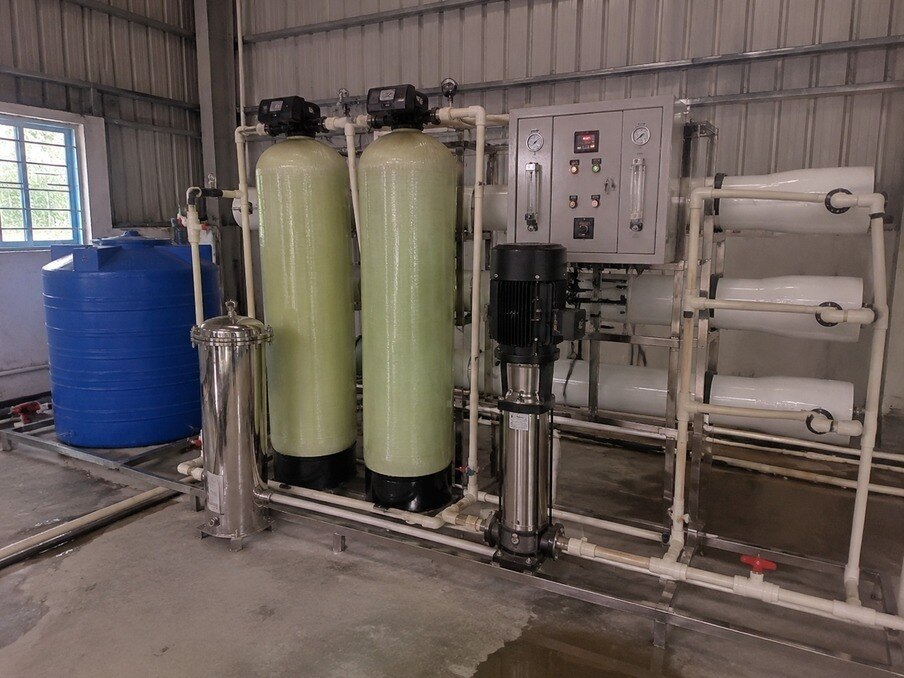
A DM plant uses cation exchange followed by anion exchange resin: the cation bed replaces positively charged ions with hydrogen, and the anion bed replaces negatively charged ions with hydroxide. Hydrogen and hydroxide combine to form water, producing much lower conductivity.
| Option | What it removes | When it fits |
|---|---|---|
| Softener | Calcium and magnesium hardness, exchanged for sodium | Use when hardness scale is the main risk and sodium-bearing water is acceptable |
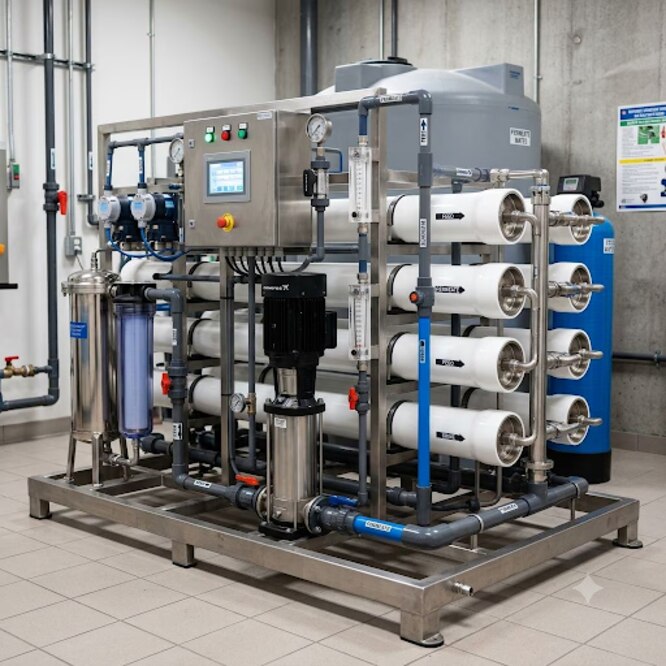
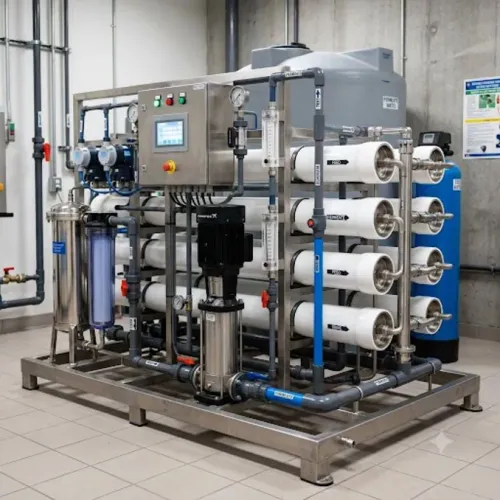
| Reverse osmosis | A large fraction of dissolved salts, with the exact rejection depending on the membrane and feedwater | Use when feed salinity is high, or to reduce the load and acid or caustic demand on ion-exchange vessels |
| DM plant | Cations and anions, including residual hardness, alkalinity, chloride, sulfate, and silica | Use when boiler feedwater requires low conductivity and a tighter ionic specification than softening provides |
A two-bed DM plant is more economical than making high-salt water pass through a mixed bed, which is usually reserved for final polishing. RO and demineralisation often work together rather than compete.
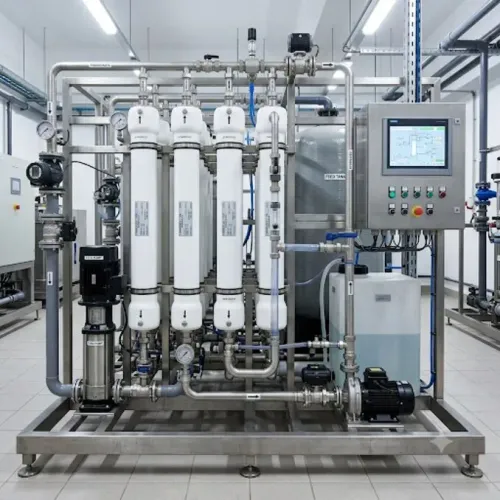
Pretreatment must remove suspended solids, iron, manganese, oil, chlorine, and hardness precipitates or they will foul or damage resin; filtration, activated carbon, or RO may come first.
Low-conductivity water does not control pH, dissolved oxygen, phosphate, sulfite, condensate contamination, or blowdown. It can also corrode carbon steel, so boiler-water chemistry still needs separate control.
How Minerals Turn Into Boiler Scale, Corrosion, and Steam Contamination
Evaporation concentrates dissolved contaminants inside the boiler. At high cycles of concentration, calcium, magnesium, silica, chloride, sulfate, iron, copper, and phosphate reach levels that feedwater tests alone can hide. Blowdown removes the concentrated water, but excessive blowdown wastes heat, water, and treatment chemicals.
| Contaminant or condition | Test that reveals the risk | Boiler damage |
|---|---|---|
| Calcium plus carbonate alkalinity | Total hardness, calcium hardness, and M-alkalinity titrations | Calcium carbonate scale, reduced heat transfer, and tube overheating |
| Calcium plus phosphate at high pH | Calcium hardness, phosphate, and boiler-water pH | Calcium phosphate scale and blocked heat-transfer surfaces |
| Dissolved silica | Silica colorimetric test or online silica analyser | Silica deposits on boiler surfaces; volatile silica can travel with steam and foul turbine blades |
| Chloride and sulfate | Chloride and sulfate analysis, conductivity, and boiler-water cycles | Concentration, carryover, foaming, and increased corrosion risk |
| Dissolved oxygen | Feedwater dissolved-oxygen analyser | Pitting corrosion, especially where oxygen scavenging or deaeration fails |
| Iron and copper | Feedwater and condensate iron and copper tests | Corrosion-product transport and deposits on tubes |
Conductivity detects ionic leakage and salt ingress, but it cannot prove that silica is controlled because silica contributes weakly and unevenly to conductivity. Low-conductivity DM water also lacks alkalinity and can attack carbon steel unless feedwater pH, oxygen, phosphate or volatile treatment, condensate quality, and blowdown are controlled for the boiler’s pressure and steam-use requirements.
Where DM Water Fits in the Boiler Feedwater Treatment Train
Raw water normally passes through raw-water pretreatment, reverse osmosis when salt loading justifies it, cation and anion exchange vessels, and a mixed-bed polisher. The low-conductivity DM water then enters a storage tank, moves to the deaerator or feedwater tank, receives conditioning chemicals, and reaches the boiler feed pump.
The mixed-bed polisher is usually a finishing stage, not the economical first barrier for high-salt water; its resin separation and regeneration are more demanding.
- Pretreatment removes suspended solids, iron, manganese, oil, hardness precipitates, organics, and chlorine that can foul or damage ion-exchange resin. Use clarification or filtration, activated carbon for chlorine removal, and RO when it reduces the load on the DM vessels.
- Control dissolved oxygen and carbon dioxide separately. Use deaeration, closed or properly vented tank design, leak control, and oxygen-scavenging or oxygen-control chemistry as the boiler design requires.
- Treat DM water before it attacks carbon steel. Low alkalinity and ionic strength can make untreated DM water corrosive, so control feedwater pH and apply phosphate or all-volatile treatment where specified.
- Control concentration inside the boiler with blowdown. Conductivity detects ionic leakage and salt ingress, but silica needs separate testing when steam purity or turbine protection matters.
| Control | What it addresses | Typical protection |
|---|---|---|
| Pretreatment | Fouling and resin oxidation | Filters, carbon, RO |
| DM train | Dissolved ionic minerals | Cation, anion, mixed-bed exchange |
| Deaeration and dosing | Oxygen, carbon dioxide, pH | Deaerator and chemistry program |
| Blowdown | Concentration in boiler water | Heat-balanced discharge |
The Water Tests and Alarm Points That Prove the Plant Is Working
A plant is working only when its instruments detect both gradual resin exhaustion and sudden contamination. Set limits from the boiler and turbine manufacturer’s chemistry requirements, operating pressure, steam use, and governing standard—not from a generic DM-plant brochure.
| Test or alarm point | What it proves | Failure indicated |
|---|---|---|
| Conductivity and resistivity after the DM outlet | Ionic leakage remains low; resistivity falls as conductivity rises | Cation or anion exhaustion, regeneration failure, or valve bypass |
| Silica analyser | Silica stays below the steam-purity limit | Silica breakthrough, which conductivity may miss |
| Hardness test | Calcium and magnesium are absent | Hardness leakage from exhausted resin, poor regeneration, or channeling |
| Condensate conductivity and contamination alarm | Returned water remains suitable for reuse | Heat-exchanger leak, oil, process chemical, corrosion products, or a cross-connection |
| Boiler-water conductivity, pH, phosphate, and alkalinity | Concentration and treatment remain controlled | Excessive dissolved solids, incorrect chemical dosing, inadequate blowdown, or corrosion risk |
Investigate a DM-water failure against the regeneration record, not only the resin’s rated capacity. Check acid or caustic dose, regenerant distribution, slow-rinse and fast-rinse times, valve sequencing, channeling, and fouling. A regeneration fault can cause sodium, chloride, sulfate, silica, or hardness leakage before capacity is reached.
Use automatic diversion for off-spec DM water and contaminated condensate where a failure could damage the boiler or turbine. Low-conductivity water alone does not prove safe boiler chemistry: maintain the specified feedwater pH and oxygen control, then verify boiler-water treatment and blowdown separately.
How to Specify a DM Plant Without Overlooking the Boiler Chemistry
Specify the water quality and operating duty, not just the vessel diameter. Your brief must connect the DM plant to the boiler pressure, steam purity requirement, turbine design, and boiler chemistry program.
1. State the treated-water volume in litres per hour, peak flow, daily demand, storage capacity, and required reserve. Include conductivity, silica, sodium, chloride, dissolved oxygen, iron, and copper limits from the boiler or turbine manufacturer.
2. Define regeneration frequency, resin capacity, chemical consumption, regeneration time, and the maximum acceptable pressure drop. Request alarms for conductivity, flow, tank level, and failed regeneration rather than relying on a routine operator check.
3. Describe the pretreatment: filtration for suspended solids and iron, activated carbon when chlorine threatens resin, and reverse osmosis when high-salt water would make ion exchange uneconomical. Ask how the design prevents oil, hardness precipitates, and manganese from reaching the resin.
4. Specify degasification, storage-tank protection, deaeration, and oxygen control separately. Ion exchange does not remove dissolved carbon dioxide or oxygen.
5. State whether a mixed-bed polisher is needed and where it sits. It delivers higher-quality water, but resin separation and regeneration cost more than separate-bed treatment.
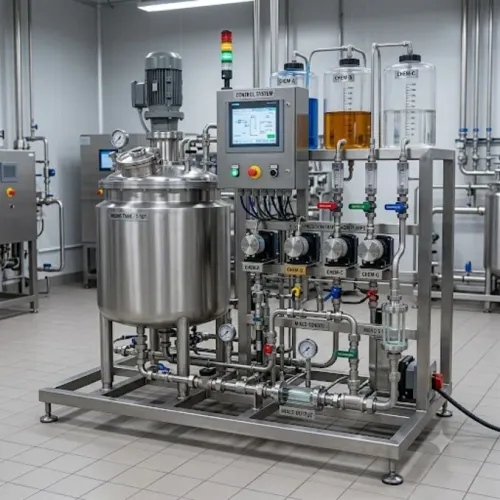
A manufacturer adds value by checking the complete water-and-steam balance, sizing pretreatment and dosing equipment, and matching alarms to operating risks. Terra Ecosystems Pvt Ltd can contribute at this interface when it evaluates filtration, reverse osmosis, chemical dosing, and demineralisation as one treatment train rather than treating vessels as the whole solution.
Frequently asked questions
What does a DM plant remove that a water softener leaves behind?
A softener exchanges calcium and magnesium for sodium. A DM plant removes dissolved cations and anions, including hardness ions, chloride, sulfate, alkalinity, and much of the silica, depending on its design and polishing stage.
How do dissolved minerals damage boilers and industrial equipment?
Minerals concentrate as water evaporates, forming boiler scale and reducing heat transfer. Chloride and dissolved oxygen support corrosion, while carryover of dissolved solids and silica can contaminate steam and damage downstream equipment.
Where does DM water fit in a boiler feedwater treatment train?
DM water usually follows pretreatment such as filtration, activated carbon, and softening. The complete train can also include reverse osmosis, demineralization, condensate recovery, chemical dosing, deaeration, and final polishing.
Which tests show that a DM plant is working?
Check feedwater and outlet conductivity, pH, hardness leakage, silica, sodium, chloride, and alkalinity. Set alarms for rising conductivity or silica, resin exhaustion, abnormal pressure drop, and regeneration or chemical dosing failures.