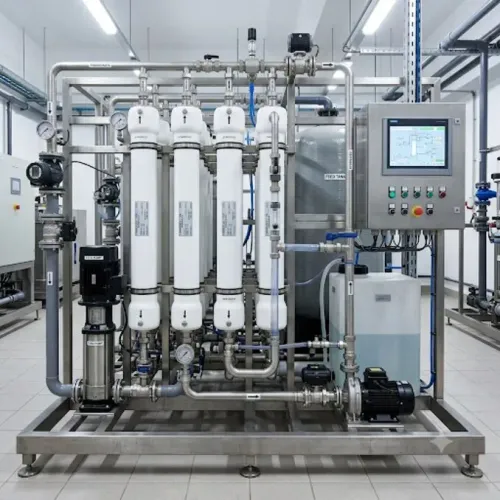
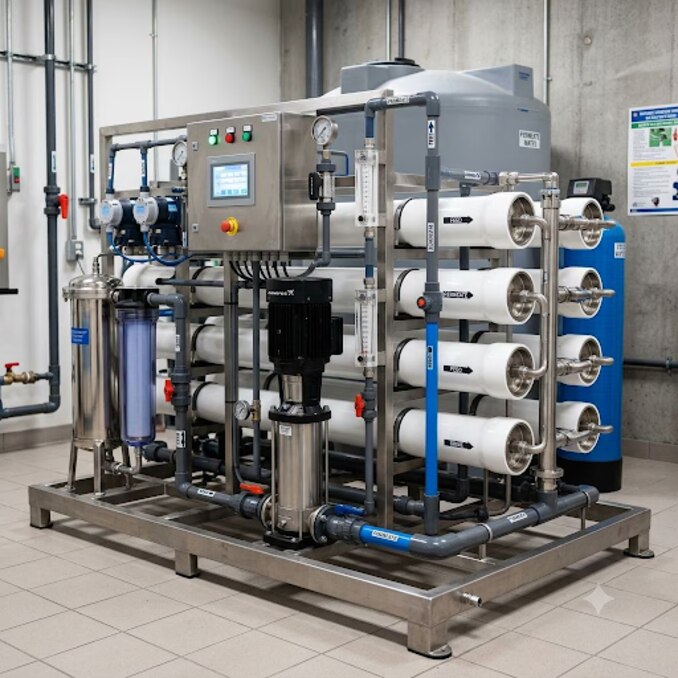
An RO plant can meet its rated flow and still fail your process if the feed analysis is incomplete, the recovery exceeds the scaling limit, or the quoted capacity applies to the wrong temperature and flow point. Use the water chemistry, end-use specification, membrane design, pretreatment, operating controls, and reject-disposal plan to compare proposals on a like-for-like basis.
Key takeaways
- Base selection on representative feed-water data, including peak loads and cold conditions.
- Define permeate limits from the process that will consume the treated water.
- Check pretreatment for hardness, suspended solids, chlorine, iron, and silica control.
- Require written guarantees for capacity, recovery, quality, energy use, and reject handling.
Build a Design Basis from Representative Feed-Water Data
Reliable industrial RO plant selection starts with a design basis, not a single conductivity result. Collect data from the water that will reach the membranes, and show suppliers the highest-load and coldest operating cases.
1. Record source, intake and pretreatment location, design flow, daily operating hours, feed temperature range, pH, conductivity/TDS, and seasonal or production-related changes.
2. Use representative water sampling: take preserved samples during high and low source conditions, document sampling point and date, and send them promptly for RO feed-water analysis.
3. Request results for alkalinity, hardness, silica, sulfate, barium, strontium, iron, manganese, aluminium, chloride, residual chlorine or other oxidant, TOC, oil, turbidity, microbial indicators, and process-specific contaminants.
4. Include SDI15 testing and state turbidity; conventional polyamide systems commonly target SDI15 below 5 and turbidity near 1 NTU or lower. A cartridge filter alone does not fix poor colloid removal.
5. Define permeate limits by contaminant and guarantee type: maximum concentration, average, or projection. If boron matters, specify pH, temperature, recovery, and feed concentration, because generic salt rejection cannot replace a boron guarantee.
Ask vendors to size at the coldest design temperature, state temperature correction, recovery, design flux and pressure, and provide normalized permeate flow and salt passage using ASTM D4516. Include reject disposal limits and allowable recovery in the request.
Match Permeate Quality to the Process That Will Use It
Your end-use water specification should determine the RO configuration, polishing stage, and performance guarantee—not the other way around. Define maximum conductivity or TDS, silica, hardness, boron, microbiological limits, temperature, and allowable recovery before requesting a proposal.
1. Classify the user. General process water may suit single-pass RO. Boiler makeup, high-pressure humidification, or semiconductor rinsing may require two-pass RO followed by a mixed-bed deionizer or electrodeionization.
2. Check contaminants RO does not reliably remove. Carbon dioxide and hydrogen sulfide can pass through the membranes, so low total inorganic carbon, controlled downstream pH, or low dissolved-gas limits may require degasification, chemical adjustment, or polishing.
3. Set ion-specific guarantees. Conductivity alone cannot prove compliance for silica, boron, nitrate, ammonia, or specific organics. For boron, require a guaranteed concentration at stated pH, temperature, recovery, and feed concentration because rejection changes sharply with pH.
4. Define how results will be judged. Label every value as a maximum, average, or design projection, and require normalized permeate-flow calculations at the coldest design temperature.
5. Require a permeate-and-concentrate mass balance under normal and upset conditions. Recovery determines reject volume and concentration; sewer discharge, reuse, evaporation, or crystallization can change the viable RO and polishing design.
Choose Pretreatment That Protects the Membrane Array
RO pretreatment must remove foulants before they reach the membrane array, not rely on cartridge filters to repair an undersized upstream process.
| Foulant | Control step | What it prevents |
|---|---|---|
| Particles and colloids | Coagulation and clarification, followed by multimedia filtration or ultrafiltration; target SDI15 below 5 and turbidity near 1 NTU or lower | Rapid differential-pressure rise and colloidal fouling |
| Free chlorine and other oxidants | Activated carbon dechlorination or sodium bisulfite dosing, with an online residual-oxidant monitor and high-residual shutdown or diversion | Irreversible damage to aromatic-polyamide membranes |
| Oil | Oil-water separation, dissolved-air flotation, or coalescing filtration before media filtration | Irreversible membrane wetting and loss of salt rejection |
| Iron and manganese | Oxidation followed by filtration, or chemical precipitation and multimedia filtration | Deposits that block feed channels |
| Dissolved organics | Activated carbon or another validated adsorption process | Organic fouling and increased cleaning frequency |
| Biological fouling | Controlled upstream disinfection, dechlorination before RO, and validated biocide or periodic cleaning | Biofilm growth |
| Scale-forming salts | Antiscalant dosing, softening, or acid adjustment based on concentrate chemistry | Mineral scale and falling permeate flow |
Specify differential-pressure transmitters across each filter and verify carbon contact time. A cartridge filter is last-line particle protection, not a substitute for clarification or multimedia filtration. If feed contains carbon dioxide or hydrogen sulfide, add degasification or chemical adjustment because RO will not reliably remove those gases.
Test Recovery, Membrane Loading, and Temperature Performance
A reliable proposal shows design permeate flow, RO recovery, membrane flux, operating pressure, and temperature-corrected performance at the coldest design feed temperature. Do not accept a capacity calculated only at average temperature: colder water is more viscous, so pressure rises and permeate production falls.
| Figure | What to check | Warning sign |
|---|---|---|
| RO recovery | Permeate flow divided by feed flow for each stage and the complete array | A total recovery figure that hides high final-stage concentration |
| Membrane flux | Permeate flow per membrane area, stated by stage and design condition | High flux that reduces fouling margin and cleaning intervals |
| Pressure vessel staging | Vessel count, elements per vessel, interstage boosting, and stage-by-stage recovery | Total membrane area given without array layout |
| Temperature correction | Method used to calculate normalized permeate flow at minimum temperature | Capacity guaranteed only at a warm, average feed temperature |
| Pressure drop | Feed-to-concentrate pressure loss across each vessel and the complete array | No limit for detecting fouling, scaling, or blocked elements |
The first stage receives the highest fouling load; the last stage sees the most concentrated brine. Ask for stage flows, pressures, salt passage, and normalized permeate flow under the specified feed concentration, recovery, pressure, and temperature. ASTM D4516 provides a basis for separating temperature and operating changes from membrane deterioration.
Require online feed and permeate conductivity, feed temperature, feed and concentrate pressure, permeate flow, and cartridge-filter differential pressure. Without these signals, you cannot distinguish fouling from temperature loss, leaking O-rings, or instrument drift.
Compare Capacity Guarantees, Operating Data, and Reject Handling
Treat a promised RO plant capacity as credible only when it is tied to feed conditions, temperature, recovery, pressure, and acceptance-test measurements. A nominal claim such as “100 m³/day” proves little if it applies only to warm water, clean membranes, or an unstated feed conductivity.
| Capacity claim | Credible guarantee |
|---|---|
| RO plant capacity | A flow rate at the coldest design feed temperature, specified recovery, feed pressure, and permeate-quality limit |
| Operating data | Feed and permeate flow, conductivity, temperature, pressure, recovery, and array pressure drop recorded during testing |
| Performance trend | Normalized permeate flow, normalized salt passage, and normalized pressure drop, calculated using ASTM D4516 |
| Acceptance basis | Defined duration, stabilized operating conditions, instrument accuracy, and remedies if the plant misses capacity or quality |
Require the supplier to show temperature-corrected projections, not raw permeate flow alone. ASTM D4516 normalization separates temperature, pressure, recovery, and feed-concentration effects from membrane deterioration. Also require online feed and permeate conductivity, temperature, pressure, flow, cartridge-filter differential pressure, oxidant residual where relevant, and tank levels.
Reject water needs an engineered destination before purchase. Require a mass balance for permeate and concentrate during normal and upset operation, showing volume, chemistry, and discharge limits.
RO concentrate management can involve sewer discharge, reuse, evaporation, crystallization, injection, or another permitted route; recovery must follow scaling calculations for silica, sulfates, carbonate, and metal hydroxides, not pump capacity.
Turn the Proposal into an Accountable Procurement Specification
Put the guarantee in numbers, not adjectives. Specify permeate flow, temperature-corrected normalized flow, recovery, salt passage, and contaminant limits as maximums or averages, with feed concentration, pH, temperature, pressure, and recovery stated. For boron, require a separate guaranteed value under defined conditions; generic salt rejection is inadequate.
Require online RO instrumentation for:
- Feed and permeate conductivity, feed temperature, feed and concentrate pressure, and permeate flow
- Differential pressure across pretreatment and cartridge filters, oxidant residual, and key tank levels
Specify minimum turndown, start-stop frequency, standby preservation, automatic flushing, restart quality, and low-flow or high-pressure actions. Define membrane cleaning triggers: about 10% normalized-flow loss, 5% to 10% normalized salt-passage rise, or 10% to 15% normalized pressure-drop rise, subject to baseline data and manufacturer guidance.
RO plant acceptance criteria must include a witnessed test at the coldest design temperature, laboratory analyses, alarms, and documented response times. Require the industrial water treatment system supplier to provide calibration intervals, PLC backups, drawings, training, spares, and cleaning support. Terra Ecosystems Pvt Ltd should state each commitment in the contract, not a sales presentation.
Related products
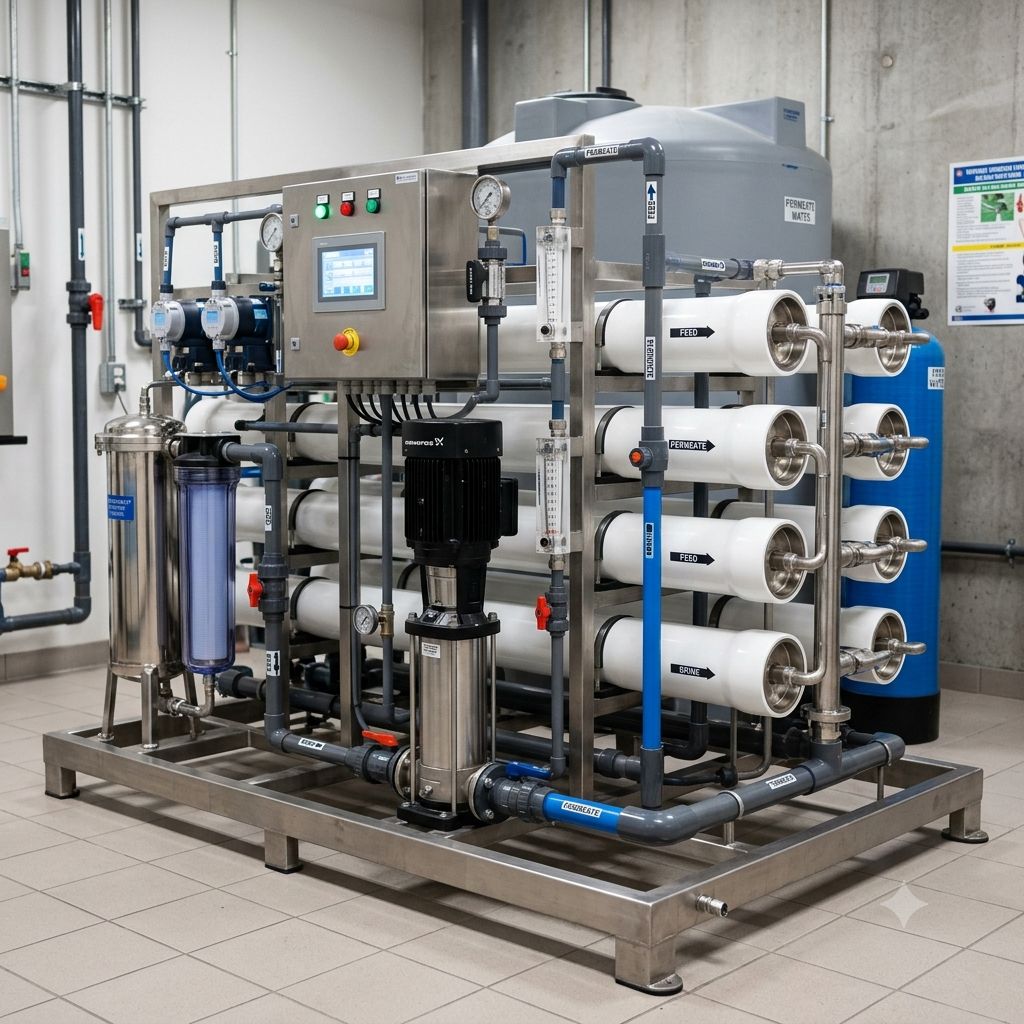 | REVERSE OSMOSIS SYSTEM We offer a wide range of Industrial Reverse Osmosis Plant according to We need for tap water, brackish water & sea water application. View product → |
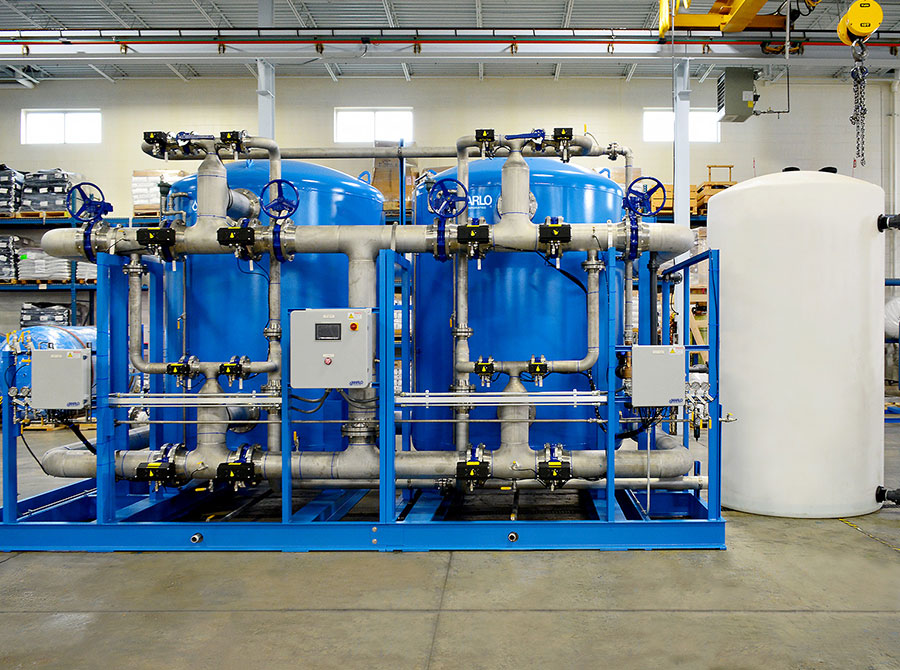 | WATER SOFTNING PLANT A water softener reduces the dissolved calcium, magnesium, and to some degree manganese and ferrous iron ion concentration in hard water. View product → |
Frequently asked questions
What feed-water data do you need before selecting an industrial RO plant?
Collect representative data from water entering the membranes, including conductivity, temperature, flow, pH, hardness, suspended solids, turbidity, silica, iron, manganese, chlorine, and microbiological indicators. Include peak contaminant loads and the coldest operating temperature.
How should you define the required RO permeate quality?
Set limits for conductivity, total dissolved solids, silica, hardness, and other contaminants according to the process using the permeate. Boiler feed, rinsing, process water, and drinking-water applications require different specifications.
What pretreatment protects RO membranes?
Select pretreatment based on the feed-water risks. Common equipment includes strainers, multimedia filters, cartridge filters, activated carbon or dechlorination, water softeners, antiscalant dosing, iron removal, ultrafiltration, and pH adjustment.
Which RO performance figures should suppliers test or guarantee?
Compare permeate flow, salt rejection, recovery, feed pressure, energy consumption, membrane loading, and performance at the design temperature. Request values for normal, peak-load, and cold-water conditions.
What should an industrial RO plant procurement specification include?
State feed-water limits, permeate-quality limits, capacity, recovery, operating temperature, pretreatment scope, reject volume and destination, materials, instrumentation, testing methods, commissioning duties, spare parts, and written performance guarantees.
Related products
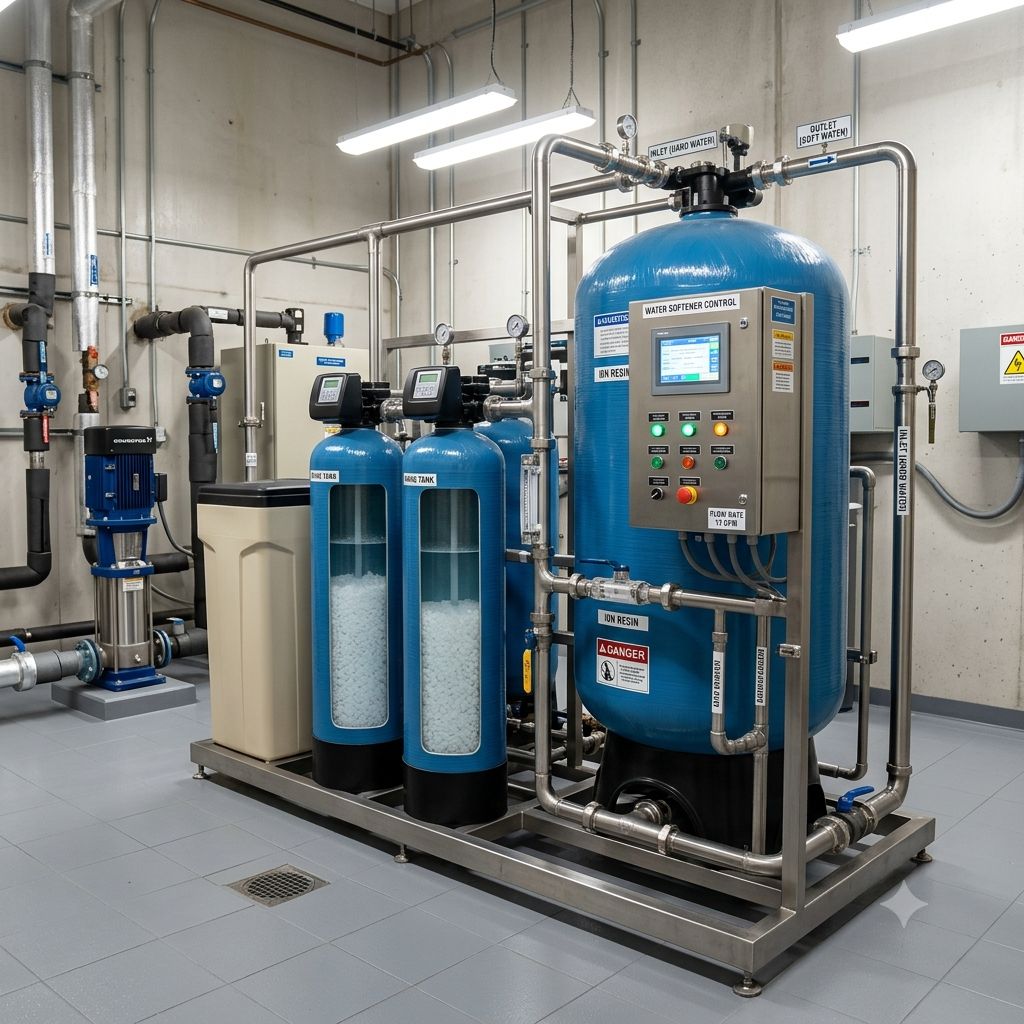 | FILTRATION SYSTEM Pressure filtration can be used for a variety of conventional filtration media; oxidative media for iron and manganese removal; activated carbon... View product → |
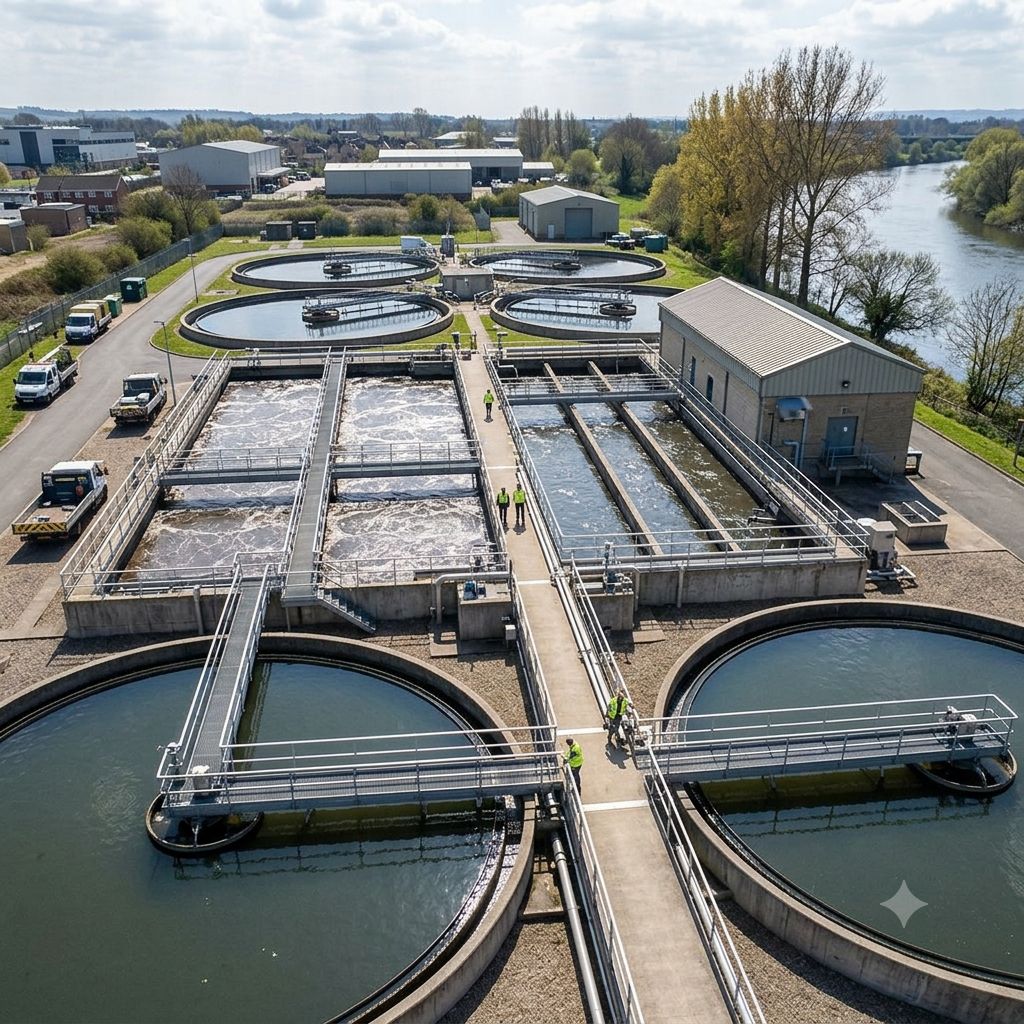 | SEWAGE TREATMENT PLANT We has many years of Sewage Treatment Plant Solution experience in the design, construction, and operation of wastewater treatment plants, we are... View product → |
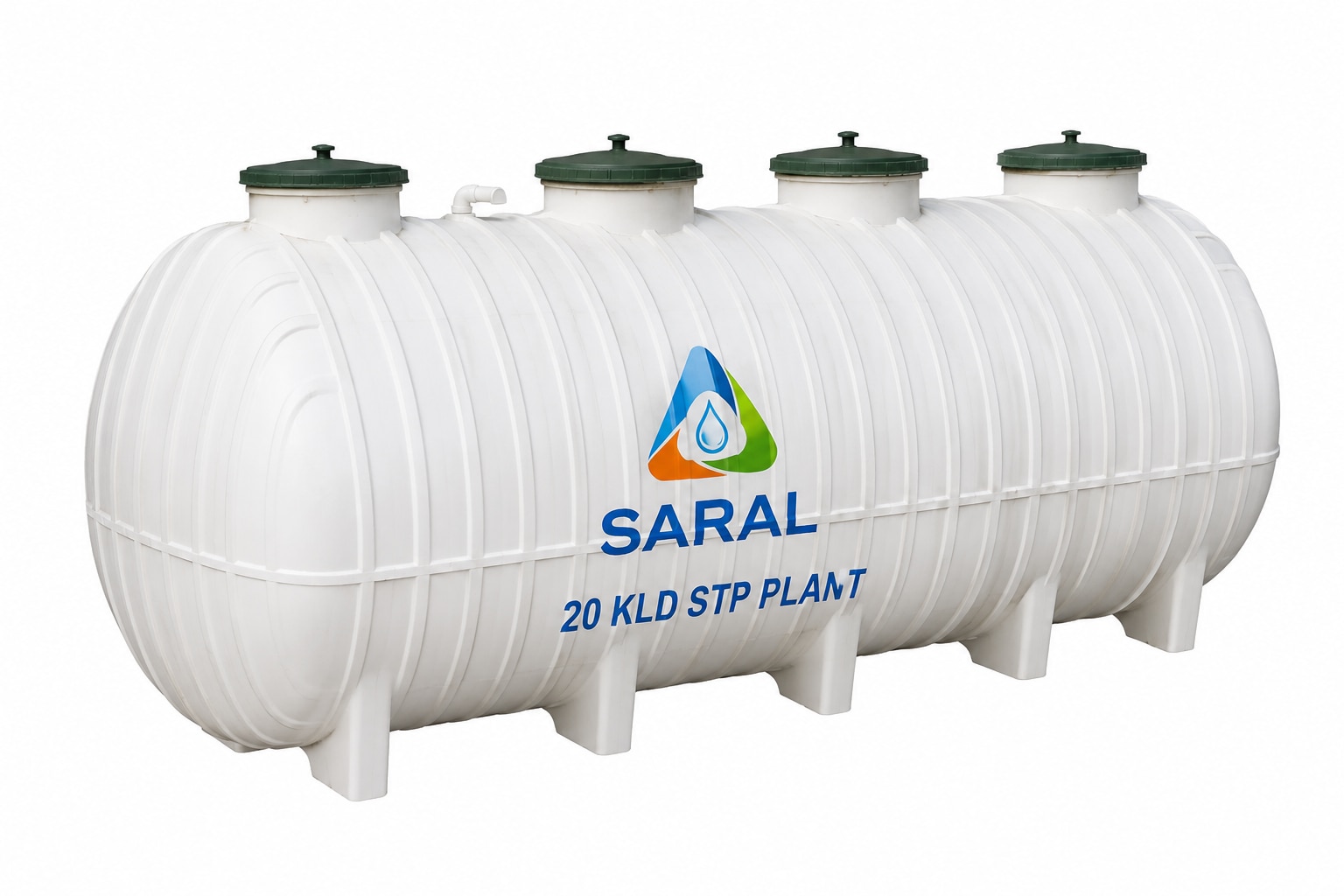 | PACKAGED SEWAGE TREATMENT PLANT PACKAGED SEWAGE TREATMENT PLANT SARALTM FRP STP is a prefabricated, decentralized onsite sewage treatment system designed in accordance with CPHEEO guidelines for residential,... View product → |
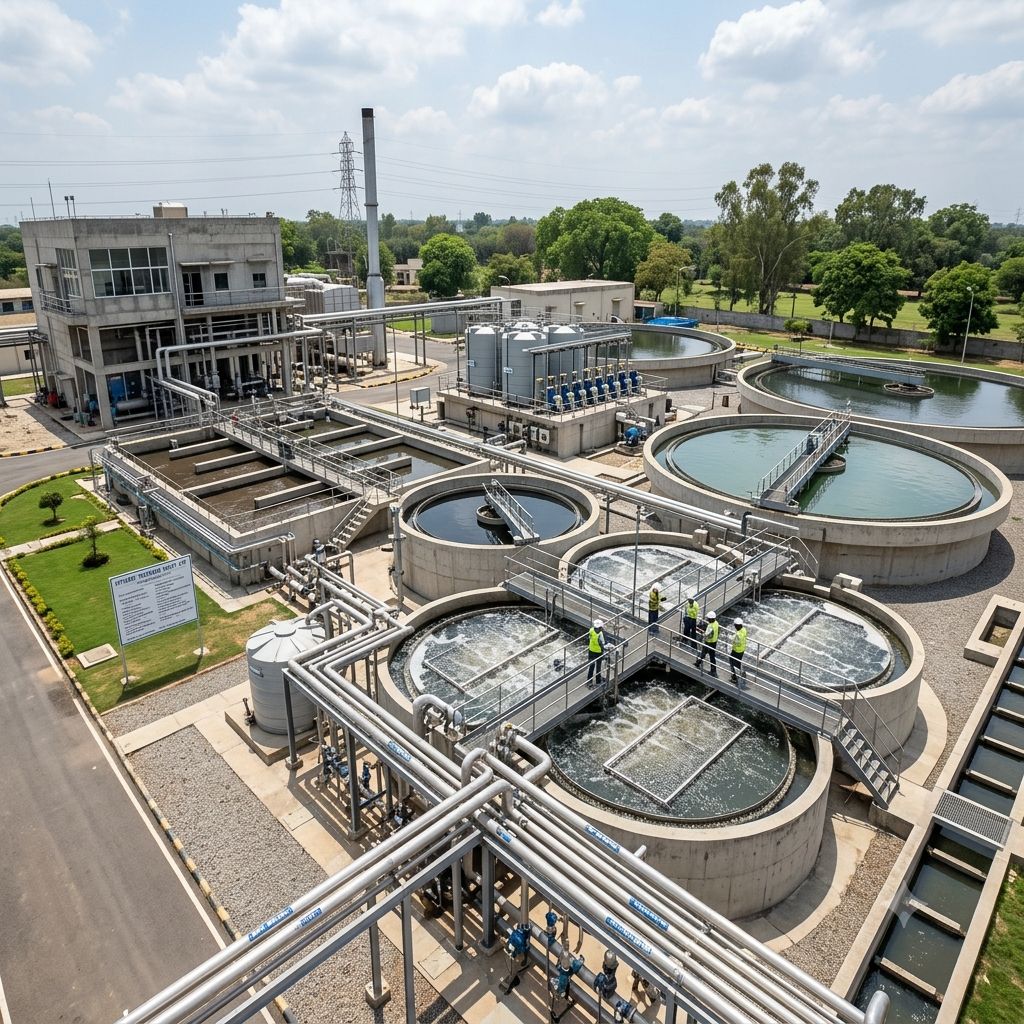 | EFFLUENT TREATMENT PLANT The Effluent Treatment Plant (ETP) is an environmental facility that removes pollution from the water released during the industrial process. View product → |