A quotation for an ETP or DM plant can look complete while excluding tanks, instruments, chemical systems, sludge handling, regeneration waste management or performance testing. By the end, you will be able to map each package to its feed water, process stages, operating limits, civil and electrical scope, and acceptance guarantees.
Key takeaways
- Fix flow, pollutant loads, discharge limits and reuse goals before selecting equipment.
- Specify equalisation, sludge handling, chemical dosing, controls and operator safety in the ETP scope.
- Choose polishing stages from your industry contaminants and final water-use requirements.
- Define commissioning, guarantees, sampling methods and performance-test responsibilities in writing.
Start with the Design Basis, Not the Equipment List
Fix the design basis before comparing any effluent treatment plant package in Nagpur. A plant selected from daily flow alone can fail when a batch discharge brings solvents, metals, colour, high COD or a biological shock load into equalisation.
Record these inputs in a signed design-basis document:
- Average and peak flow in m³/day, hourly flow, operating hours, and batch-versus-continuous discharge pattern.
- Inlet pH, temperature, BOD, COD, TSS, TDS, oil and grease, colour, chlorides, sulphates, ammonia, phenols, relevant metals, toxicity and biological inhibition.
- Process-specific contaminants, such as chromium, nickel, copper, zinc and cyanide from plating, or solvents and refractory COD from pharmaceutical production.
- The permitted discharge route: sewer, common effluent treatment plant, surface-water body, land application, reuse or ZLD recovery.
- MPCB consent conditions, including outlet limits, monitoring points, sampling frequency and reporting duties.
Require a mass balance showing treated water, sludge, reject and evaporation losses. The quotation must state guaranteed inlet and outlet conditions, chemical consumption, sludge quantity, electrical load, instrument air, water and other utility requirements.
Define the industrial wastewater treatment scope beyond equipment supply: sampling, treatability testing, civil works, installation, commissioning protocol, operator training, performance testing, documentation and after-sales support. Ask what happens if the outlet guarantee fails, including corrective work, retesting and measurable consequences. Without these figures, “ETP supplier in Nagpur” describes a location, not a verifiable treatment solution.
What a Complete ETP Liquid and Sludge Line Includes
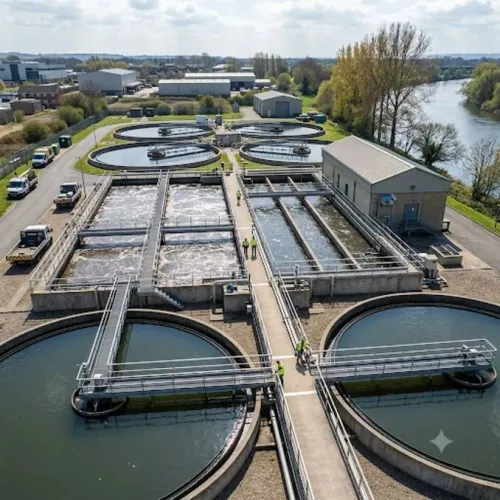
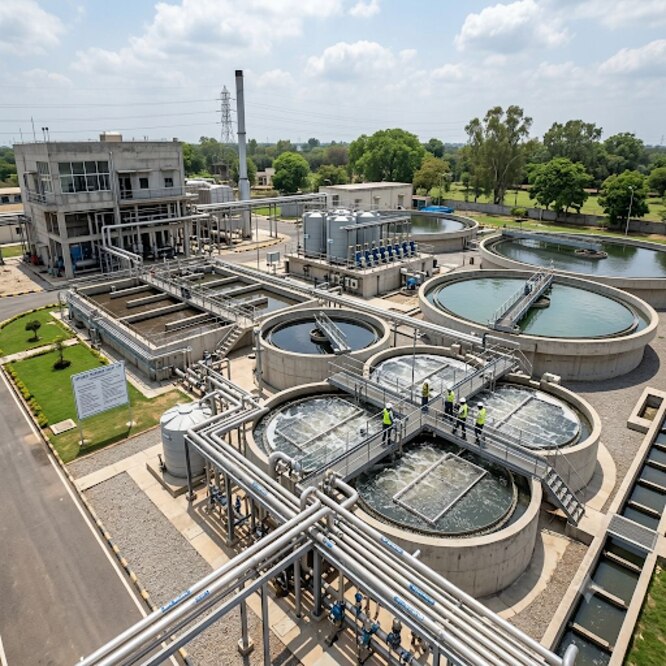
A complete effluent treatment plant package in Nagpur must show the liquid line and sludge line separately. The city does not determine the process: industrial wastewater characteristics, batch or continuous discharge, peak flow, pollutant variability and MPCB consent limits do. A flow-only design can fail under shock loads, solvents, metals, colour or high-COD batches.
| Line or stage | Component-by-component inclusions | Boundary to confirm |
|---|---|---|
| Inlet and pretreatment | Inlet chamber, bar screen, oil and grease trap, equalisation tank, agitator or air grid | Screenings and collected oil handling |
| Chemical and primary treatment | pH correction tank, chemical dosing system, flash mixer, flocculator and primary clarifier | Chemical storage, calibration and sludge removal |
| Biological and polishing | Aeration reactor, secondary clarifier, tertiary filter, activated-carbon filter, disinfection and treated-water tank | Select extended aeration, SBR or MBBR from the load; these are alternatives |
| Sludge line | Sludge holding, gravity or chemical thickening, polymer dosing, filter press or screw press, filtrate return and covered sludge storage | Confirm sludge testing, bags or containers, transport and disposal records |
| Support package | Pumps, interconnecting piping, valves, online pH and flow instruments, blower or compressor, electrical panel and PLC/SCADA | Include tanks, foundations, installation, commissioning and spares |
For effluent treatment plant and dm plant inclusions in nagpur, separate the quoted scope into these checks:
- Ask for the mass balance, design and peak flow, chemical and electrical consumption, sludge quantity, guaranteed inlet and outlet values, performance-test protocol, operator training and one year of consumables.
- Treat RO, advanced oxidation, metals removal or extra carbon filtration as profile-dependent additions, not automatic inclusions.
- Confirm whether civil works, trial runs, documentation and after-sales support belong to the effluent treatment plant package in nagpur or sit outside it.
Match Optional Treatment to the Industry and Final Water Use
No single ETP train is mandatory for every factory. Screening, flow equalisation, pH control, solids separation, treated-water storage and sludge handling form the base; biological treatment becomes mandatory only when the consent limit requires removal of biodegradable BOD or COD.
| Treatment stage | Include when | Do not add automatically |
|---|---|---|
| Oil trap and chemical coagulation | Wastewater contains oil, metals, colour or suspended solids | Clean, low-solids streams |
| Biological reactor and secondary clarifier | Biodegradable organic load requires BOD or COD reduction | Toxic or solvent-heavy wastewater without treatability evidence |
| Pressure sand, activated-carbon or cartridge filtration | Reuse, low TSS, colour or odour control is required | Discharge that already meets solids limits |
| Reverse osmosis | Reuse requires low TDS or specific dissolved-salt removal | A project with no reject-management route |
| Evaporator or crystallizer | ZLD is required and concentrate cannot be discharged | Projects where a permitted liquid-discharge route exists |
Change the train to match the industry and the final destination:
- Plating: segregate chromium, cyanide and metal-bearing streams before precipitation; use polishing only after metals meet the target.
- Pharmaceutical: test toxicity, solvents and refractory COD before selecting biological treatment; add carbon or advanced oxidation when biodegradation is inadequate.
- Food and dairy: provide screening, oil-and-grease removal, equalisation and biological treatment for high biodegradable load.
- Textile: add colour-focused coagulation, activated carbon or oxidation when the discharge or reuse limit demands it.
This industrial wastewater treatment scope must also state whether treated water goes to an MPCB-approved drain, cooling tower, washing line or a DM plant feed; each destination changes the final polishing and performance guarantee.
What a DM Plant Package Includes—and How It Differs from Other Water Systems
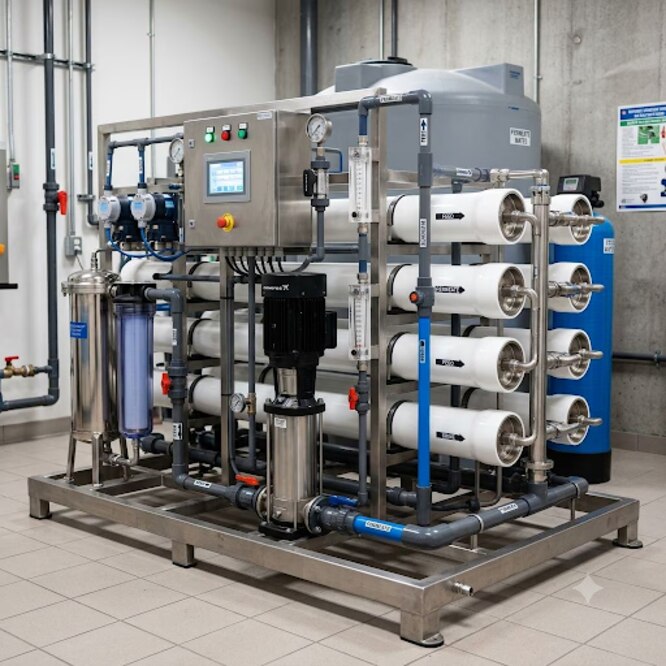
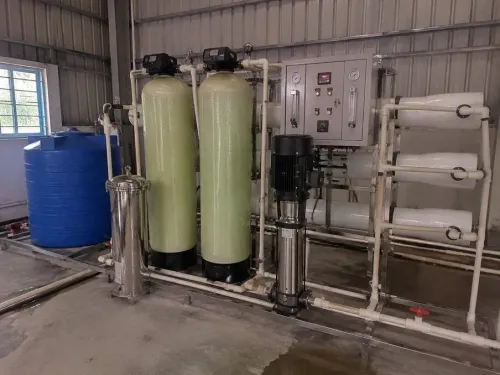
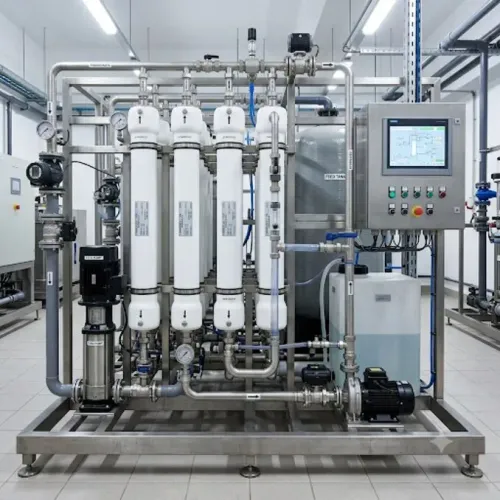
A DM plant package in Nagpur produces demineralized water; it is not an effluent treatment plant. A conventional package includes raw-water filtration, activated-carbon filtration, and, where required, reverse osmosis before ion exchange.
Core equipment includes:
- Cation exchanger, degasser where carbon dioxide removal is needed, and anion exchanger
- Mixed-bed polisher for high-purity water
- Acid and caustic storage tanks, regeneration pumps, dosing equipment and neutralisation arrangements
- Rinse-water collection, DM-water storage tank, transfer pumps, piping, valves and instruments
The phrase effluent treatment plant and dm plant inclusions in nagpur must not combine these scopes. An ETP treats contaminated discharge; a DM plant treats feedwater and creates a reject or regeneration-waste stream that still needs an approved disposal route.
| System | What it removes | When it applies |
|---|---|---|
| Softener | Calcium and magnesium hardness | Protect boilers or RO membranes; it does not remove dissolved salts |
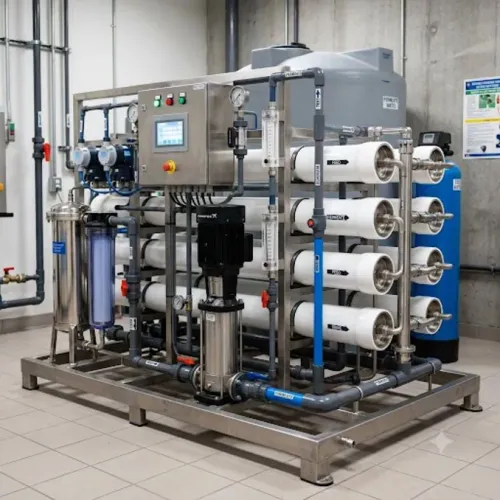
| RO plant | A broad share of dissolved salts, organics and microbes | Use where lower-TDS water is needed; manage the reject stream |
| Ion-exchange DM plant | Cations and anions, producing low-conductivity water | Use for process or boiler feed requiring demineralisation |
| Mixed-bed polisher | Residual ions after RO or two-bed treatment | Use for high-resistivity water; regenerate resin or replace it |
Specify conductivity or resistivity, silica, sodium, flow, temperature and recovery at acceptance. State whether waste goes to the sewer, CETP, reuse or ZLD route, then check the MPCB consent conditions.
Define the Supply, Commissioning and Performance-Test Boundary
Compare an ETP supplier in Nagpur by fixing the boundary from wastewater feed conditions to tested treated water, sludge, and every excluded item. A city name does not prove that the industrial wastewater treatment scope matches your process or MPCB consent limits.
Request these items in every quotation:
- Mass balance showing inlet flow, treated water, sludge, filtrate, reject and chemical waste.
- Guaranteed inlet and outlet pH, BOD, COD, TSS, oil and grease, colour, TDS, metals and temperature.
- Average and peak flow in m³/day, operating hours, and batch-discharge assumptions.
- Chemical consumption, electrical load, air demand, water demand, sludge quantity and disposal responsibility.
- Clear inclusion of tanks, foundations, piping, valves, instruments, MCC or PLC/SCADA, installation, trial runs, training, spares and one year of consumables.
- A commissioning protocol stating sampling points, test duration, laboratory method and compensation or corrective action for underperformance.
Compare scope boundaries in writing:
| Area | Included package | Verify before ordering |
|---|---|---|
| ETP | Liquid line, sludge line and automation | Ask which units, civil works and disposal documents are excluded |
| DM plant package in Nagpur | Pretreatment, ion exchangers, regeneration system and DM-water storage | Demand separate feed-water, product-water and regeneration-waste guarantees |
| Performance | Trial operation and laboratory test | Specify acceptance limits and consequences of failure |
Keep the ETP and DM plant as separate systems: one produces treated effluent and sludge; the other produces demineralized water and acidic or alkaline regeneration waste. The same test applies to Terra Ecosystems Pvt Ltd: compare its written boundary, guarantees and acceptance test against competing quotations, not the equipment list alone.
Related products
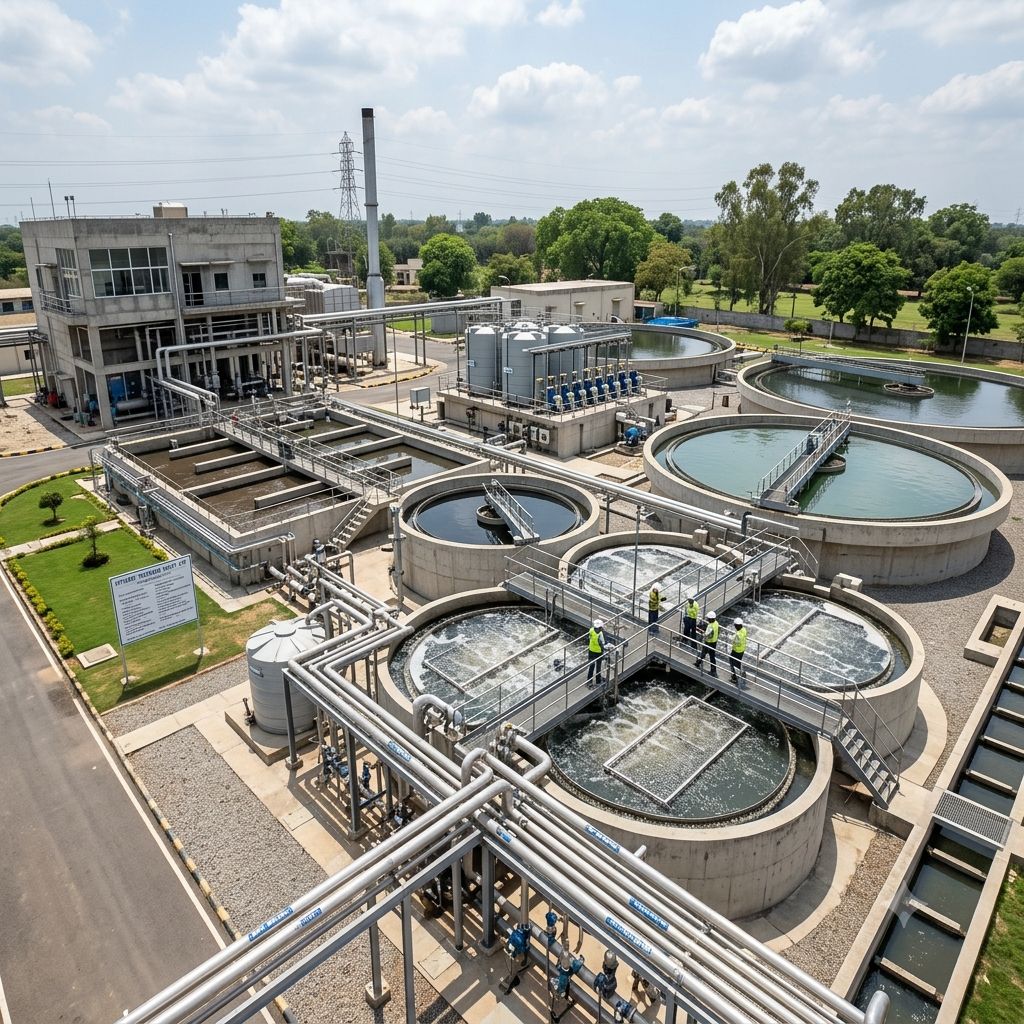 | EFFLUENT TREATMENT PLANT The Effluent Treatment Plant (ETP) is an environmental facility that removes pollution from the water released during the industrial process. View product → |
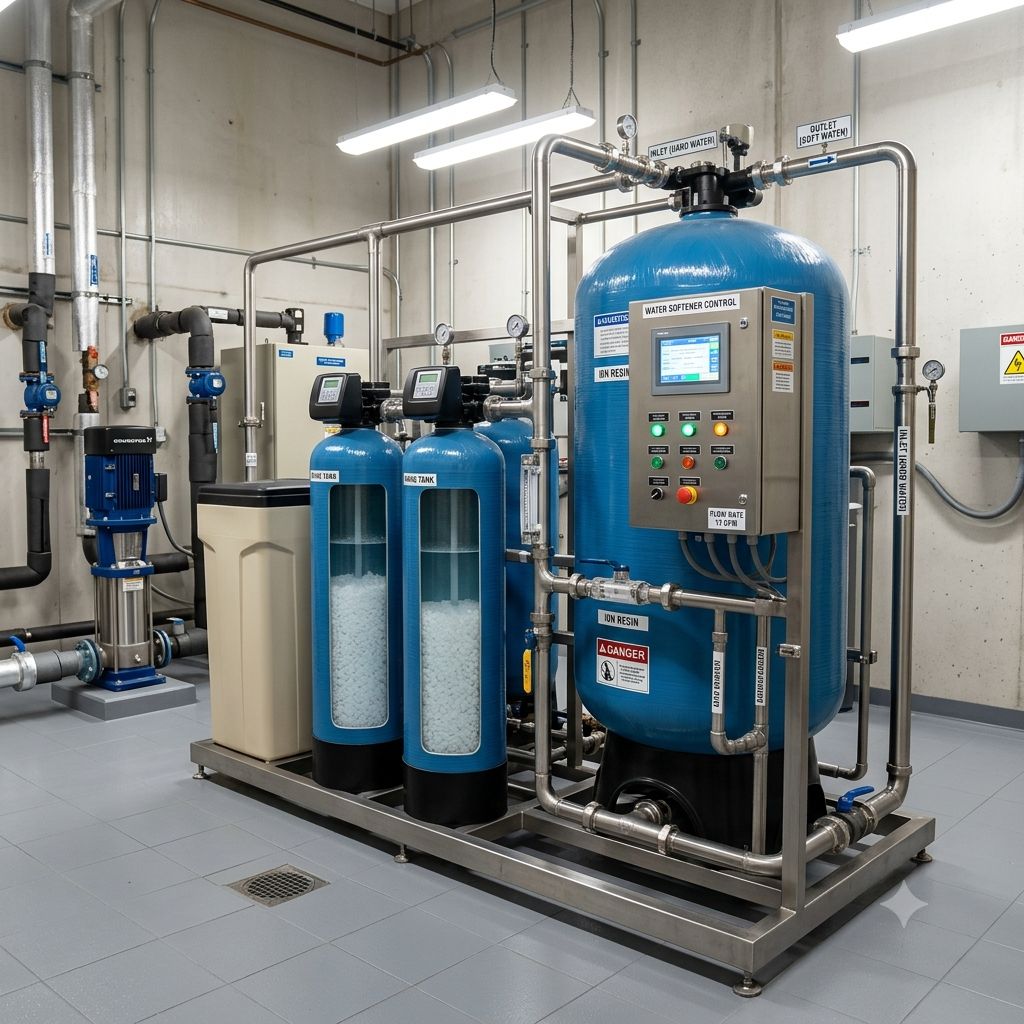 | FILTRATION SYSTEM Pressure filtration can be used for a variety of conventional filtration media; oxidative media for iron and manganese removal; activated carbon... View product → |
Frequently asked questions
What should an effluent treatment plant package in Nagpur include?
A complete package covers the liquid line from screening and equalisation through treatment, clarification, filtration and final discharge or reuse, plus sludge handling, chemical dosing, controls, safety systems and commissioning responsibilities.
How do you decide which optional ETP treatment stages to include?
Match treatment to the industry and measured contaminants. Colour, metals, solvents, high COD, oil, biological shock loads and reuse quality each require different processes and polishing stages.
What does a DM plant package in Nagpur include?
A DM package commonly defines pretreatment, ion-exchange vessels, resin, regeneration chemical systems, valves, instrumentation, treated-water storage and controls. Confirm the feed-water analysis and required conductivity before finalising it.
How does a DM plant differ from an ETP or other water systems?
An ETP treats industrial wastewater for compliant discharge or reuse, while a DM plant removes dissolved ions from relatively clarified feedwater. Filtration, softening, RO and sewage-treatment systems solve different water-quality problems.
Related products
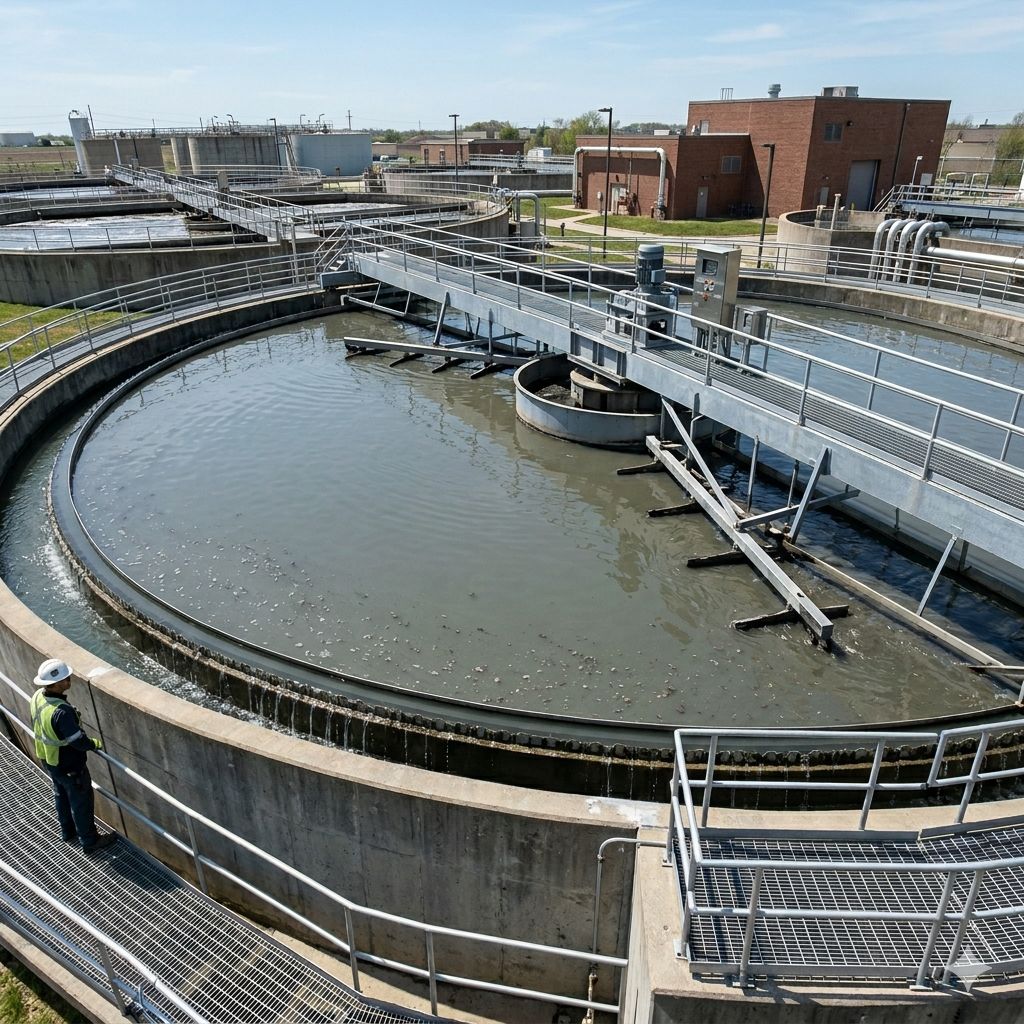 | CLARIFIER SYSTEM Clarifiers are required where ever the Suspended solids in raw/waste water are higher in concentration. View product → |
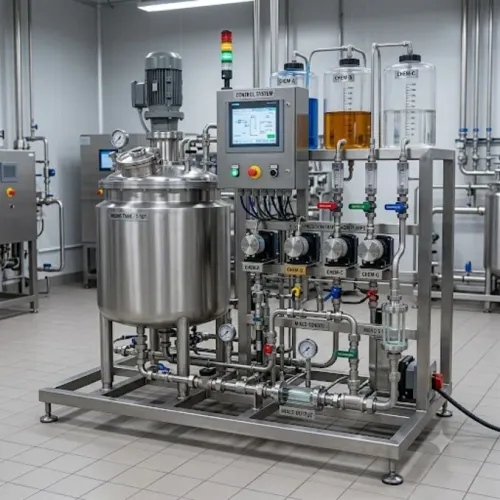
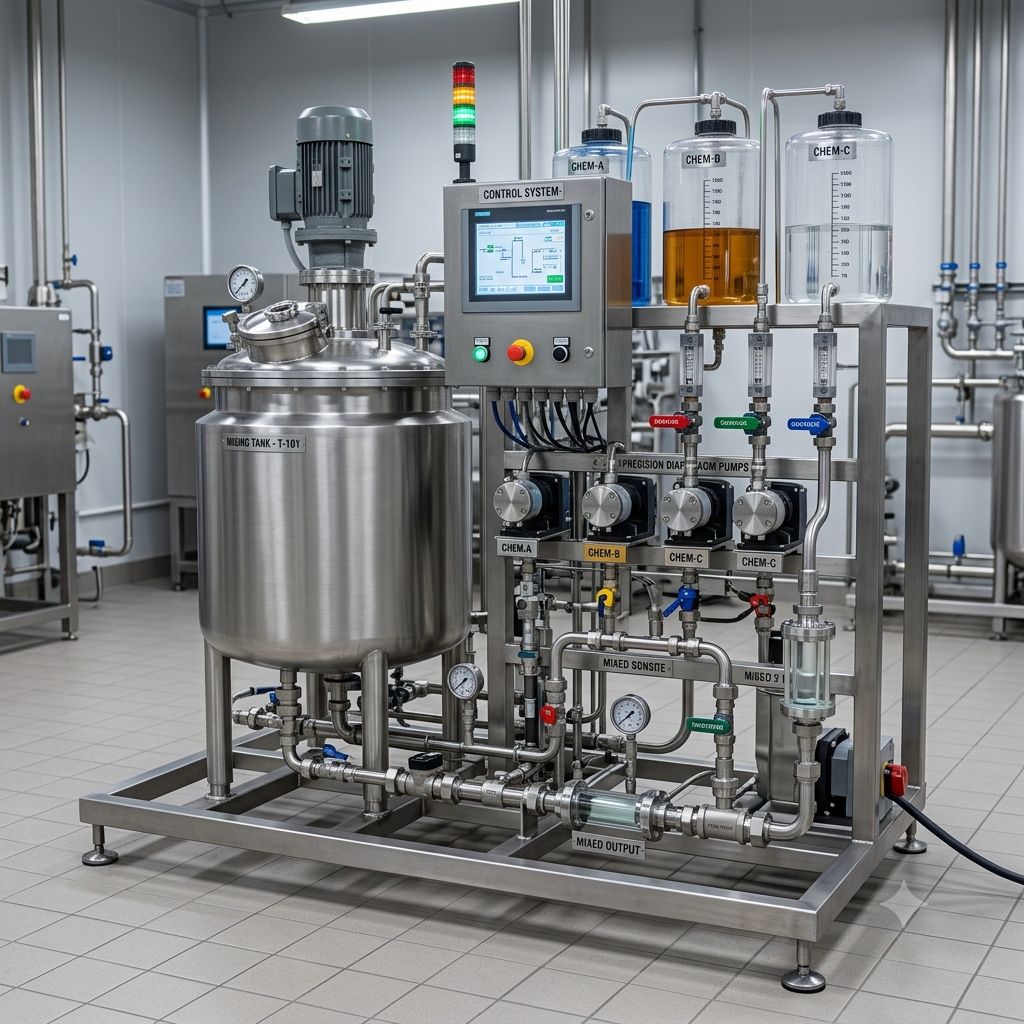 | CHEMICAL MIXING AND DOSING SYSTEM CHEMICAL MIXING AND DOSING SYSTEM Chemical dosing is the adding of chemicals into water/fluid or sludge to achieve required conditioning. View product → |
Keywords