Most apartment communities in Nagpur are deciding between the wrong categories: domestic sewage normally calls for an STP, while a DM plant addresses dissolved minerals in already treated or pretreated water. The right choice depends on your wastewater source, intended reuse, raw-water chemistry, flow pattern, compliance obligations and willingness to operate the plant properly.
Key takeaways
- Choose an STP for domestic sewage; a DM plant does not replace biological treatment.
- Size the plant from measured daily flow, peak flow and occupancy data.
- Treat sewage biologically before polishing water through filtration or demineralisation.
- Compare sludge handling, testing, operator duties and lifecycle cost—not only installation price.
Which plant does an apartment community in Nagpur actually need?
The usual answer to effluent treatment plant or dm plant for apartments in nagpur is an STP. Toilets, bathrooms, kitchens and laundry produce domestic sewage, so apartment wastewater treatment in Nagpur normally needs biological sewage treatment, not an industrial ETP.
| Plant | What it does | When an apartment community needs it |
|---|---|---|
| STP | Treats domestic sewage, including organic matter, solids and pathogens | Normal residential wastewater |
| ETP | Treats process wastewater with site-specific contaminants | Manufacturing, a large laundry, food processing or another separately identifiable commercial stream |
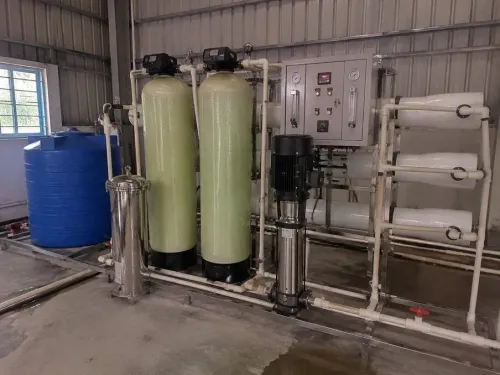
| Softener | Reduces hardness by removing calcium and magnesium ions | Hard-water protection for plumbing, boilers or selected appliances |
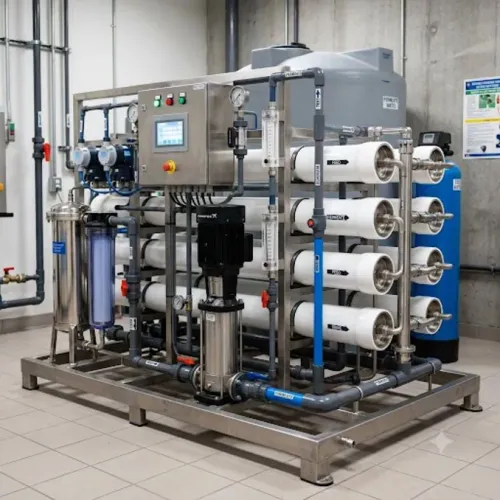
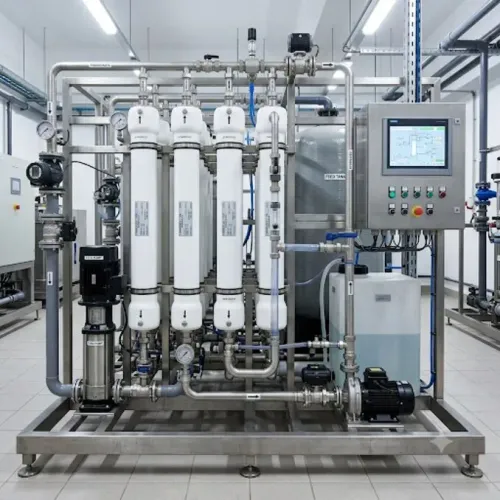
| RO plant | Uses a membrane to remove dissolved salts and other contaminants | A defined low-TDS or higher-purity water requirement |
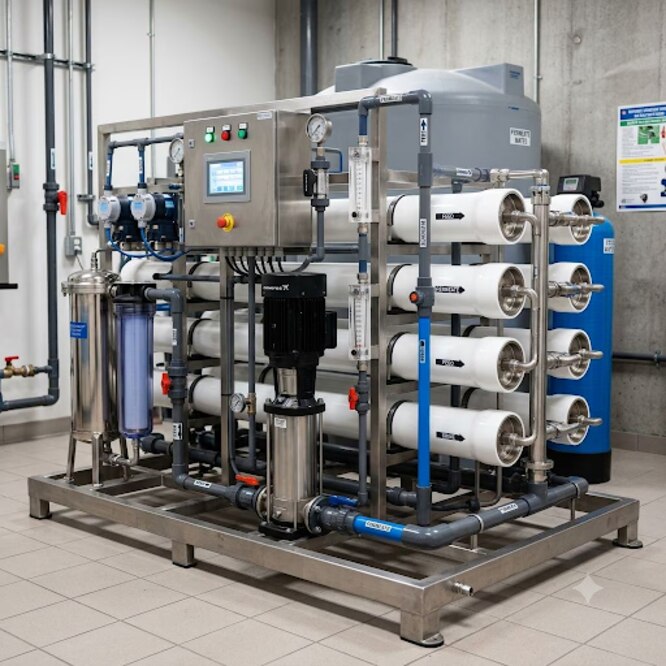
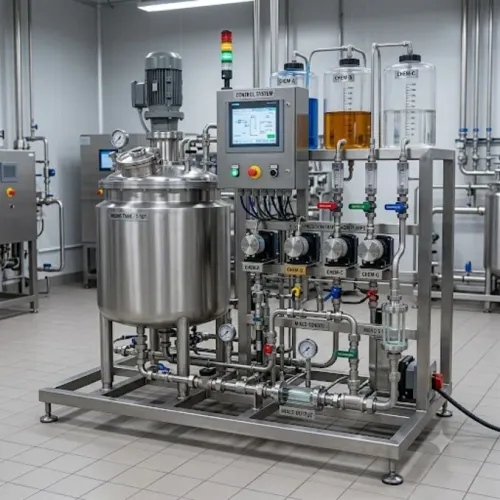
| DM plant | Uses cation and anion ion exchange, sometimes with RO and a mixed-bed polisher, to produce low-mineral water | Boiler feed, laboratory processes or another high-purity use |
Do not send raw sewage to a DM plant or RO plant. Sewage causes biological growth, fouling and scaling, while neither system replaces BOD removal, solids handling or pathogen control.
Choose an ETP only when testing confirms a separate process or commercial effluent stream. Add DM or RO to the STP system only for a defined high-purity water use; they are not substitutes for an STP.
What measurements should set the plant size and design?
The installed water connection is not a design flow: it records sanctioned supply capacity, while the community may add borewell or tanker water and send water to uses that never reach the sewer.
Build a water balance covering municipal supply, borewell and tanker receipts, irrigation, cooling-tower makeup, commercial kitchens, other consumption, losses and likely sewage generation. Use 80% of supplied water becoming sewage as a planning starting point, not a guarantee.
Require representative wastewater sampling during:
- Weekday and weekend occupancy
- Morning and evening peaks
- Low-occupancy periods
- Tanker delivery or power-interruption conditions
Record flow and test:
- BOD, COD and TSS
- Ammonia, total nitrogen and phosphate
- Oil and grease
- pH and peak-hour variation
Average daily flow cannot size pumps, screens, blowers, clarifiers or disinfection equipment without peak and low-flow data. Missing those conditions leaves equipment oversized for routine flow or unable to handle morning surges.
For any DM decision, test the raw water for:
- pH, electrical conductivity and TDS
- Hardness and alkalinity
- Silica, iron and manganese
- Chloride and sulphate
- Microbiological quality
These results determine whether pretreatment, softening, RO, ion exchange or a mixed-bed polisher is justified.
How should an apartment STP treat sewage and produce reusable water?
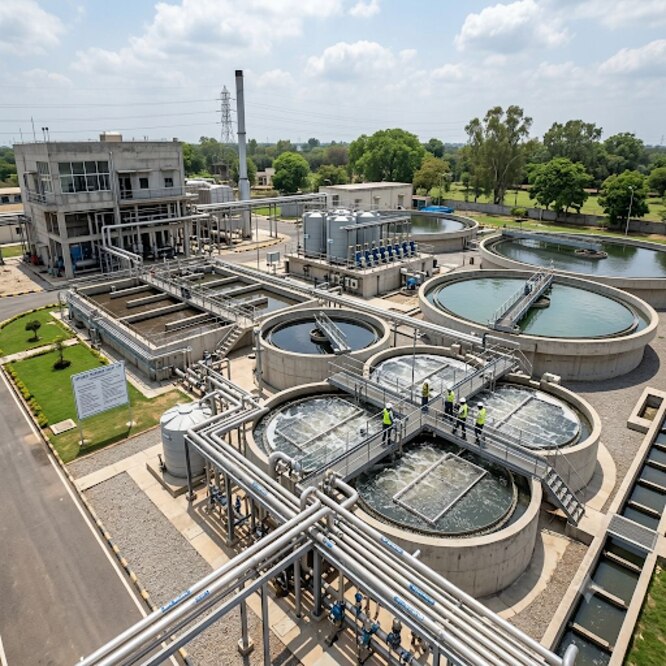
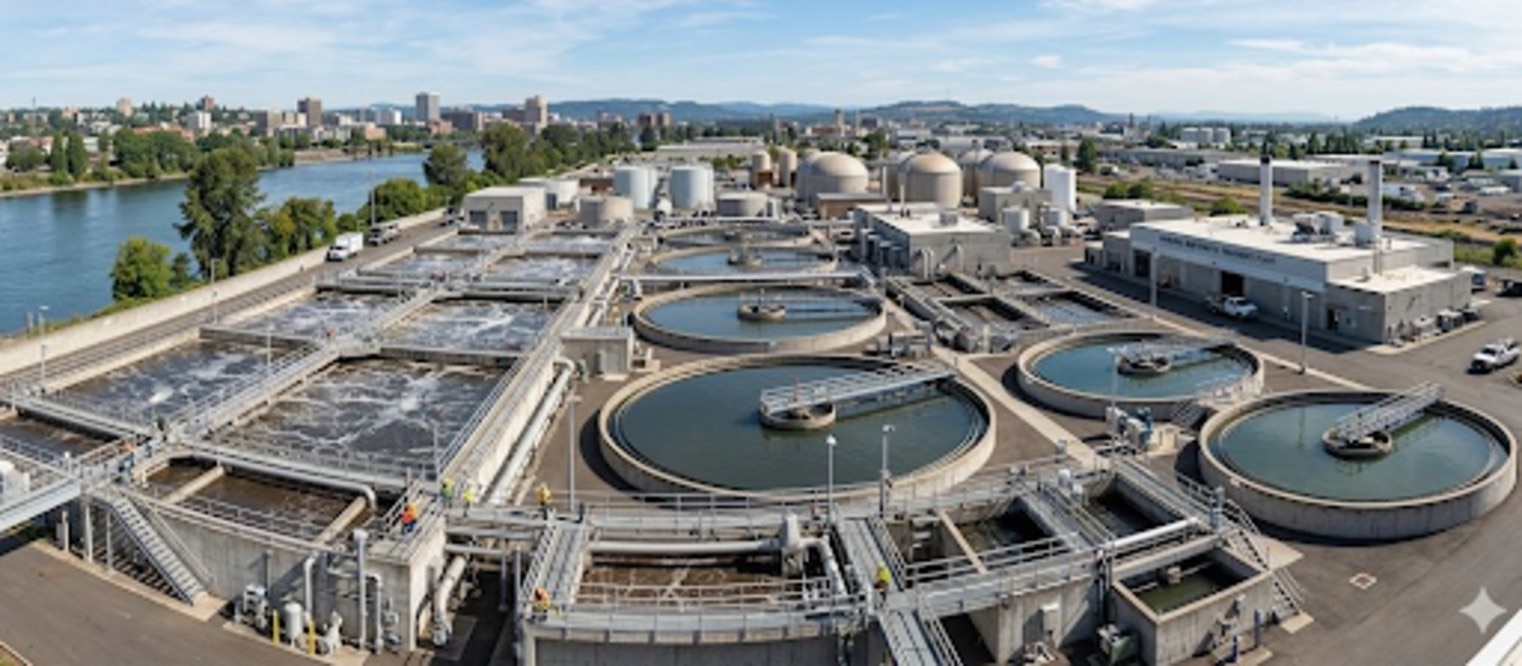
An apartment STP should move sewage through screening, flow balancing, biological treatment, solids separation, polishing and disinfection before reuse. A practical train is:
- Coarse screening removes rags, plastics and sanitary waste; fine screening protects pumps and biological equipment.
- Add a grease trap or dissolved-air grease removal where kitchens, restaurants or food-service areas contribute significant oil and grease.
- Equalisation absorbs morning peaks, tanker interruptions and occupancy swings before controlled biological treatment.
- Use MBBR, SBR or MBR for BOD and ammonia reduction, followed by clarification or membrane separation.
- Filter the clarified water, disinfect it with ultraviolet light, chlorination or both, and control residual disinfectant in storage.
- Waste excess sludge, return sludge where the process requires it, and store treated water in a labelled tank with turnover.
| Option | Strength | Main operating risk |
|---|---|---|
| MBBR | Compact and comparatively tolerant of variable loading | Media retention, aeration and sludge separation need attention |
| SBR | Biological treatment and settling occur in timed cycles | Sequencing, level instruments and controls must work reliably |
| MBR | Produces low-turbidity water | Higher membrane, energy, cleaning and replacement costs |
These are not interchangeable effluent treatment plant options in Nagpur. Toilet flushing and landscaping need stable, disinfected water; vehicle washing needs separate solids and microbiological control.
Cooling-tower makeup demands tighter hardness, silica and cycles-of-concentration control, while discharge must meet the Maharashtra Pollution Control Board consent limits for named parameters such as BOD, TSS and fecal coliform.
Use separate non-potable pipes, labelled tanks, backflow protection and residual-disinfectant checks. Prevent every cross-connection with potable lines.
When does a DM plant add value, and what must happen before it?
A DM plant adds value only after sewage treatment has produced clarified, low-solids water. In the effluent treatment versus DM plant in Nagpur decision, separate the targets: an STP controls sewage pollution, while a DM plant removes dissolved ions for a defined low-mineral use.
| Water target | Suitable plant | What it does not replace |
|---|---|---|
| Sewage compliance | STP or suitable ETP | DM treatment, sludge handling or pathogen control |
| Reuse water | STP plus filtration and disinfection | Boiler or laboratory-grade mineral control |
| Low-mineral water | RO, ion exchange and mixed-bed polishing | Microbiological control downstream |
A DM plant for apartment communities does not remove BOD, settle sewage solids, control pathogens or manage sludge. Send raw apartment sewage to ion-exchange resin or RO membranes and fouling, scaling and biological growth will rapidly damage performance.
Use this sequence: STP or other suitable pretreatment, clarification and filtration, dechlorination when required, softening or antiscalant dosing as appropriate, then RO or ion exchange. Add a mixed-bed polisher when the end use requires very low conductivity. DM water can meet a conductivity target and still need downstream microbiological control.
Define these waste streams before procurement:
- RO reject contains concentrated salts.
- Resin regeneration produces acidic and alkaline waste.
- The water balance must specify storage, neutralisation, reuse or permitted disposal for each stream.
Use DM water for boiler feed, laboratory processes or other low-mineral applications—not as a substitute for the apartment STP.
How should you compare quotations, compliance duties and operating risk?
Reject any quotation that names only a plant capacity. Compare the documented design basis, exclusions and operating commitments against these procurement requirements:
- Influent flow, peak and low flows, BOD, COD, TSS, ammonia, oil and grease, and representative sampling during weekday/weekend occupancy, peak hours, low occupancy and tanker or power interruptions.
- Treated-water end use and guaranteed outlet limits, including the applicable Maharashtra Pollution Control Board consent conditions, local-body requirements and project-specific environmental-clearance conditions.
- Electricity, chemicals, sludge quantity, sludge testing and disposal responsibility; also specify RO reject and ion-exchange regeneration-waste storage, neutralisation, reuse or permitted disposal.
- Contractual odour and noise limits, standby pumps and blowers, bypass prevention, operator staffing, calibration intervals, critical spares, commissioning trials and performance testing at defined flow and pollutant loads.
Project scale matters separately from the treatment label. The EIA Notification, 2006 covers building-and-construction projects at 20,000 square metres and above under item 8(a); larger area-development or township projects fall under item 8(b). Check applicability against current rules and the actual project facts.
Compare quotations on operating risk, not only price:
| Dimension | Ask for evidence | What goes wrong when omitted |
|---|---|---|
| Equalisation and screening | Tank volume, screen rating and cleaning method | Solids and grease overload biology |
| Reliability | Blower and pump standby philosophy | Downtime forces bypasses |
| Control | Calibrated DO, pH, flow and level instruments | False readings destabilise treatment |
| Sludge | Wasting schedule and disposal route | A compliant outlet becomes non-compliant |
Terra Ecosystems Pvt Ltd can be considered when you need an engineering partner to convert sampling, reuse goals and consent conditions into a turnkey specification. Compare its documented design basis, guarantees and operating commitments with competing bids.
Related products
 | SEWAGE TREATMENT PLANT We has many years of Sewage Treatment Plant Solution experience in the design, construction, and operation of wastewater treatment plants, we are... View product → |
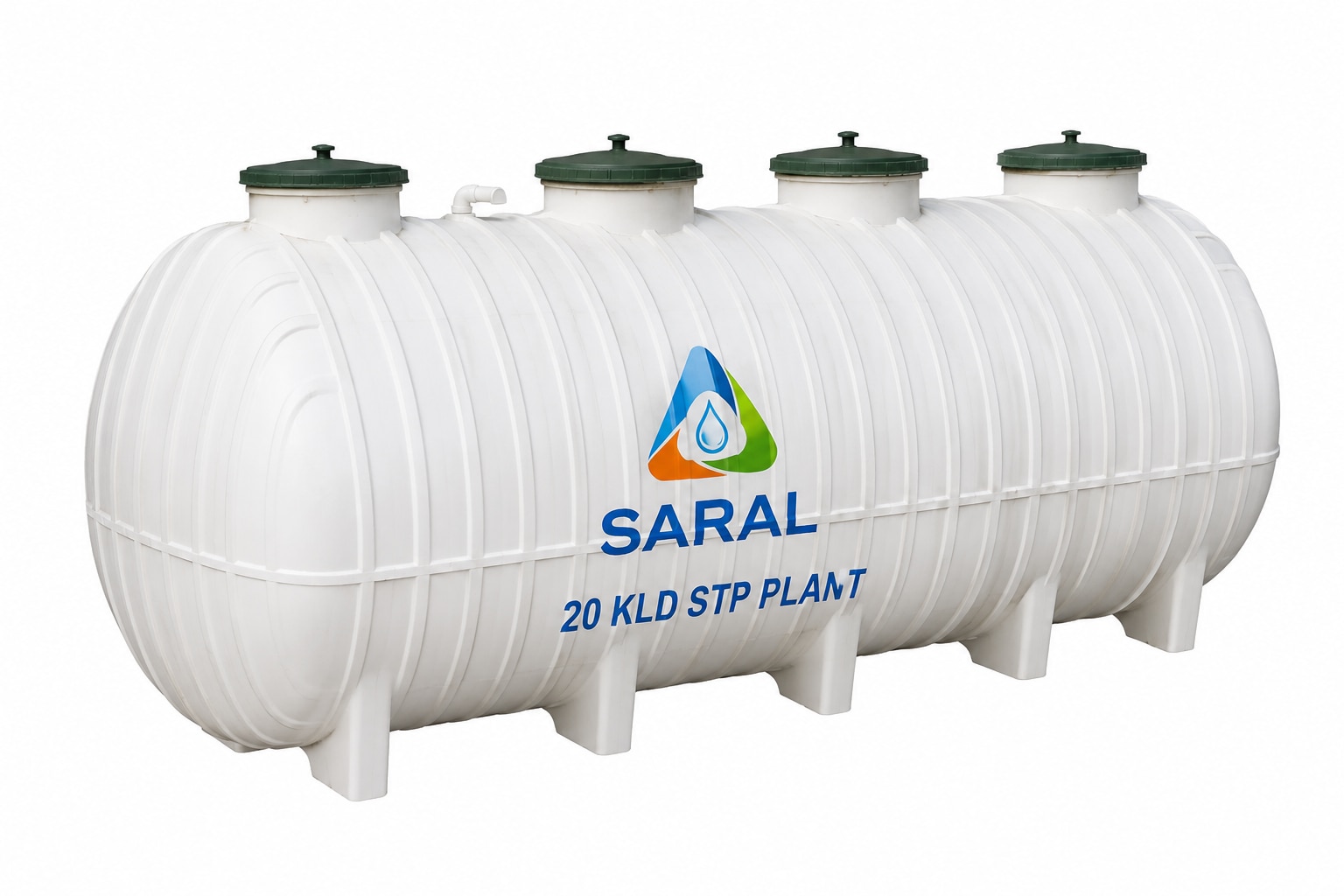 | PACKAGED SEWAGE TREATMENT PLANT PACKAGED SEWAGE TREATMENT PLANT SARALTM FRP STP is a prefabricated, decentralized onsite sewage treatment system designed in accordance with CPHEEO guidelines for residential,... View product → |
Frequently asked questions
Which plant does an apartment community in Nagpur need: an ETP or a DM plant?
Most apartment communities need a sewage treatment plant because toilets, bathrooms, kitchens and laundry produce domestic sewage. A DM plant only removes dissolved minerals from water after suitable pretreatment; it does not treat raw sewage or replace biological treatment.
What measurements should determine an apartment STP size?
Use actual or defensible figures for occupancy, water consumption, sewage flow, daily peak flow, kitchen wastewater, tanker inflow and planned expansion. Confirm the design flow with water-meter readings and allow for hydraulic peaks rather than sizing from flat count alone.
How should an STP produce reusable water?
The process should remove solids and organic matter through screening, equalisation and biological treatment, followed by clarification and tertiary polishing. Select filtration and disinfection for the intended reuse, such as flushing, gardening or cooling-tower makeup, and provide treated-water storage and test points.
When does a DM plant add value for an apartment community?
A DM plant adds value when the community has a defined low-mineral-water requirement, such as laboratory, boiler or specialised process use. Install pretreatment first and control hardness, suspended solids, iron, silica and organics before ion exchange or membrane equipment.
How should apartment communities compare treatment-plant quotations?
Compare guaranteed inlet and outlet water-quality values, design flow, electricity demand, chemical consumption, sludge disposal, operator coverage, testing frequency, spare parts, warranty exclusions and annual operating cost. Check who will maintain records and handle consent, inspection and laboratory requirements.
Keywords